
 SEARCH
 LIST YOUR PROPERTY

The new university academic year is fast approaching in the Belgian capital, and with it, the usual questions about accommodation. Whether you are a host looking to rent out a spare room or a future tenant in search of a studious nest, it is crucial to understand the ins and outs of the Brussels student lease 2026. At Roomlala, we know that property legislation can sometimes seem complex and intimidating. That is why we have decoded all the rules in force for the 2026-2027 academic year for you. This legal framework, which is particularly well-thought-out and secure, greatly encourages renting out rooms as a homestay. Let's find out together how to navigate these new regional provisions with peace of mind and prepare for the academic year without the slightest administrative stress.
The fundamentals of the Brussels student lease 2026: what you need to know
Duration, renewal and contract specifics
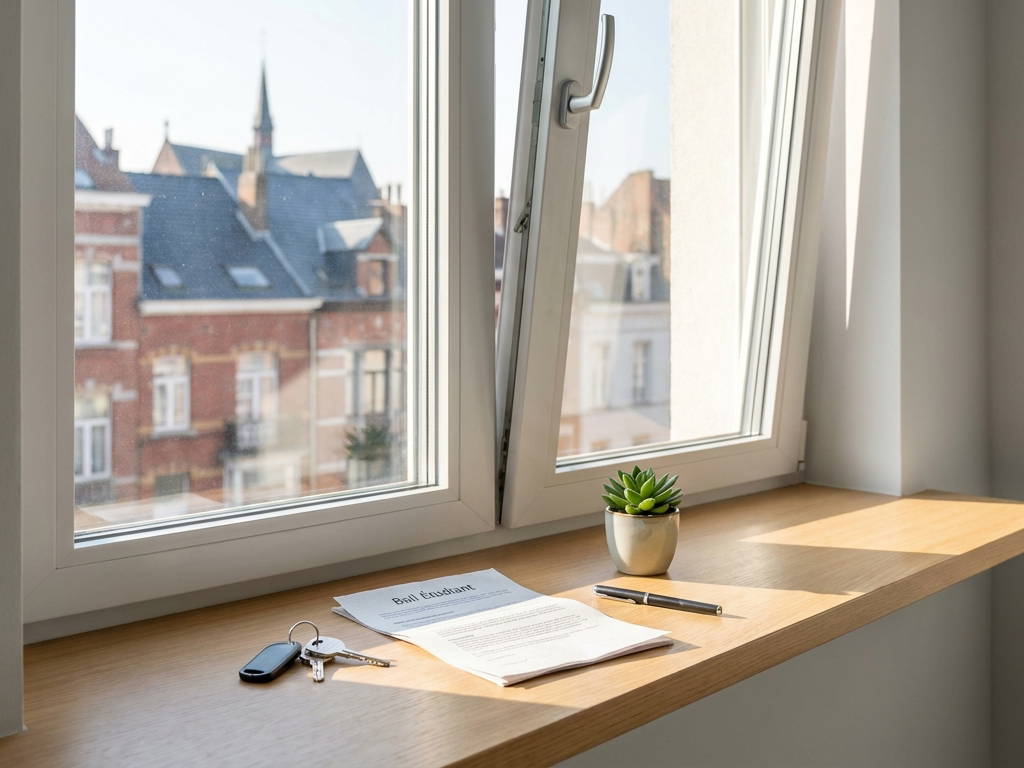
The student lease contract in the Brussels-Capital Region is specifically designed to fit perfectly with the academic rhythm. Concretely, the law stipulates that this type of contract is concluded for a maximum duration of 12 months. This temporal flexibility allows both parties to avoid long-term commitments, which is the ideal solution to cover a single academic year without excessive constraints.
Read also: 2026 Student start of term in Brussels: Essential information on student leases and shared housing, Student housing crisis in Belgium: Why a homestay is the solution for the start of the 2026 academic year and New subletting rules in Switzerland: What tenants need to know in 2026
At the end of this first one-year period, the lease can be extended for successive one-year periods under the same conditions (notably regarding the base rent amount, excluding legal indexation). At Roomlala, we see every day that this great flexibility is very reassuring for hosts who are embarking on the renting experience for the first time, as they retain control over the availability of their accommodation from one year to the next.
However, there is a major point to watch out for: the application of this specific rental regime is absolutely not automatic. It is not enough for the tenant to be of student age to benefit from it. Both the host and the tenant must expressly choose this type of contract by mutual agreement and mention it explicitly in the signed document. Without this mention, the contract could be reclassified.
Let's take a concrete example to illustrate this principle. If you decide to rent a room from September 2026 to June 2027 (a duration of 10 months), you are perfectly in line with the legislation. If your student tenant enjoys their stay and wishes to stay the following year to continue their studies, a simple one-year extension amendment will be more than sufficient, without you having to renegotiate all the initial terms of the contract.
Student proof: a strict and unavoidable obligation
For the contract to be legally valid under this protective regime, the tenant has the formal obligation to prove their status. It is therefore mandatory to provide valid proof of registration at a regular educational institution, whether it be a university, a higher education college, or a training institute recognised by the Belgian authorities.
The law is very precise regarding the timing: this official supporting document must be given to the host at the time of signing the lease, or at the latest within two months following the effective move-in date. This is a crucial administrative step that we strongly advise you not to neglect in order to avoid any unpleasant legal surprises during the year.
What happens in practice if the student forgets, neglects, or is unable to provide this document within the given deadlines? The legal sanction is immediate and final: the contract automatically switches to a standard residential lease or a main residence lease. The rules then change drastically, particularly regarding the length of commitment and termination conditions, which can penalise the host.
Here is a frequent use case: Lucas moves in on 1 September 2026, but his university has an administrative delay in issuing final certificates of registration. The law protects him by giving him until 31 October to hand over the precious document to his host. At Roomlala, we nevertheless encourage all our tenants to anticipate this step and to provide a provisional certificate as soon as their school registration is finalised.
Essential legal updates since 1 January 2026
New quality standards for room rental regulations
The year 2026 marks a historic and major turning point for Brussels student accommodation legislation. Since 1 January 2026, brand-new regional standards for quality, healthiness, and safety have come into force across the entire Brussels territory. Their primary objective is noble: to guarantee decent, healthy, and safe housing for all students in the European capital.
Among the key measures of this reform is the strict and definitive ban on non-sealed gas appliances inside rooms (such as old water heaters or old stoves). This radical measure aims to completely eradicate the risks of carbon monoxide poisoning, which had previously represented a major public health issue in older buildings.
Furthermore, the regulation now imposes very precise minimum comfort standards. Here are the main obligations for hosts:
- The mandatory presence of a water point such as a shower or bathtub, whether it is private or shared under good hygiene conditions.
- A minimum habitable surface area strictly set at 12 m² for a standard individual student room.
- Strict ventilation and natural light standards to guarantee the occupant's psychological well-being.
Practical example for a host: If you currently offer a small guest room of 10 m², it can no longer be rented under the strict designation of 'student room' according to the new 2026 standards, unless you benefit from specific derogations related to the provision of very large shared common areas (such as a large living room or a vast kitchen). We therefore invite you to measure your spaces carefully and check their compliance before publishing your listing on our platform.
The EPC certificate and rent indexation: an ecological and financial challenge
Ecology, energy transition, and building performance are also strongly entering the scope of the student lease. In 2026, providing a valid EPC (Energy Performance Certificate) has become a prerequisite for managing certain financial actions of the host, thus linking the financial aspect to the ecological footprint of the accommodation.
The most impactful novelty of this year undoubtedly concerns the annual indexation of rent. If the host wishes to index the rent on the contract anniversary date to keep up with the rising cost of living (inflation), they must imperatively possess a compliant and high-performance EPC certificate. Properties considered energy-inefficient (displaying a very poor EPC score, often F or G) see their indexation possibility totally frozen or very strongly limited by law.
This strong political measure massively encourages Brussels hosts to renovate their properties. For students, this is excellent news: it is the guarantee of renting a much better-insulated room, which is significantly more comfortable during the harsh winter months, and above all, much less energy-consuming on a monthly basis.
Use case: Ms Peeters rents a charming room in her home in the municipality of Ixelles. Unfortunately, her EPC certificate is rated G. In October 2026, on the anniversary date of her tenant's contract, she will legally be unable to apply rent indexation. She therefore has every interest in quickly carrying out some insulation work (such as replacing window frames or insulating the roof) to improve her score and regain her indexation rights for future years.
Termination, security deposit and procedures: what governs Brussels student accommodation legislation
An asymmetric termination highly protective for the student
One of the greatest strengths of the Brussels student accommodation legislation lies in its so-called asymmetric termination system. Concretely, the law was designed to strongly protect the student against the many uncertainties inherent to academic life, such as an unexpected academic failure, a radical change of study path, or even the opportunity for an internship abroad during the year.
In practice, the student enjoys remarkable freedom: they can terminate their lease contract at any time of the year, without ever having to justify a serious reason to their host. They simply need to respect a legal notice period of 2 months. The cherry on top for the tenant: no early termination indemnity can be claimed by the landlord.
Conversely, the host is subject to infinitely stricter rules to ensure the stability of the student's accommodation. The landlord can only end the lease at its legal expiry (most often at the end of the initial 12 months), and this requires a formal 3-month notice. It is therefore formally forbidden for them to evict the student in the middle of the academic year, unless they obtain a court decision acknowledging serious misconduct by the tenant (such as prolonged non-payment of rent or major damages).
Let's take a clear example: If a student realises in December 2026 that their chosen course does not suit them and decides to quit their studies to move back in with their parents, they send their notice immediately via registered mail. Their notice period will cover the months of January and February. As of 1 March, they will be completely free of any commitment to the host, without having to pay any financial penalty for the months remaining until June.
Security deposit and registration obligation: financial rules
Regarding finances, the security deposit (often referred to as a caution in common language) is strictly regulated by the Brussels legislator to avoid abuse. Its amount is formally capped at a maximum of 2 months' rent (calculated excluding charges). The host cannot under any circumstances, and under any pretext, demand 3 months of deposit from a student.
A novelty closely monitored by the authorities in 2026 concerns the procedures for returning this famous deposit. The host now has a legal and strict obligation to release it within a maximum of 2 months following the official handover of keys and the tenant's final departure. In the event of unjustified delay on the part of the landlord, automatic financial penalties may apply in favour of the aggrieved student.
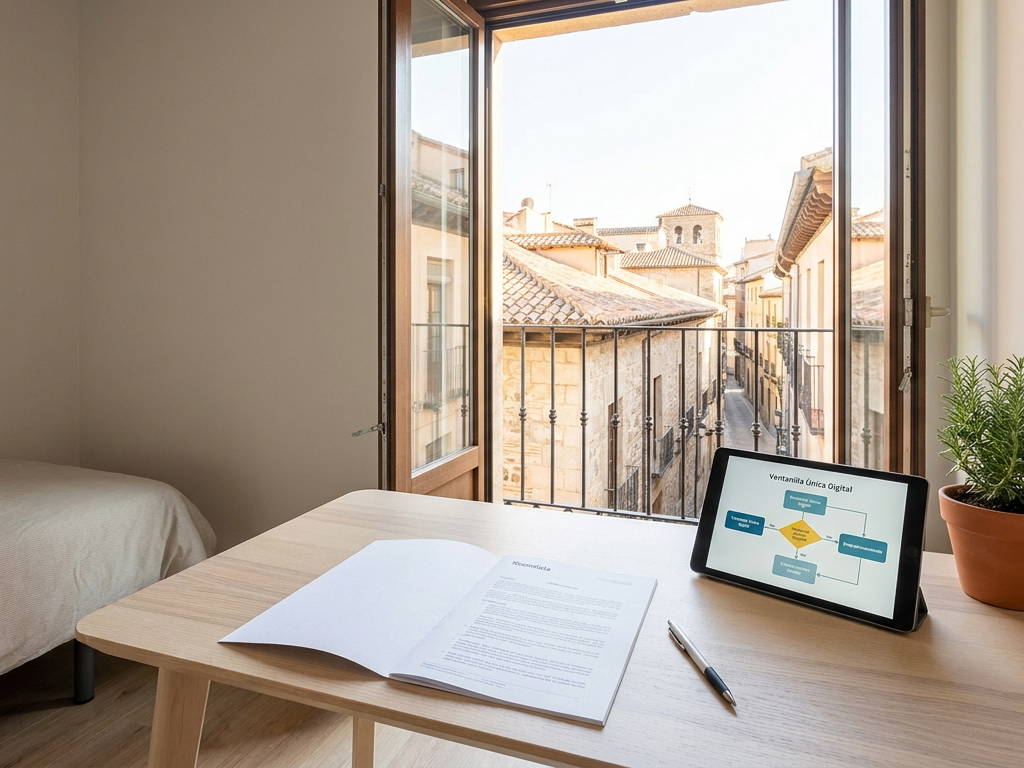
Finally, let us not forget the essential administrative steps. Lease registration is a legal obligation that falls exclusively on the host. Here is how to proceed:
- The contract must be registered with the FPS Finance (Federal Public Service).
- This procedure is totally free for residential leases.
- It must imperatively be carried out within a maximum period of 2 months after the joint signing of the contract.
At Roomlala, we very frequently remind our host community that this registration is a crucial and non-optional step. Indeed, it gives a certain date to the rental contract, thus effectively protecting both parties in the event of a subsequent dispute or in the event of the property being unexpectedly resold by the host.
Why renting a student room in Belgium as a homestay is an excellent idea in 2026?
A legal framework perfectly adapted to cohabitation and flexibility
With this particularly clear and well-marked regulation, renting a student room in Belgium has never been such a secure process, especially when opting for the friendly homestay model. This alternative model is attracting more and more Brussels residents who have a spare room in their house or large apartment.
It is essential to note a major administrative specificity linked to the question of domicile. In the context of a standard student lease (and this is particularly true for a homestay), the rented accommodation is legally considered a simple second residence. Consequently, the student generally cannot officially register their primary residence there; their legal main residence remains fixed at their parents' home.
This urban planning rule is a real boon and a relief for many hosts. Indeed, the student's lack of formal domicile allows for the avoidance of many annoying administrative or tax complications, such as a potential negative impact on the calculation of child benefits, local taxes, or the financial status of a cohabitant. It is very often this compelling argument that convinces hosts to take the leap into intergenerational renting.
Let's imagine a very common practical case: You welcome Sofia, a brilliant Spanish student who has come to do her Erasmus at the ULB. She signs a proper student lease with you, but logically keeps her main residence in Spain. On your side, you benefit from a significant monthly additional income, while having the absolute certainty that the official composition of your household as registered with your municipal administration will not be modified.
Security, support and friendliness guaranteed with Roomlala
Beyond the purely legal and financial aspects that we have just detailed, renting a room as a homestay meets a deep and growing need for authentic social connection. For a young adult sometimes arriving from far away in a bustling metropolis like Brussels, being warmly welcomed by a local resident is an extremely reassuring and precious factor for integration.
At Roomlala, we make it a point of honour to facilitate these beautiful intergenerational and intercultural encounters as much as possible. Our intuitive platform allows you to discuss at length with tenant candidates via internal messaging before any final validation, to check the seriousness of profiles thanks to reviews left by the community, and to ensure real lifestyle compatibility before you commit.
Furthermore, our highly secure online payment system provides complete peace of mind. It guarantees that hosts receive their rent on time without having to chase up transfers, while offering student tenants the absolute certainty that their accommodation is indeed reserved, blocked for them, and perfectly compliant with the listing published online.
In conclusion of this overview, the regulation of student leases in Brussels for the 2026 academic year offers a perfect, fair, and modern balance between the essential protection of the tenant and the legal security of the host. Facing the shortage of student accommodation in the capital, this is the perfect time to make the most of your spare space or, if you are a student, to find the perfect homestay room to succeed brilliantly in your university year!


There are no comments yet.
Leave a comment
You must be logged in to post a comment.