
 SEARCH
 LIST YOUR PROPERTY
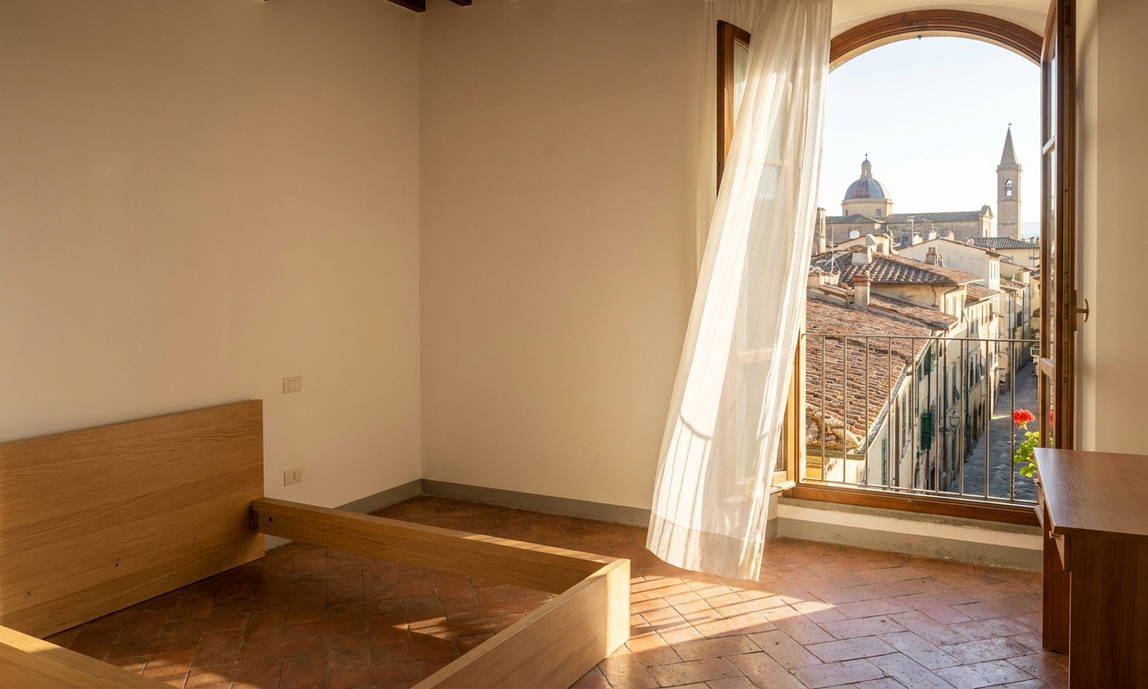
Faced with soaring property prices, the start of the student academic year in Italy has never been more complex. The well-known phenomenon of the 2026 'caro affitti' (high rents) is making headlines in every Italian newspaper. Students are struggling to find affordable accommodation, while hosts are sometimes hesitant to rent out their spare rooms for fear of heavy taxation or tedious administrative procedures. However, a legal and extremely advantageous solution exists: the Canone Concordato. This rent-controlled scheme is the ideal answer for balancing students' needs with the profitability for hosts. At Roomlala, we support thousands of hosts every day in renting out their homestay rooms. We have therefore decided to break down the major tax benefits of this specific contract for the 2026 academic year.
Understanding the housing crisis and the 2026 'caro affitti'
For several years now, and with a marked acceleration in 2026, Italy has been facing an unprecedented student housing crisis. Rental prices have literally exploded in large university cities. According to the latest real estate market data, increases of up to +59% are being observed in certain highly sought-after towns. This phenomenon, infamously known as the 2026 'caro affitti', is putting the academic journeys of many young people at risk as they can no longer afford decent housing.
Read also: Transitional Lease in 2026: The legal and flexible alternative for renting out your room in Italy, Contratto Transitorio in Italy: The legal and flexible alternative for renting out your room in 2026 and 2026 academic start in Switzerland: The boom in intergenerational housing in the face of shortages
Looking for a student room in Rome, Milan, or even in Bologna and Florence, is now a real uphill battle. Public university residences are full, and the private rental market shows prices that are often inaccessible for the average student budget. It is in this context of high tension that the Italian government strongly encourages the use of alternative and solidarity-based solutions, such as renting homestay rooms governed by incentive-based tax schemes.
For you, as a host with a spare room, this situation represents a unique opportunity to generate extra income while doing a huge service for the student community. By opting for student rentals in Italy via a suitable contract, you are actively participating in resolving this housing crisis. And to reward this civic commitment, the Italian state has put in place the Canone Concordato, a mechanism that significantly lightens the tax burden for hosts in Italy.
Let's take a concrete example: a retired couple living in Milan has had a spare room since their children moved out. By renting it out on the open market, they face standard taxation of 21% on their rental income. By choosing to host a student via the controlled scheme, they not only secure their rental with a reliable profile, but they also gain access to an exceptionally reduced tax rate, thus turning a simple empty room into a real financial asset.
What is the 2026 Canone Concordato for student rentals?
The 2026 Canone Concordato, or controlled rent, is a type of rental contract governed by Italian law (Law 431/98). Unlike the standard free market contract (4+4 years) where the host sets the rent as they wish, controlled rent meets strict criteria defined by territorial agreements (accordi territoriali) signed between tenants' unions and hosts' associations at the municipal level. For student rentals, there is a specific variant of this contract, tailored to the university schedule.
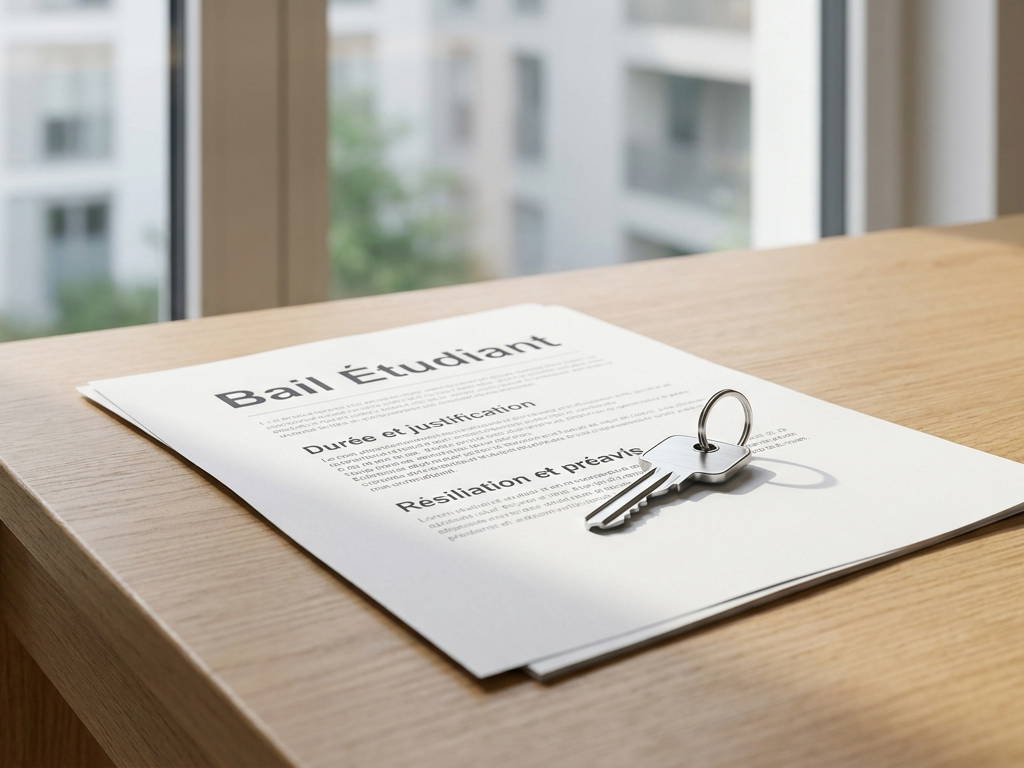
This contract for university students (contratto per studenti universitari) is a transitional lease. Its legal duration is between 6 months minimum and 36 months maximum. This flexibility is a major asset for Roomlala hosts, as it allows the room to be rented only during the school year, while regaining use of the room during the summer period if necessary. Furthermore, this contract can be automatically renewed for an identical duration, thus offering great stability to both parties.
The strict rules for setting the rent
The main point to watch with the Canone Concordato is determining the price of your room. The rent amount is not free: it must strictly fall within the strict scales set by the municipality in question. These scales take into account multiple criteria: the size of the room, the location of the property (city centre, suburbs, university area), the presence of common areas, or the equipment provided (furniture, internet connection, access to the washing machine, etc.).
To calculate the maximum authorised rent, the host must refer to the zoning map of their city. For example, if you rent a student room in Rome or Milan in a central area (Zone 1), the ceiling per square metre will be higher than in a peripheral area. Although this controlled rent is generally 15 to 20% lower than open market prices, this difference is largely compensated by the tax savings achieved. At Roomlala, we advise you to contact a local hosts' association or check your town hall's website to obtain the certificate of compliance (attestazione di rispondenza) required to validate your rent calculation.
The obligation to register and legal deadlines
To benefit from the advantages of the 2026 Canone Concordato, administrative rigour is required. The rental contract must be registered with the Agenzia delle Entrate (the Italian tax authority) within a strict deadline of 30 days following its signature or its effective date. Failure to meet this deadline results in the nullity of the contract and, consequently, the immediate loss of all associated tax reductions.
Registration can be done online via the Agenzia delle Entrate's RLI portal, or physically at one of their offices. It is crucial to tick the box corresponding to the 'Cedolare Secca' option during this registration. At Roomlala, security and compliance are our priorities. Although we facilitate the connection and secure payment of your rents, we remind you that it is your responsibility to carry out this legal registration. Rest assured, once this step is completed, you are protected by a solid legal framework and you can welcome your student with total peace of mind.
Taxation for hosts in Italy: The concrete benefits of controlled rent
If the Canone Concordato is the preferred solution to the 2026 'caro affitti', it is above all thanks to its arsenal of tax benefits. The Italian state has understood that to encourage hosts to rent for less, it had to offer them attractive financial compensation. This is where taxation for hosts in Italy comes into play, which proves to be particularly generous for solidarity-minded landlords.
By choosing to rent your homestay room with this type of contract, you leave the classic income tax regime (IRPEF), whose brackets can quickly eat into your profits, to opt for a flat-rate and significantly lightened taxation system. Let's look in detail at the two pillars of this tax optimisation: the Cedolare Secca and the IMU reduction.
The Cedolare Secca reduced to 10%
The Cedolare Secca is a substitute tax that replaces IRPEF, as well as regional and municipal taxes, registration fees, and stamp duties on the rental contract. In the context of a free market rental contract, the Cedolare Secca rate is set at 21%. But the major advantage of the Canone Concordato is that it drops this rate to just 10%! This is a significant argument for anyone wishing to maximise the profitability of their student rental in Italy.
Let's take a specific use case: You rent a room to a student in Bologna for 400 euros per month, i.e., 4,800 euros per year. With a free market contract at the 21% rate, you would pay 1,008 euros in tax. With the Canone Concordato at the 10% rate, your tax falls to 480 euros. You thus achieve a net saving of 528 euros per year, while having helped a young person find housing. Be careful, however, about one crucial point to watch: to activate this 10% rate, you must officially renounce, in a clause of the contract, the annual indexation of the rent based on inflation (the well-known ISTAT index). This is a 'sine qua non' condition required by the Agenzia delle Entrate.
The 25% IMU reduction
The second major tax benefit concerns the IMU (Imposta Municipale Propria), which is the Italian property tax. If you rent out a part of your primary residence (your spare room), you are generally exempt from IMU on your primary home. However, if the rented room is in a second home or an investment property, the Canone Concordato grants you a legal reduction of 25% on the amount of this local tax. In other words, the host only pays 75% of the tax due.
To benefit from this reduction and the 10% Cedolare Secca rate, a strict geographical condition applies: the property must be located in a municipality recognised as having high housing tension (ad alta tensione abitativa). Fortunately, almost all major Italian university cities (Rome, Milan, Bologna, Turin, Florence, Naples) are on this list. For example, a host owning an apartment in Turin, which they rent out as student housing, will see their property tax bill lightened by a quarter, which often represents several hundred euros of annual savings.
How to set up this contract with peace of mind with Roomlala?
Now that the benefits of the 2026 Canone Concordato hold no more secrets for you, it is time to take action. Welcoming a student into your home is an enriching human experience, which allows you to fight against loneliness while livening up your daily routine. At Roomlala, we have designed our platform to simplify your life at every step of your rental project.
Here are the key steps to successfully renting out your room:
- Check your area: Ensure that your municipality is classified as 'ad alta tensione abitativa' to benefit from the maximum advantages.
- Calculate the rent: Apply the scales from territorial agreements according to the precise characteristics of your room and your home.
- Draft the contract: Use the legal template for students (with a duration of 6 to 36 months) and make sure to include the clause renouncing the ISTAT index.
- Register the lease: Declare the contract to the Agenzia delle Entrate within a strict 30-day deadline to officially validate your tax benefits.
When you find the ideal tenant via our secure messaging system, you just need to follow these few rules. At Roomlala, we handle the security of your rent payments: the tenant pays online, and we transfer the funds to you reliably and on time. You no longer have to worry about unpaid rent, which further reinforces the security offered by the legal framework of the Canone Concordato.
In conclusion, faced with the challenge of the 2026 'caro affitti', renting out your room via the Canone Concordato is a truly win-win approach. You optimise your taxation as a host in Italy while offering an affordable and welcoming roof to the new generation of students. Don't wait any longer to join the large community of Roomlala hosts and give meaning to your empty space starting from the next academic year!



There are no comments yet.
Leave a comment
You must be logged in to post a comment.