
 SEARCH
 LIST YOUR PROPERTY
Autumn is gently settling over the Iberian Peninsula, and with it comes one of the warmest and most authentic traditions in the Portuguese calendar. If you are planning a trip to Portugal in November, you cannot miss St. Martin’s Day Portugal 2026. Far from the summer frenzy, the month of November offers a more intimate and cultural side of the country, marked by the scent of roasted chestnuts and laughter shared around large bonfires. At Roomlala, we are convinced that the best way to discover a culture is to experience it from the inside. That is why we invite you to move away from classic tourist accommodation and opt for the authenticity of a room to rent in a homestay.
Wednesday, 11 November 2026, will mark the peak of these celebrations, known as São Martinho. At the heart of this festival is the Magusto, a friendly gathering that warms hearts as winter approaches. Choosing a homestay in Portugal during this period means giving yourself the unique chance to be invited to the family table, to listen to local legends told by your hosts, and to toast with them to the new wine. In this comprehensive article, we guide you through preparing for your stay, understanding the traditions of the Magusto, choosing the best destinations, and booking your room with peace of mind thanks to the new 2026 regulations.
Read also: Royal Agricultural Winter Fair 2026: Homestay in Toronto without breaking the bank, Rome Film Fest 2026: Tips for finding affordable accommodation near the Auditorium and Accommodation for Film Fest Gent 2026: The trick to finding a place to stay in Ghent without breaking the bank
St. Martin’s Day Portugal 2026: Dive into the heart of Magusto traditions
What is the Magusto and why celebrate it?
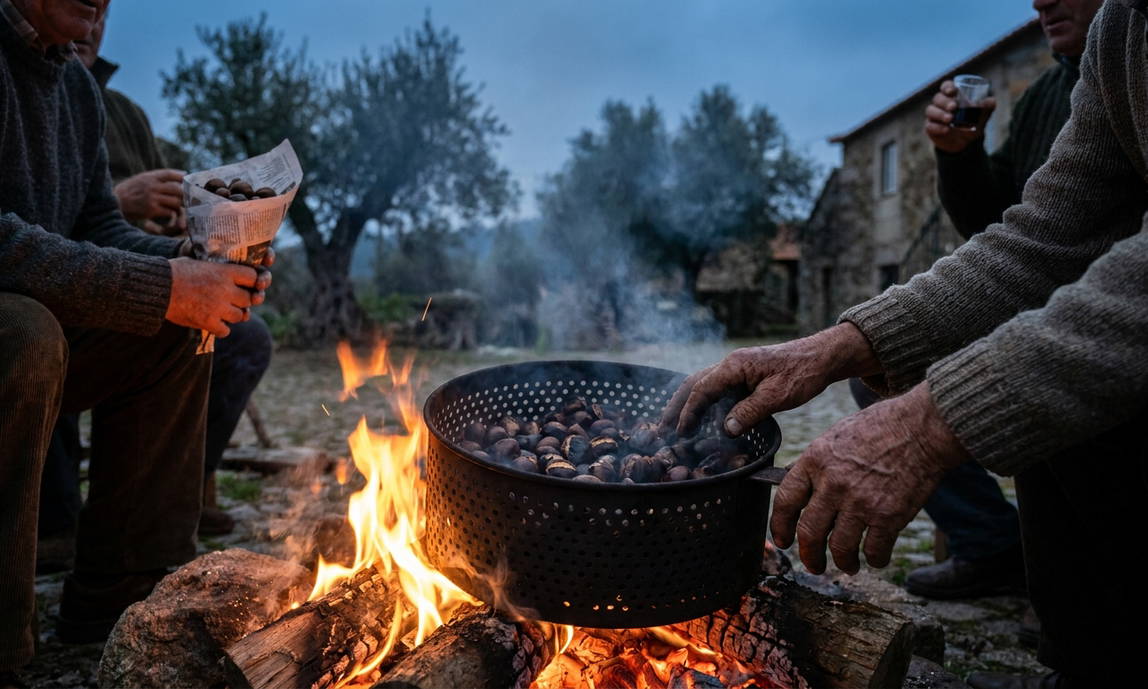
The Magusto tradition is inseparable from the St. Martin’s Day (São Martinho) festival. Historically, this celebration has its roots in ancient pagan rituals linked to the end of the harvest and the arrival of winter, which were later Christianised. On Wednesday, 11 November 2026, the whole country will come alive to perpetuate this ancestral custom. The principle is simple but deeply unifying: friends, families, and neighbours gather around large bonfires, often lit with pine needles (caruma), to roast chestnuts.
But the Magusto is not limited to chestnuts. It is also the symbolic moment to taste the year's new wine. The Portuguese traditionally accompany the chestnuts with água-pé, a slightly alcoholic drink obtained by adding water to pressed grape pomace, or jeropiga, a grape must fortified with brandy, which is sweeter. By staying in a homestay, you will not just be a spectator of these festivities. Your hosts will most likely invite you to blacken your face with the ashes from the fire, a traditional joke that symbolises joy and equality among the participants.
Let’s take a concrete example: imagine arriving at your room to rent in a small village in central Portugal. Late in the afternoon, your host, João, suggests you join him in the village square. You find yourself sharing a cone of piping hot chestnuts, wrapped in newspaper, while chatting with the locals around the fire. It is this human dimension, impossible to replicate in a standard hotel, that a homestay offers you during St. Martin’s Day Portugal 2026.
The St. Martin’s Summer: myth and climatic reality
Legend has it that one cold, rainy autumn day, a Roman soldier named Martin of Tours crossed paths with a beggar freezing in the cold. Having nothing else to offer, Martin cut his thick military cloak in two with his sword to give half to the poor man. Immediately, the rain stopped and a radiant sun broke through the clouds, warming the earth for several days. It is this meteorological miracle that the Portuguese call the 'Verão de São Martinho' (St. Martin’s Summer).
In reality, this period in November in Portugal often offers a surprising climatic break. It is not uncommon to see temperatures rise and the sun shine intensely around 11 November. However, as savvy travellers, we advise you to remain cautious. The climate in November remains autumnal and can prove very changeable, especially if you are visiting the north of the country or mountainous regions.
Here is a use case for packing your suitcase: if you have booked a homestay in Portugal in the Serra da Estrela region, use the onion-skin layering technique. Pack t-shirts and light jumpers to enjoy the sun in the afternoon, but do not forget a waterproof jacket and a good coat for the evenings around the bonfire. Your local hosts will also be able to lend you an umbrella or let you know if the Magusto evening will be held under cover in case of an unexpected downpour.
Must-visit destinations to experience the Magusto in November 2026
Alijó and Lousã: The authenticity of mountains and vineyards
If you are looking to experience St. Martin’s Day Portugal 2026 in its purest form, the northern and central regions are unmissable. In Alijó, located in the majestic Douro Valley, the Magusto takes on a special dimension thanks to the richness of the surrounding vineyards. Tasting the new wine is a serious affair there. Renting a homestay room in this region will allow you to visit family-run quintas and understand the winemaking process directly from local producers.
Further south, in the central region, the town of Lousã is famous for its mountainous landscapes and schist villages (Aldeias do Xisto). In November 2026, Lousã will organise fairs dedicated to chestnuts and honey as it does every year. The contrast between forests with warm autumn colours and the smoke from bonfires creating a mystical mist in the valleys is striking. The hosts in the region are renowned for their legendary hospitality and will not hesitate to let you taste their own production of honey or artisanal liqueurs.
Practical advice for these regions: public transport can be limited in rural areas. When booking your room to rent on Roomlala, do not hesitate to ask your future host if it is possible for them to pick you up at the nearest station or if they recommend renting a car. Very often, hosts are happy to facilitate your arrival so that your immersion begins on the right foot.
Trancoso and Golegã: Historic fairs and grandiose celebrations
For those who prefer the excitement of large traditional fairs, Trancoso, in the Guarda district, is a top destination. This fortified city organises São Martinho festivities that attract visitors from all over the region. The medieval streets fill with stalls selling local products, from ewe's cheese to smoked meats, perfectly accompanying the Magusto chestnuts. A homestay room within the walls will offer you privileged access to these festivities, allowing you to walk back after a busy evening.
But the most spectacular event in November in Portugal undoubtedly takes place in Golegã, the horse capital. The 'Feira Nacional do Cavalo', which always coincides with the St. Martin’s fair, brings together thousands of equestrian enthusiasts. The streets of Golegã transform into a true parade of Lusitano horses, riders in traditional costumes, and carriages. The scent of roasted chestnuts mingles with an equestrian atmosphere that is unique in the world.
An example of a successful stay in Golegã: Marie and Thomas, a travelling couple, booked a homestay a few kilometres from Golegã last year. Their hostess, Filipa, not only saved them from paying the exorbitant prices of local hotels that were booked out, but she also advised them on the best times to attend equestrian demonstrations without the crowds, while sharing a private Magusto in her garden with them on the evening of 11 November.
Why choose a homestay in Portugal for these festivities?
Cultural immersion: sharing beyond the accommodation
At Roomlala, we often remind people that travelling is not just about the landscapes you pass through, but is enriched by the encounters you make along the way. A homestay in Portugal takes on its full meaning during cultural events like St. Martin’s Day. By renting a simple room, you gain access to an intimate world. Your hosts become your personal guides, translating not only the language but also the social codes and traditions that often escape passing tourists.
The Magusto is, in essence, a festival of sharing. If you stay in a hotel, you might be able to buy chestnuts on the street, but you will miss the very essence of the festival: the conviviality of the home. By choosing a room to rent, it is extremely common for the host to include you in their own family circle for the evening of 11 November 2026. You will discover secret family recipes for preparing jeropiga or learn the exact technique for cutting chestnuts before roasting them so they do not burst.
To maximise this experience, here is our tip: when making your booking request on Roomlala, explicitly mention your interest in the São Martinho festival. For example, write: 'Hello, I am very curious to discover the Magusto tradition this year. Would you be willing to share a moment around this festival during my stay?' Portuguese hosts, proud of their culture, will be delighted by your proactive approach and will prepare your welcome accordingly.
An affordable and warm solution during the autumn peak season
Although November is not the high summer season, the period around 11 November sees a peak in local tourist traffic in Portugal. The Portuguese themselves travel across the country to visit their families or attend major fairs like the one in Golegã. Consequently, standard hotel prices tend to rise significantly during the week of St. Martin’s Day Portugal 2026.
A homestay is therefore the most sensible solution for your budget. Renting a homestay room costs on average 30 to 50% less than an equivalent hotel room, especially in rural areas popular for the Magusto. This substantial saving on accommodation will allow you to reallocate your budget to local experiences: buying excellent Douro Valley wines, bringing back local crafts, or treating yourself to good traditional restaurants (the famous tascas).
Furthermore, access to your host’s kitchen (an option often included in room rental listings) allows you to reduce your dining expenses. You will be able to prepare your breakfasts and some meals with fresh products bought at local autumn markets, all while asking for culinary advice from your host. It is the perfect blend of budget management and cultural enrichment.
Renting a room safely: what you need to know in 2026
The appeal of homestays in Portugal is strong, but it is essential to travel legally and safely. In Portugal, short-term rentals, including simple room rentals in a home, are strictly regulated by the 'Alojamento Local' (AL) status. Specifically, hosts who rent rooms in their own primary residence fall under the 'Quartos' category. Portuguese law authorises them to rent up to a maximum of 3 rooms simultaneously, thus guaranteeing the maintenance of an intimate and family atmosphere, far from mass-market hospitality.
The year 2026 marked a major turning point in the regulation of such accommodation. Since May 2026, the new European directive (Regulation 2024/1028) has been fully implemented in Portugal, imposing strengthened control over short-term rentals. From now on, it is formally mandatory for every rental listing to display a valid Alojamento Local registration number. Local authorities carry out automated cross-checks to combat illegal hosting and ensure traveller safety (fire standards, hygiene, insurance).
At Roomlala, we take this compliance very seriously. We support our Portuguese hosts in updating their listings with their official AL number. As a tenant, you can book your room to rent with complete peace of mind on our platform. We advise you to always check for the presence of this number on the listing before confirming your stay for St. Martin’s Day Portugal 2026. This ensures not only that you are compliant, but also that you are covered by the appropriate insurance in case of any unforeseen circumstances.
Finally, one last point of vigilance: planning ahead. As Magusto festivities attract many visitors, the best homestays, particularly those located near Golegã, Lousã, or in the Douro Valley, are booked months in advance. To guarantee your cultural immersion and not find yourself without quality accommodation, we strongly recommend that you secure your booking on Roomlala by the end of the summer. You will then have all the time you need to prepare for your trip and chat with your future host about the festivities that await you.
There are no comments yet.
Leave a comment
You must be logged in to post a comment.