
 SEARCH
 LIST YOUR PROPERTY

Autumn 2026 marks a turning point for the Spanish property market. With the announcement of the extension of the 'stretched' zones, many Spanish homeowners and international investors are asking legitimate questions about the profitability of their properties. Faced with increasingly strict regulations on entire homes, one solution stands out: renting out individual rooms.
At Roomlala, we support thousands of hosts every day who are looking to optimise their rental income while scrupulously complying with the law. The good news is that the homestay or room-by-room shared housing model still offers remarkable legal flexibility compared to the standard rental of a complete flat.
Read also: Rising rental costs in Switzerland (Winter 2026): Renting out a room to balance your budget, Shortage of student accommodation in Belgium in 2026: Homestay, the supportive alternative and Youth Rental Voucher autumn 2026: How to finance your shared housing in Spain
In this article, we will explain the implications of the extension of the Spanish 'stretched' zones in 2026. We will look at why and how renting out a part of your property generally avoids the imposed caps, while highlighting regional points of vigilance, particularly in Catalonia, so that you can rent with complete peace of mind.
The extension of the Spanish 'stretched' zones in 2026: What is changing this autumn
The concept of 'zonas tensionadas' (stretched zones) was introduced to try to regulate a property market under high pressure, where demand far exceeds supply. This autumn 2026, the map of these zones is expanding significantly. The government has officially validated the addition of new municipalities, thus changing the rental landscape for many owners.
In concrete terms, new municipalities in the Basque Country are joining the red list, while Catalonia confirms the maintenance and extension of its system to 271 municipalities. In these specific geographical areas, the law imposes strict rent control in Spain. This means that when renewing a lease or signing a new contract for an entire home, the landlord can no longer set the rent freely: they must refer to a benchmark index or the previous tenant's rent.
To illustrate this change, let's take a concrete example. Imagine you own an 80-square-metre flat in San Sebastián (Basque Country). Up until now, you were renting this entire property for 1,300 euros per month. With the city's new classification as a 'stretched' zone, the benchmark index could cap this rent at 950 euros. For many owners, this forced reduction represents a significant loss of earnings that calls into question the viability of their investment.
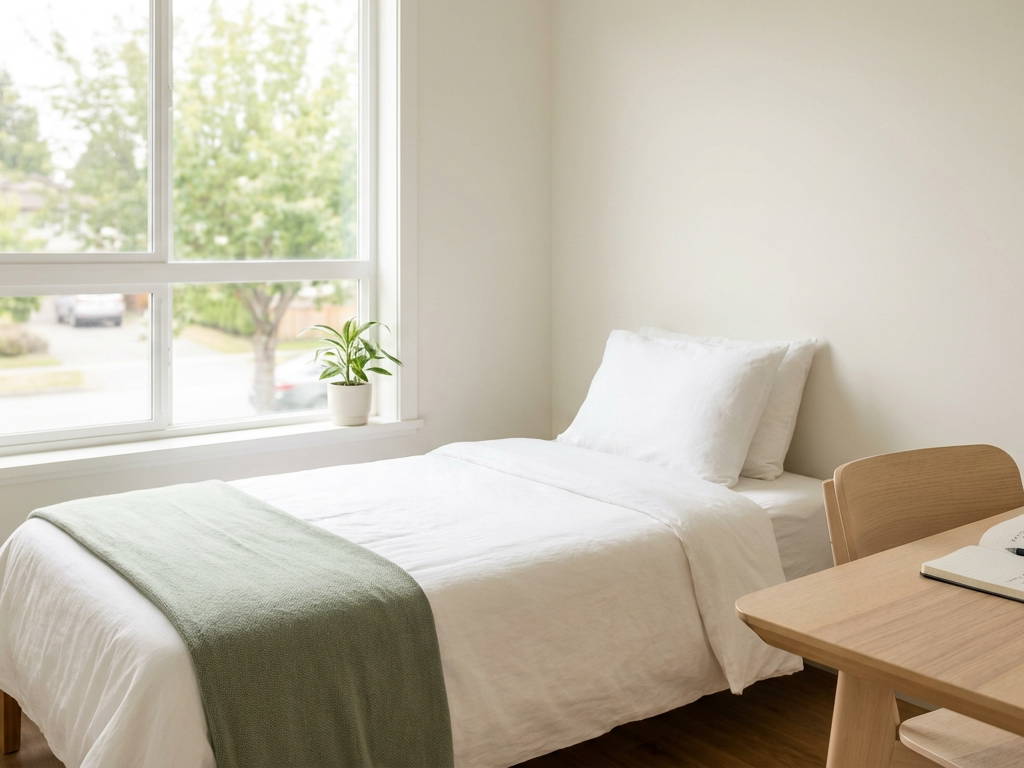
Faced with this rent control in Spain, which is hitting leases for entire homes head-on, owners are looking for legal alternatives. This is where renting out individual rooms comes into play. By changing the nature of the rental agreement, it is possible to fall outside the scope of this strict restriction, while meeting strong demand from students and young professionals.
- Basque Country: Integration of major new municipalities into the list of 'stretched' zones this autumn.
- Catalonia: Confirmation of 271 municipalities subject to strict rules.
- Direct impact: Mandatory rent caps for leases of entire homes.
- The alternative: Renting by the room to regain flexibility.
Ley de Vivienda room rental: Why individual rooms are an exception
The Spanish Civil Code vs. the Urban Leases Act (LAU)
To understand the impact of the Ley de Vivienda on room rentals, you have to delve into the subtleties of Spanish property law. In Spain, renting an entire home as a primary residence is governed by the Ley de Arrendamientos Urbanos (LAU). It is this law, recently amended by the new Ley de Vivienda, that imposes rent caps in 'stretched' zones and provides strong protection for the tenant over the long term.
However, when it comes to room rental legislation in Spain, the situation changes completely. Renting only part of the property (an individual room with access to shared areas) is generally not subject to the LAU, but falls under the Spanish Civil Code (Código Civil). This legal distinction is fundamental, as the Civil Code is based on the principle of contractual freedom between the parties.
In other words, because the contract concerns shared usage rather than the transfer of a complete and independent dwelling, the legislator considers it a private agreement. At Roomlala, we often remind our hosts that this nuance is their best ally. It allows for homestay or shared housing contracts without being trapped by the constraints of the LAU, thus offering a breath of fresh air to owners.
Freedom to set prices and flexibility of contracts
Thanks to being subject to the Civil Code, room rental legislation in Spain offers valuable freedom. The landlord and the tenant can freely agree on the room's rent, without having to consult the benchmark price index for the 'stretched' zone. This pricing freedom allows the price to be adjusted according to the services offered (quality furniture, high-speed internet, cleaning, etc.).
Take the case of Carlos, owner of a large flat in Valencia (who is closely watching the regulations). If he rents his entire flat, he could be limited to 1,000 euros per month in the event of it being classified as a 'stretched' zone. By choosing to rent his 3 rooms individually via Roomlala at 450 euros each, he generates 1,350 euros per month. He thus maintains his profitability while offering affordable accommodation to three separate students.
Besides the price, the contract duration is also flexible. Unlike the LAU, which imposes 5 to 7-year leases for entire homes, the room rental contract under the Civil Code lasts exactly the time agreed between the parties. You can rent for 3 months, 9 months (ideal for the academic year), or a year, which allows you to recover the use of your room or your home much more easily if needed.
'Zonas tensionadas' shared housing: Points of vigilance and regional exceptions
The specific case of Catalonia in 2026
While the general rule of the Civil Code offers great freedom, it is crucial to remain informed about regional exceptions. In the context of 'zonas tensionadas' and shared housing, Catalonia is a notable exception. Since 1 January 2026, this autonomous community has been applying a strict regional law (Law 11/2025) which specifically aims to regulate room rents and temporary rentals.
Catalan legislators have noticed that many owners were dividing their flats to bypass the rent caps. To remedy this, the Catalan law now stipulates that in its 271 'stretched' zones, the sum of the room rents in the same flat cannot exceed the maximum price authorised for the entire home according to the benchmark index. This is a radical change for hosts in this region.
For example, if you are a Roomlala host in Barcelona and your flat's benchmark index sets a maximum rent of 1,200 euros, you cannot rent 4 rooms at 400 euros each (i.e. 1,600 euros in total). You will need to adjust the price of each room so that the total remains less than or equal to 1,200 euros. It is therefore imperative for our Catalan users to calculate their cap precisely before publishing their listings.
The national draft decree: What you need to know
Beyond Catalonia, the Spanish central government is closely monitoring the shared housing phenomenon. In the summer of 2026, the Ministry of Housing (Mitma) announced a draft decree aimed at extending the Catalan model to the entire national territory. The objective of this decree is to cap the sum of room rents at the maximum price authorised for the entire home in all 'stretched' zones in Spain.
However, and this is an essential point of vigilance for you: as of today (autumn 2026), this national measure is not yet definitively approved or in force. The legislative process in Spain can be long and subject to amendments. Consequently, outside of Catalonia, room rental remains for the moment governed by the flexibility of the Civil Code.
At Roomlala, we advise you to take advantage of this window of opportunity while anticipating the future. If you rent rooms in Madrid, Seville, or Bilbao, you can still set your prices freely. Nevertheless, we recommend that you offer fair and measured rents, in order to build tenant loyalty and prepare yourself smoothly for a possible national regulation in the months or years to come.
Renting on Roomlala: The winning strategy for owners in Spain
Faced with this shifting legislative landscape, renting a room in your home or offering shared housing remains the most resilient strategy for owners in Spain. By choosing to rent out a part of your primary or secondary residence, you retain control of your property. You avoid the long-term constraints imposed by standard leases, and you keep the freedom to choose your tenants according to your preferences.
At Roomlala, we understand that legal and financial security is your priority. That is why our platform is designed to make your life easier. We provide you with room rental contract templates adapted to Spanish legislation (under the Civil Code regime), thus guaranteeing that you are compliant with current regulations, whether you are in a 'stretched' zone or not.
Furthermore, profitability should not come at the expense of peace of mind. By using Roomlala, your payments are secured online, and you benefit from our support in the event of a dispute. Renting a room also means supporting the collaborative economy, helping a student find housing near their university, and sharing enriching life moments, all while generating an essential additional income in the face of inflation.
In conclusion, although the extension of the Spanish 'stretched' zones in 2026 makes renting out entire homes more complex, room rental remains an oasis of flexibility. With the notable exception of Catalonia, price freedom remains the norm. Do not wait any longer to transform your unoccupied square metres into a profitable and human opportunity: publish your listing on Roomlala and join our community of serene and informed hosts.





There are no comments yet.
Leave a comment
You must be logged in to post a comment.