
 SEARCH
 LIST YOUR PROPERTY
Autumn often brings the start of the new academic year, falling temperatures, but also the dreaded arrival of tax assessments. From the end of August 2026, many homeowners will discover the amount of their 2026 property tax. And this year again, the bill promises to be steep with another widespread increase. Faced with this growing tax burden, it is only natural to look for sustainable solutions to preserve your purchasing power. At Roomlala, we support thousands of hosts every day who have found the perfect solution: renting out a room in their own home. This approach, which is both community-minded and lucrative, allows you to generate a significant secondary income for a host. Better still, under certain very specific conditions, this income can be totally exempt from tax. How can you transform that spare room gathering dust into a real anti-inflation shield? We explain everything you need to know about the tax situation for homestay furnished rentals in 2026, so you can approach the tax season with peace of mind.
2026 property tax increase: Why is the bill getting even heavier?
Receiving the 2026 property tax assessments, sent from the end of August for taxpayers not on a monthly payment plan, is likely to cause some frustration. This year, the economic climate continues to directly impact local taxation. Indeed, property tax is undergoing another increase with an automatic national revaluation of cadastral bases of at least +0.8%. This increase, indexed to inflation, applies systematically across the entire French territory, regardless of local decisions.
Read also: Generalisation of the CIN in Italy by 2026: What are the requirements for renting out a room?, 2026 Personal Income Tax Declaration: Tax deductions for renting out a homestay in Spain and Increase in the council tax surcharge in 2026: Renting out a room long-term to make your property pay for itself
But that is not all. Added to this state-revalued base are any rate increases voted for by municipalities and inter-municipal authorities. Many municipalities, faced with rising operating costs and the need to finance the ecological transition, have chosen to increase their tax rates in 2026. The combination of these two factors leads to a significant increase in the final amount to be paid for many households.
Let's take a concrete example: if your rental base was 3,000 euros last year, it automatically goes up to 3,024 euros with the national revaluation. If your municipality also decides to increase its rate by 2 points, the difference on the final bill will quickly add up to tens or even hundreds of euros. Faced with this situation, it is becoming urgent for homeowners to find levers for financial optimisation to offset this unavoidable expense.
Renting a room in your home: The ideal solution for a host's secondary income
Responding to ever-increasing rental demand
While property tax is rising, another phenomenon is intensifying in France: the housing crisis. Students, young professionals, and seasonal workers are finding it increasingly difficult to find an affordable roof over their heads, particularly in large cities and high-demand areas. Renting out an unoccupied furnished room in your main residence is a direct and civic-minded response to this issue. By opening your door, you provide a safe and warm housing solution to someone who is in dire need of it.
At Roomlala, we see a spectacular rise in searches for homestays every year. This way of life is popular due to its financial accessibility for the tenant and the human dimension it offers. Whether you have a child's bedroom that is now empty, or a spare room used only two weeks a year, this space represents untapped potential. Transforming it into a living space for a student allows you to give this room a new purpose while creating social bonds.
A secure and regular secondary income
Beyond the human aspect, renting a room in your home is a formidably effective financial lever. This host's secondary income is ideal for cushioning, or even totally cancelling out, the impact of the 2026 property tax. By renting your room for a few hundred euros per month, you can quickly accumulate an annual sum that far exceeds the amount of your local taxes.
Imagine you rent a 12-square-metre room in Bordeaux for 350 euros per month including utilities. Over a 9-month university year, that represents a gross income of 3,150 euros. This sum easily covers the national average for property tax, and even leaves you with a surplus to fund your hobbies, renovation work, or cope with inflation. Furthermore, using a secure platform like Roomlala guarantees you reliable payments and a clear contractual framework, thus avoiding any nasty surprises.
Furnished rental taxation: How to benefit from tax exemption in 2026?
Strict conditions related to the accommodation and the tenant
The great strength of homestay rentals lies in their extremely favourable tax framework. Indeed, Article 35 bis of the General Tax Code provides for a total tax exemption on the income generated, provided that very specific criteria are met. The first essential condition is that the room being rented must be an integral part of your main residence. It must be a room in your own living space, where the tenant generally shares access to common areas (kitchen, bathroom).
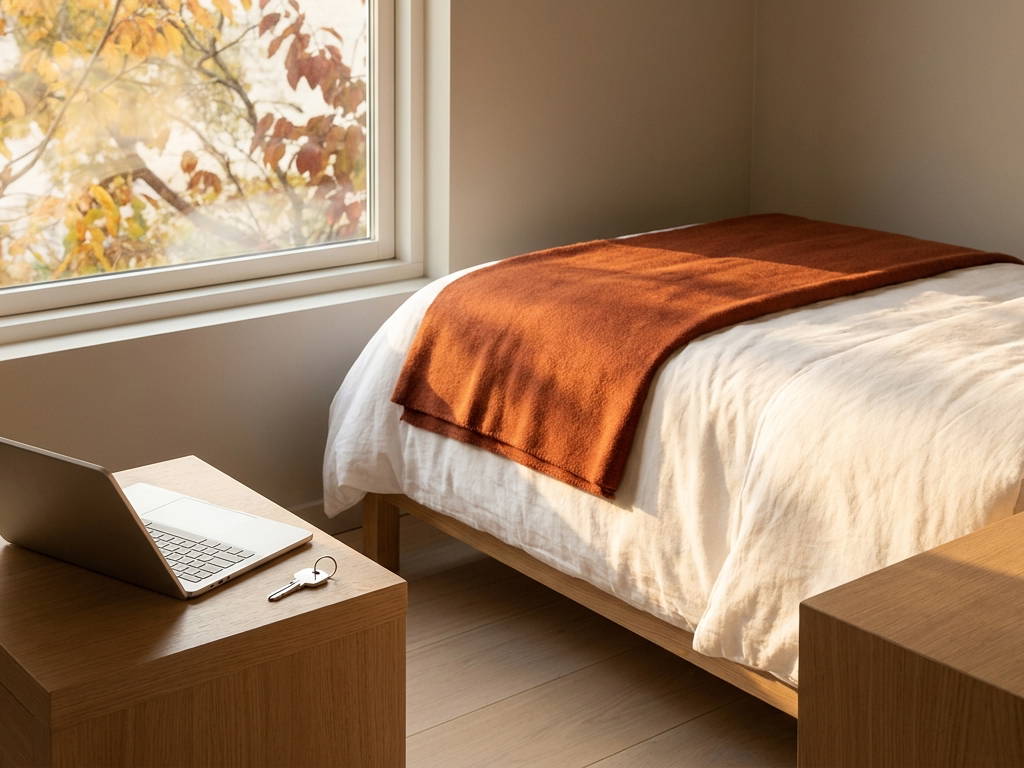
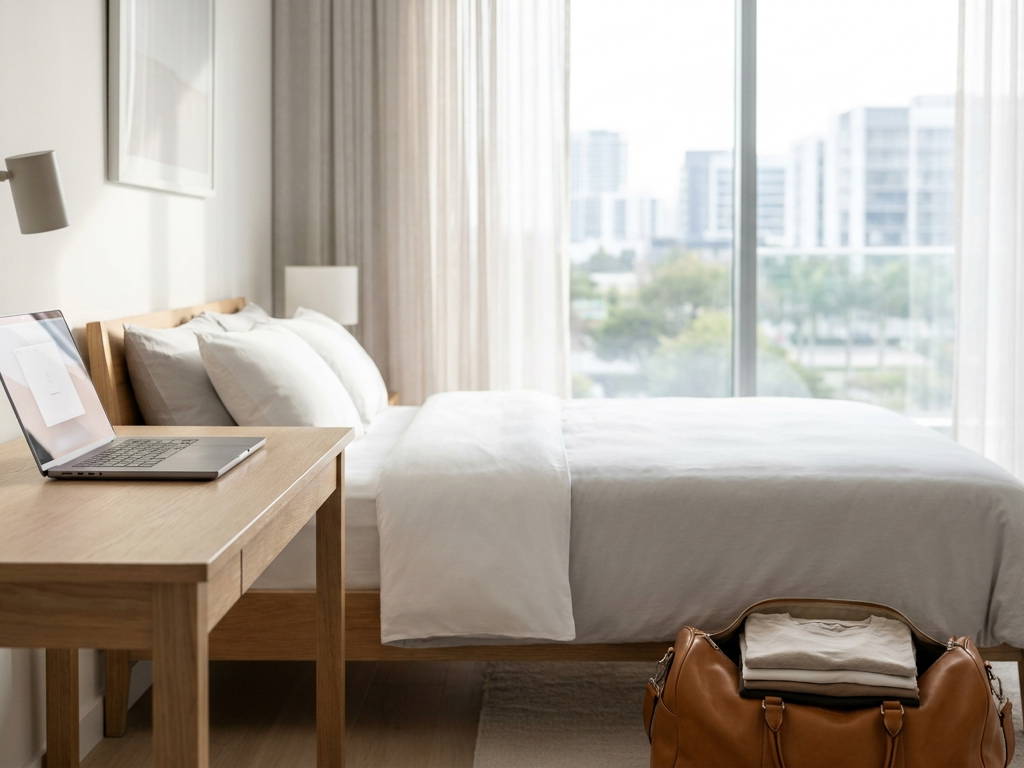
The second condition concerns the tenant themselves: the room must constitute their main residence. However, there is a notable and very practical exception: if your tenant is a seasonal worker, the room can be considered their temporary residence and qualify you for the exemption. Finally, the room must necessarily be rented furnished, meaning it must contain all the elements essential for daily life (bed, bedding, storage, table, chair, lighting, etc.), in accordance with the list set by law.
Reasonable rent caps not to be exceeded in 2026
For this furnished rental tax regime to remain a housing aid tool and not become an instrument for speculation, the tax authorities impose a price limit. To benefit from tax exemption in 2026, the annual rent excluding charges that you set must not exceed what are known as reasonable rent caps. These caps are re-evaluated each year and published in the Official Bulletin of Public Finances (BOFiP).
For the year 2026, the annual rent caps per square metre of living space, excluding charges, are set at:
- 215 euros per square metre in the Île-de-France region.
- 159 euros per square metre in other French regions.
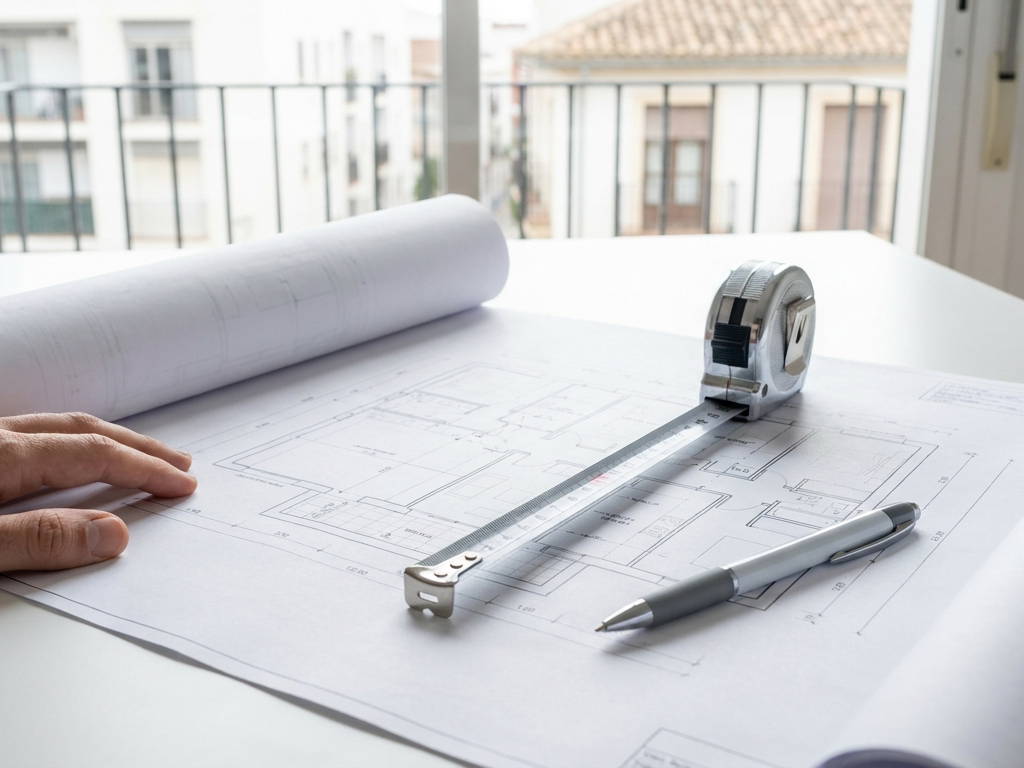
Let's do a simple calculation. If you live in Toulouse (outside the Île-de-France region) and you rent out a 15-square-metre room, the annual rent excluding charges must not exceed 2,385 euros (15 x 159). Over 12 months, this represents a maximum monthly rent excluding charges of 198.75 euros to maintain total exemption. To this amount, you can of course add a provision for charges (water, electricity, internet) which must correspond to the actual expenses.
Points of vigilance: Avoiding traps to maintain your exemption
The risk of requalification as BIC income
It is crucial to understand that adhering to the rent caps is not a simple recommendation, but a strict obligation. If the set rent exceeds the legal cap of 215 euros or 159 euros per square metre depending on your area, even by just one euro, the tax penalty is final: the tax exemption for room rental is completely lost. There is no pro-rata or partial exemption.
In this scenario, all of your rental income becomes taxable under the Industrial and Commercial Profits (BIC) category. You will then have to declare these sums to the tax authorities. If your annual receipts are less than 77,700 euros, you will by default fall under the micro-BIC regime, which entitles you to a flat-rate allowance of 50% for expenses. Although this allowance is attractive, it remains less advantageous than total exemption. It is therefore essential to correctly calibrate your rent when drafting the lease.
The concept of independence of the accommodation and the duration of the scheme
Another common trap concerns the layout of the premises. For the exemption to work, the rented room must not be totally independent accommodation. If it is a studio apartment at the bottom of your garden, a maid's room under the roof with its own independent entrance from the building's common areas, or a space with its own kitchen and bathroom without any connection to your living space, the tax authorities will consider it a separate dwelling. The Article 35 bis exemption will not apply, and you will be taxed under the standard furnished rental regime.
Finally, keep in mind the temporality of this tax loophole. The tax exemption scheme provided for by Article 35 bis of the General Tax Code has been extended by Parliament, but it is currently in force until 31 December 2026. Although it is very often renewed due to its social utility in the face of the housing shortage, it will be necessary to remain attentive to future finance laws. In the meantime, at Roomlala, we strongly encourage you to take advantage of this opportunity in 2026 to calmly face your property tax while having a wonderful human experience.

There are no comments yet.
Leave a comment
You must be logged in to post a comment.