
 SEARCH
 LIST YOUR PROPERTY

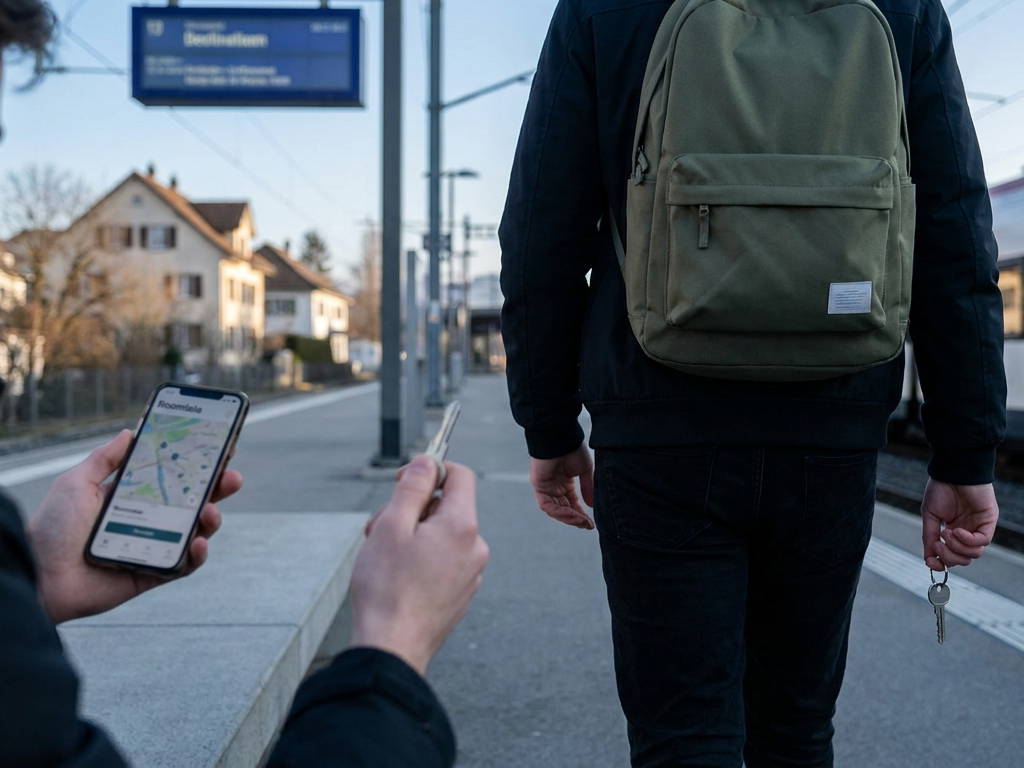
As the 2026 Swiss academic year approaches, a wave of concern is sweeping through Swiss campuses. Finding a roof over their heads has become a real obstacle course for thousands of young people. At Roomlala, we see the direct consequences of this unprecedented situation every day: the shortage of student housing in Switzerland is worsening, leaving many students in total uncertainty just a few weeks before the start of classes.
In major university cities like Geneva, Lausanne, or Zurich, housing tension has reached historic highs. Waiting lists for student halls of residence are growing inexorably, while apartments on the open market are being snapped up at prohibitive prices. Students, often with limited budgets, find themselves on the front line of this housing crisis that seems to be setting in for the long term.
Read also: Housing crisis: Renting a room to an apprentice, the solidarity-based solution for 2026 in French-speaking Switzerland, Shared housing in Wallonia 2026: Domiciliation and Cohabitant Status and LMNP reform and 2026 EPC rules: Why homestays are becoming the safe haven for hosts
Yet, in the face of this bleak outlook, supportive and affordable alternatives are emerging strongly. Renting a room in a homestay is no longer seen as just a plan B, but as a vital, human-centric solution that is perfectly regulated by law. We explain why sharing daily life with a local resident is the best response to the rise in Swiss rents for this new academic year.
Understanding the property crisis and the rise in rents in Switzerland
A stable reference rate, but rents are soaring
To grasp the scale of the problem, we must look at current economic mechanisms. In June 2026, the Federal Office for Housing (FOH) announced that the mortgage reference interest rate would be maintained at 1.25%. In theory, this stability should reassure tenants. However, it is crucial not to be misled: this stagnation in the rate absolutely does not translate into an overall drop in rents; quite the contrary.
The reality on the ground is much harsher, particularly for new leases. Switzerland suffers from a chronic deficit of new builds. Faced with sustained population growth and the undeniable attractiveness of economic and university hubs, demand is exploding. This profound imbalance between supply and demand is causing a continuous rise in Swiss rents on new lease agreements, heavily penalising young people entering the market.
In Geneva, Lausanne, and Zurich, prices are reaching record levels. Property management agencies receive dozens, if not hundreds, of applications for every available studio. In this ultra-competitive context, a student application, even one backed by solid guarantors, often struggles to compete with applications from young professionals or couples with regular and high incomes.
A totally saturated student rental market
The situation is all the more critical as infrastructure dedicated to students is saturated. Historic foundations and cooperatives, such as the FMEL (Foundation for Student Housing in Lausanne) or the WOKO in Zurich, are literally being stormed. Waiting times are now counted in semesters or even years, leaving many first-year enrolees without any prospect of institutional accommodation.
On the open market, the situation is hardly any brighter. Finding a simple room in a traditional shared housing arrangement is a miracle. Currently, a standard room on the open market in a large Swiss university city often goes for between 800 and 1,200 CHF per month. These astronomical amounts severely cut into students' budgets, sometimes forcing them to work part-time to the detriment of their studies, or worse, to drop out of their course.
This is precisely where the search for a standard student shared housing in Geneva or Lausanne shows its limitations. Solidarity leases, the requirements of estate agencies, and the rarity of large apartments make the creation of new shared housing extremely difficult. It is therefore urgent to turn to the existing and under-utilised property stock: the unoccupied rooms in private homes.
Homestays: the cure for the student housing shortage in Switzerland
Faced with this alarming situation, at Roomlala, we are convinced that the solution lies in intergenerational mutual aid and the optimisation of space. Renting a room in a homestay offers incomparable flexibility. Unlike traditional leases, which require a long-term commitment and heavy administrative procedures (a three-month rental deposit, an extract from the Debt Collection Office, etc.), homestays allow for quick installation and contracts adapted to the academic rhythm (by the semester or the year).
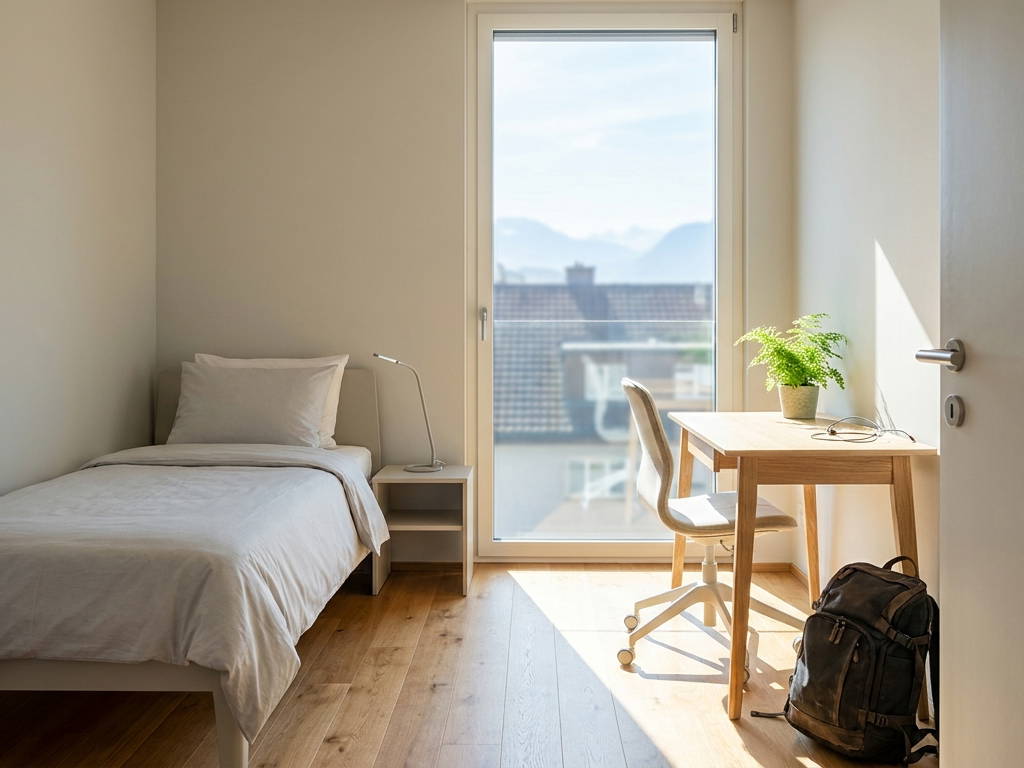
The financial aspect is obviously the number one argument. By renting a room from a private individual, students access furnished accommodation, often with all bills included (water, electricity, internet), for a rate significantly lower than open market prices. This budget control is essential for allowing young people to focus fully on their academic success without living in the anxiety of difficult ends to the month.
Let's take a concrete example: Lucas, a Master's student at the UNIGE (University of Geneva). After months of unsuccessful searches for student shared housing in Geneva or Lausanne, he opted for a homestay via Roomlala. For 650 CHF per month, he stays with Sylvie, a dynamic retiree who has had a large empty room since her children moved out. Not only has Lucas halved his housing budget, but he also benefits from a quiet environment, which is conducive to revising.
Beyond the economic aspect, it is the human adventure that comes first. Student isolation is a growing scourge. Arriving in a new city, sometimes a new country, can be unsettling. Living in a homestay ensures a friendly presence, advice on local life, and sometimes lovely moments of sharing over a meal. It is a supportive and warm response to the coldness of the property crisis.
The Swiss legal framework: what you need to know about subletting
A fundamental right preserved by the 2024 votes
It is natural to have questions about the legality of this practice. At Roomlala, we want to reassure you: subletting, and by extension the renting of a room in a home by a main tenant, is a fundamental right in Switzerland. This right is, in fact, solidly anchored and guaranteed by Article 262 of the Swiss Code of Obligations.
This legal framework was even recently reaffirmed by the citizens themselves. Indeed, the legal landscape remains very favourable to subletting following the federal votes of 24 November 2024. During this decisive vote, the Swiss rejected (with 51.58% against) a controversial draft law that aimed to drastically restrict the conditions for subletting. This vote testifies to the population's attachment to this rental flexibility, which is rightly perceived as an essential social cushion.
This democratic victory now allows tenants to continue to offer their free rooms with complete peace of mind for the 2026 Swiss academic year. However, this right comes with specific duties that it is imperative to respect to ensure harmonious and legal cohabitation.
The golden rules for legal and peaceful subletting
If you are a main tenant and you wish to host a student, there are crucial points to observe. The first absolute rule is transparency towards your landlord or property management agency. You have a legal obligation to inform them of your intention to sublet a room and to communicate the terms of this subletting (identity of the sub-tenant, amount of rent, duration).
It is important to note that the landlord can only oppose this subletting if they have a valid and justifiable reason. But be careful, Swiss law is very strict on one point: the subletting must under no circumstances generate an abusive profit. The rent you ask the student must imperatively correspond to the pro-rata of the surface occupied compared to the main rent you pay.
To be perfectly precise, a slight increase is tolerated by case law if you provide furniture and equipment. This increase for the wear and tear of furniture and utilities (Wi-Fi, electricity) is generally between 15% and 20% maximum of the rent calculated pro-rata. Respecting this rule is the guarantee of an ethical, supportive, and legally unassailable approach.
Hosts and students: how to succeed in your cohabitation for the 2026 academic year?
For this anti-crisis solution to work, it must be beneficial to both parties. On the side of the hosts (whether they are owners or main tenants), renting a room is an excellent way to cope with inflation. Sharing housing-related costs allows one to preserve their purchasing power and make a profit from an unused room, all while providing an immense service to young people.
To make this cohabitation a success, communication is key. From the first exchanges on Roomlala, we advise you to clearly define the rules of house life. Here are some essential elements to discuss before signing the contract:
- Use of common areas: Define the access times to the kitchen, bathroom, and the use of the washing machine.
- Visitors: Can the student invite friends or family? If so, how often and under what conditions?
- Cleaning: Establish a clear division of household chores to avoid any frustration.
- Lifestyle: Discuss your respective habits (getting up/going to bed times, need for silence to study or work remotely).
Let's take the case of the Morel family in Lausanne. By hosting Sofia, a student at the EPFL, they drafted a small, informal but clear shared housing charter. Sofia contributes to the house expenses to the tune of 700 CHF per month, which helps the Morels to absorb the rise in their own bills. In return, Sofia has an exceptional living environment, far from the stress of the shortage of student housing in Switzerland.
By using a trusted platform like Roomlala, you secure your procedures. We provide you with contract templates adapted to Swiss legislation, a secure payment system, and a dedicated team to assist you. For the 2026 academic year, do not let the housing crisis spoil the future of our students: open your doors, share your daily life, and take an active part in a collaborative and deeply human economy.



There are no comments yet.
Leave a comment
You must be logged in to post a comment.