
 SEARCH
 LIST YOUR PROPERTY
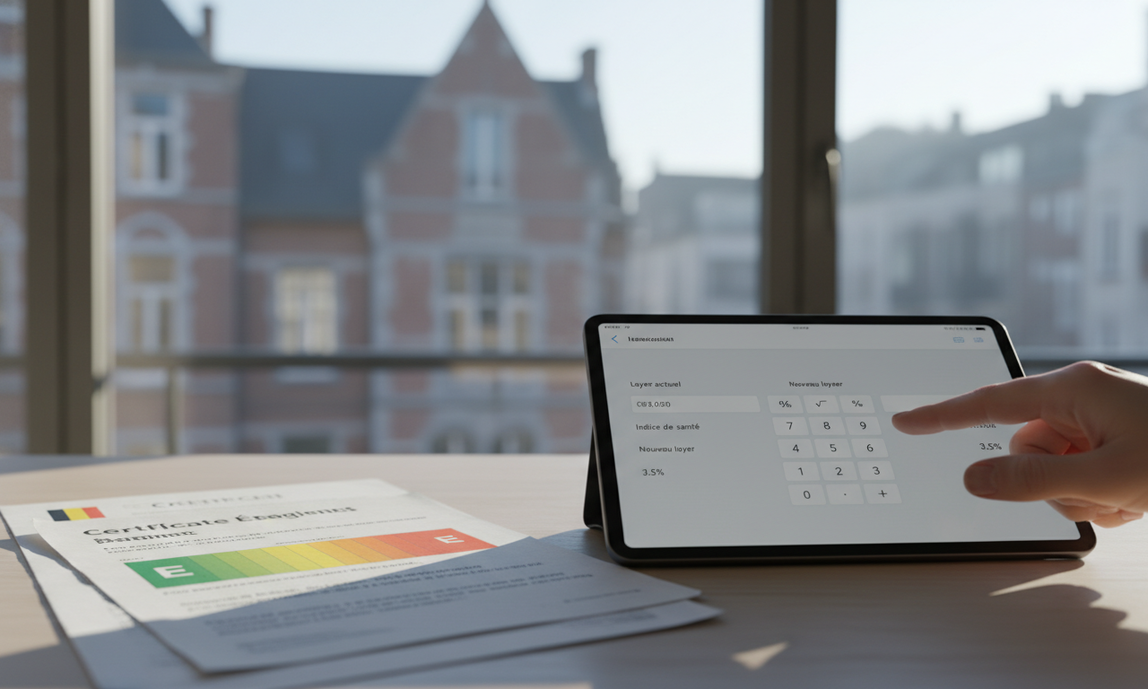
Hello to all Belgian tenants and hosts! In this month of May 2026, the housing market continues to evolve, and the question of rent remains at the centre of all concerns. While inflation has seen historic peaks in recent years, leading to emergency government measures, the situation has now stabilised. However, the rules of the game have definitely changed. At Roomlala, we know that the legislation surrounding rentals and shared housing can sometimes feel like a real maze. This is particularly true when it comes to crossing two hot topics: annual rent indexation and the famous EPC (Energy Performance Certificate) score. Whether you are a student sharing a large flat in Liège, a young professional in coliving in Brussels, or a host offering rooms in Antwerp, you are directly concerned by these regulations. In this comprehensive article, we will decode for you the impact of new energy standards on your rent indexation in 2026. The total freeze is over, but beware: the return to normal is strictly regulated!
Shared housing and rent indexation: the basic rules in 2026
In Belgium, it is essential to remember that shared housing is subject to the classic rules of residential leases. Whether you have signed a single lease with a solidarity clause or individual contracts for each room, the law protects tenants in the same way. Rent indexation is therefore no exception: it is strictly conditioned by the energy quality of the home, as evidenced by the EPC certificate. This document, which has become the cornerstone of the rental market, assesses the energy consumption of your home on a scale ranging from A (very energy-efficient) to G (energy sieve).
Read also: Shared housing in Wallonia 2026: Domiciliation and Cohabitant Status, Shared housing in Ontario: How the tenancy law exemption is encouraging hosts in 2026 and Rent control: New urban areas affected in summer 2026
To fully understand the situation in 2026, we need to take a step back. Remember: faced with the energy crisis, the government had introduced a temporary freeze on indexation for the most energy-intensive homes between late 2022 and late 2023. The goal was clear: to protect the purchasing power of tenants who were already feeling the full force of the explosion in gas and electricity bills. Today, in 2026, this strict freeze is well and truly over. Indexation is once again authorised for all EPC scores, in all three regions of the country. However, this absolutely does not mean a return to the classic mathematical formula for energy sieves!
Indeed, the legislator has put in place a correction mechanism that remains fully applicable in 2026. Why? Simply to prevent hosts from catching up all at once on the indexation lost during the freeze period. Without this mechanism, a tenant living in a home rated G would have seen their rent explode overnight as soon as the ban was lifted. The law therefore imposes a smoothing effect, capping the increase to protect tenants while allowing hosts to partially follow inflation.
Practical example of use: Let's imagine you are renting a house in shared housing in Namur with an EPC F. Your host cannot simply take the 2022 rent and apply the total accumulated inflation up to 2026. They must use the corrected formula provided by the region, which neutralises the inflation of the freeze year. At Roomlala, we always encourage hosts to use official calculators to ensure fair and legal indexation, thus avoiding any conflict with their tenants.
The impact of the EPC score on indexation according to your region
As Belgium is a federal state, housing competence is regionalised. This means that indexation rules linked to the EPC differ depending on whether your shared housing is located in Brussels, Wallonia, or Flanders. At Roomlala, we detail the specificities of each region for this year 2026.
In Brussels: mandatory registration and correction factor
In the Brussels-Capital Region, the rules are particularly strict to protect urban tenants. For homes with a good EPC (A, B, C, or D), indexation is performed normally at 100%. However, for EPC E, F, and G, a correction factor still applies in 2026. This factor mathematically reduces the authorised indexation percentage, thus penalising hosts who have not invested in the energy renovation of their property.
But that is not all! The Brussels region imposes two conditions sine qua non for a host to be able to request indexation. Firstly, the shared housing lease must be registered with the tax office. Secondly, a valid EPC certificate must have been handed over in person (or by proven electronic means) to the tenants before the indexation request. If one of these two conditions is missing, the indexation is simply illegal and the tenant has the right to refuse it.
Practical example of use: You are three students in a flat in Ixelles (EPC F). Your host sends you an email to index the rent. Before paying, you check two things: did you receive the EPC certificate when signing the lease? Is the lease registered on MyMinfin? If the answer is yes, you can check the calculation via the Brussels region website, which will automatically apply the correction factor for EPC F. If the lease is not registered, you can kindly remind your host that their request is premature.
In Wallonia: a specific calculation method for energy sieves
On the Walloon side, the philosophy is similar but the calculation method differs. For homes with an EPC A, B, or C, indexation is total. For homes rated D, E, F, G, or those that simply do not have an EPC certificate, Wallonia has put in place a specific calculation method. This calculation uses a base rent and a base index adapted to the 2022-2023 period, which de facto cuts part of the inflation to protect tenants of energy sieves.
It is crucial to note that in Wallonia, the absence of an EPC certificate is heavily penalised. Without this precious sesame, the host is treated the same as the worst energy scores (G) and is subject to the most disadvantageous calculation method. It is a strong incentive for transparency and for the renovation of the Walloon building stock, which is often ageing.
Practical example of use: You are renting a room in a homestay in Mons. The host announces an indexation based on the classic formula. You ask them for the EPC, which they admit they did not have done. In this case, you have the right to contest their calculation. In Wallonia, without an EPC, they must use the modified formula which will considerably reduce the amount of the increase. This is a fundamental right of the tenant that we fiercely defend at Roomlala.
In Flanders: the EPC certificate at the heart of the indexation system
In Flanders, the energy certificate is called the EPC (Energieprestatiecertificaat). The Flemish Region has also adopted a correction factor system to protect its tenants. Homes with an A+, A, B, or C label benefit from full indexation. However, for labels D, E, F, or in the absence of an EPC certificate, a strict correction factor is required during the 2026 calculation.
Flanders distinguishes itself by its desire to quickly eradicate energy-intensive homes. The Flemish government has also linked indexation to other renovation obligations (the famous renovatieverplichting). Thus, a Flemish host has every interest in insulating their shared housing, not only to be able to index their rent, but also to respect global health standards that are tightening year after year.
Hosts and tenants: how to apply or check the indexation?
Now that we have clarified the regional rules related to the EPC, it is time to look at the legal procedure. For yes, rent indexation follows very precise formal rules. A procedural error can render the request void, to the great relief of tenants and the great frustration of hosts. At Roomlala, we rely on education so that both parties can find common ground serenely.
The strict legal procedure for hosts
First golden rule, and not the least: indexation is never automatic! Even if the lease provides for an annual indexation clause (which is the case in 99% of contracts), the host must mandatorily make a written request to their tenants. This request can only take place on the anniversary date of the lease's entry into force, or after this date. It is based on the evolution of the health index (and not the classic consumer price index).
A crucial point of vigilance concerns retroactivity. Belgian law is very clear: a host who forgets to request indexation on the anniversary date can catch up later, but with a legal retroactivity limited to a maximum of 3 months preceding the month of the request. Any request going back more than three months is illegal and should not be paid by the tenant.
Practical example of use: The anniversary date of your shared housing lease is 1 February. Your host forgets to index and realises it in May. On 15 May, they send you a letter requesting indexation. They have the right to claim the supplement for the current month (May) and for the three preceding months (April, March, February). However, if they wake up in September, they will only be able to claim the supplement for September, August, July, and June. The months of February to May will be definitively lost for them.
Essential points of vigilance for tenants
As a tenant or roommate, you should not blindly accept the new amount calculated by your host. To err is human, and calculations integrating EPC correction factors are complex. Your first reflex should be to go to the official rent calculator of the Belgian government (Statbel). This free tool, updated in real time, integrates all regional specificities and 2026 EPC corrections. You just need to encode your lease date, base rent, region, and EPC score to get the exact amount to the nearest cent.
Next, always check administrative documents. As mentioned previously, demand proof of the lease registration (especially in Brussels) and ensure you have received a copy of the complete EPC certificate, not just a verbal mention of its letter. Finally, keep in mind that dialogue should be prioritised. If you notice an error, reply in writing, cordially, by attaching the Statbel simulation.
Homestay and shared housing: Roomlala's security commitment
Housing regulation is living, and it is sometimes difficult to sort through the laws actually in force and political debates. For example, you may have heard of the Walloon PS proposal at the end of 2025 aimed at definitively banning the indexation of EPC F and G. Beware: this was a political debate, and this measure is not applicable in this month of May 2026! It is fundamental to base yourself on current legislation to avoid unnecessary disputes.
At Roomlala, our mission is to secure homestay and shared housing rentals. We know that the relationship between a host and their tenant relies on trust. This is why we make it a point of honour to inform our community of everyone's legal obligations. By using our platform, hosts are encouraged to provide transparent listings, including the EPC score of their property, while tenants benefit from a clear and secure framework for their payments and procedures.
Whether you are offering a spare room in your home to make ends meet, or looking for an affordable shared housing that respects energy standards, Roomlala is by your side. We provide you with contract templates compliant with 2026 laws and we guide you through the maze of indexation. Because a well-understood and respected lease is the guarantee of a serene and sustainable cohabitation.
- Always check your EPC: It is the cornerstone of indexation in 2026.
- Use the Statbel calculator: Never do the calculation by hand, correction factors are complex.
- Respect deadlines: Hosts, request indexation in writing on the anniversary date. Tenants, check the 3-month retroactivity rule.
- Registered lease: An absolute obligation, particularly monitored in Brussels.
In summary, the year 2026 marks the return of indexation for all, but under high energy surveillance. Hosts, invest in insulating your properties to preserve their profitability. Tenants, know your rights to protect your budget. And don't forget: for a homestay or shared housing in complete security, trust the Roomlala community!






There are no comments yet.
Leave a comment
You must be logged in to post a comment.