
 SEARCH
 LIST YOUR PROPERTY
In 2026, the property market in Ontario continues to present major challenges, both for people looking for affordable accommodation and for hosts facing the rising cost of living and interest rates. Faced with this situation, many Ontario hosts with spare rooms are still hesitant to take the step of renting. The main reason for this reluctance? The fear of strict regulations and occasionally lengthy procedures imposed by the province. However, a little-known legal provision is radically changing the game for homestays.
At Roomlala, we see daily that a lack of knowledge about the law holds back excellent opportunities for cohabitation. Many hosts think that renting a room in their own home will subject them to the same rigid rules as renting an independent apartment. This is a misconception that deprives many households of an essential secondary income and many tenants of a warm roof. It is time to shed light on the true rules that govern sharing a home in Ontario.
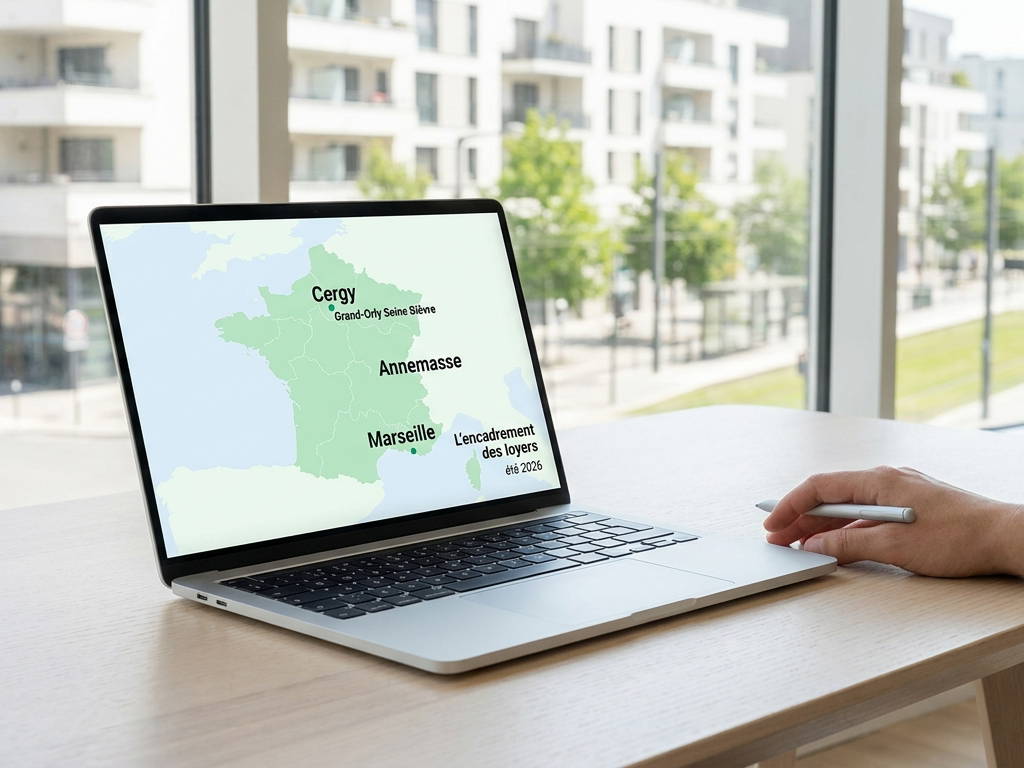
Read also: 2026 Housing Law: What changes for room rentals in Spain, Shared housing in Wallonia 2026: Domiciliation and Cohabitant Status and Rent control: New urban areas affected in summer 2026
Today, we offer you a comprehensive legal breakdown of a provision that protects and encourages hosts: the exemption provided by the Residential Tenancies Act, 2006 (RTA). This legal exception is designed specifically for situations where the host shares their personal living space with their tenant. It offers unparalleled flexibility and valuable peace of mind for those who wish to open their doors with complete security.
Discover how section 5(i) of the RTA transforms the experience of shared housing in Ontario. From setting the rent to managing departures, including drafting the contract, we explain in detail why 2026 is the ideal year to become a host, while benefiting from the security and support of the Roomlala platform.
Understanding Section 5(i) of the RTA: A breath of fresh air for hosts
The Residential Tenancies Act, 2006 (RTA), is the legal pillar that governs the relationships between tenants and hosts in Ontario. As a general rule, this law imposes very strict guidelines: the use of a mandatory standard lease, provincial control of rent increases, and complex eviction processes requiring the intervention of the Landlord and Tenant Board (LTB). These rules, while protective for tenants of entire homes, can prove unsuitable and daunting for a host who is renting a simple room in their principal residence.
This is where section 5(i) of the RTA comes in, a real breath of fresh air for hosts. This legal text clearly states that the RTA does not apply if the tenant shares a kitchen or bathroom with the host or a member of their immediate family (spouse, child, or parent). In other words, as soon as there is an effective sharing of these core rooms of daily life, the rental falls completely outside the scope of the provincial housing law. This is a fundamental paradigm shift for hosts.
In concrete terms, what does this mean? By being exempt from the RTA, the relationship between you and your tenant is no longer governed by the Landlord and Tenant Board (LTB), but by common law and Canadian contract law. You are no longer a "landlord" subject to the housing tribunal, but a party to a private contract. This legal distinction gives you back full control over your property and the terms of the cohabitation, allowing you to manage the situation with much more flexibility and responsiveness.
Let's take a concrete example to illustrate this point. Let's imagine Marc, a host residing in Ottawa. Marc decides to rent his guest room to a university student via Roomlala. Since the student uses the same kitchen as Marc to prepare their meals, the section 5(i) exemption applies immediately. Marc does not need to have the Ontario standard lease signed, and in the event of a major disagreement, he will not have to wait months to obtain a hearing before the LTB. This administrative simplicity is the first major advantage of renting a homestay room.
The concrete benefits for Ontario hosts in 2026
The RTA exemption offers tangible benefits that turn renting a room into a much calmer and more profitable experience. These benefits are mainly seen in two critical areas: financial management and conflict resolution.
Total freedom over setting and adjusting rent
One of the most restrictive aspects of traditional renting in Ontario is rent control. For the majority of dwellings, the provincial government sets a maximum annual increase rate (often around 2.5%), which the host cannot exceed without special authorisation. However, thanks to the section 5(i) exemption, hosts who share their kitchen or bathroom are not at all subject to this provincial cap. You have total freedom to set the initial rent and to determine its future adjustments.
This freedom is particularly crucial in 2026, faced with economic fluctuations and rising utility costs (electricity, water, gas). If your bills increase significantly during the winter, you are not blocked by a legal cap. You can adjust the room rate to reflect the reality of your expenses, provided, of course, that you respect the terms you initially set in your written agreement with the tenant. There is no need to use the official LTB 90-day notice forms.
Take the case of Sophie, a host in Toronto. She hosts a young professional. With the sudden increase in electricity rates (Hydro), Sophie notes that her costs have jumped. Because she had included a review clause in her private contract, she was able to inform her tenant with a reasonable one-month notice that the rent would increase by $50 to cover these new costs. The tenant agreed, understanding the situation, and the transition happened without any heavy bureaucracy.
At Roomlala, we encourage transparent communication on these financial aspects. Our platform allows you to easily update the price of your listing for future tenants, and we advise you to always discuss potential rent reviews openly even before signing your internal agreement. Clarity is the key to a successful cohabitation without financial surprises.
Simplified, stress-free departure procedures
In the classic RTA system, evicting a tenant, even for legitimate reasons like non-payment of rent or neighbourhood disturbances, can prove to be a real obstacle course. The waiting times at the Landlord and Tenant Board (LTB) can sometimes stretch on for several months, leaving the host in a position of helplessness and financial stress. The section 5(i) exemption completely eliminates this burden. No LTB approval is required to end the rental.
Under common law, if you wish for the tenant to leave, you only need to provide them with "reasonable notice". Although the law does not define an exact number of days, Ontario jurisprudence generally considers notice equivalent to a payment cycle to be reasonable. For example, if the tenant pays their rent monthly, 30 days' notice is standard. In the case of serious misconduct (violence, theft, endangering others), this notice can even be immediate.
Let's illustrate this with David, a host in Mississauga. Despite a good initial rapport, his tenant started repeatedly breaking house rules (excessive noise at night, unauthorised guests). As the situation became unliveable for David in his own home, he was able to issue a 30-day written notice for his tenant to leave. At the end of this period, if the tenant refused to leave, they became legally a trespasser, allowing David to call in law enforcement without ever having to file a case with the LTB.
It is important to highlight that these extreme situations remain rare, especially when you use a trusted platform. At Roomlala, verified profiles, reviews left by other members, and our secure messaging system help you select the ideal candidate beforehand. Nevertheless, knowing that you have a simplified departure procedure is a significant argument that reassures our Ontario hosts greatly.
Drafting your own contract: The rules of the game belong to you
Since the Ontario standard lease does not apply, the nature of your agreement with the tenant rests entirely on contract law. This means that the document you sign together becomes the law that governs your cohabitation. This contractual freedom is a fantastic opportunity to set your own boundaries.
Creating a tailored agreement for harmonious cohabitation
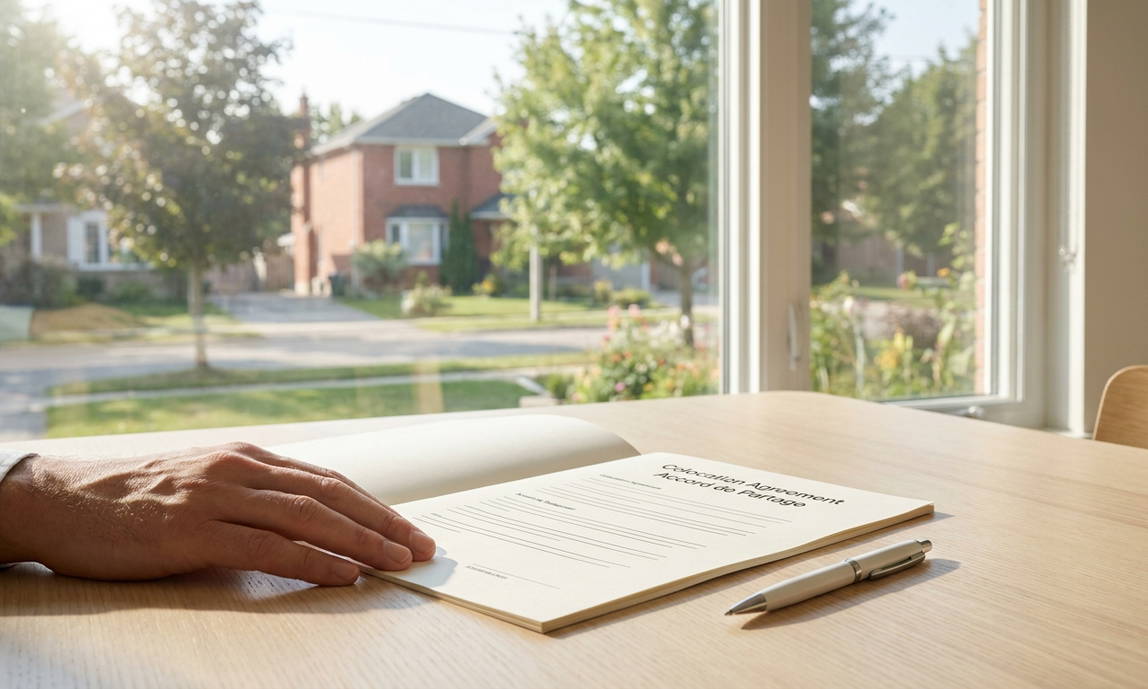
The lack of formality imposed by the province does not mean you should act informally. On the contrary, it is imperative to draft a detailed written contract. This document, often called a "Cohabitation Agreement" or "Room Rental Contract", must reflect your expectations and lifestyle precisely. You can include clauses there that would be considered null and void in a standard RTA lease (such as prohibiting pets, which is perfectly legal in an exempt rental).
To ensure your contract is complete and protects your interests under common law, here are the essential elements we recommend including:
- Financial terms: The exact amount of rent, due date, payment method, and the amount of the security deposit (which is not limited to the last month's rent under the exemption).
- Allocation of utilities: Specify if internet, electricity, and water are included, or if they will be invoiced separately based on consumption.
- Daily life rules: Define quiet hours, rules regarding guests (can they sleep over?), and the division of household chores in shared areas.
- Termination conditions: Clearly stipulate the duration of notice required by both parties in the event of voluntary departure or breach of contract.
Take the example of Elena, a nurse in Hamilton who works nights. Her daytime sleep is sacred. In her personalised contract, she included a strict silence clause between 8:00 and 16:00. She also specified that the kitchen must be cleaned immediately after every use. Because these rules were written, accepted, and signed from day one, her tenant knew exactly what to expect, thus avoiding frustrations and unspoken issues.
Securing the relationship with Roomlala tools
Drafting a solid contract is the first step, but securing the rental relationship goes beyond paper. This is where Roomlala's expertise comes into play to support you at every step of the process, from matching to rent payment. We provide a framework of trust that perfectly complements the flexibility offered by Ontario law.
Before you even organise a visit, our messaging system allows you to discuss in depth with candidates. You can present your house rules, send them a copy of your draft contract, and verify that your expectations are aligned. This prior transparency naturally filters out profiles that would not match your lifestyle, saving you precious time.
Furthermore, managing payments can sometimes be a source of tension in shared housing. With Roomlala, the booking and payment for the first month are done online in a completely secure way. This not only guarantees that the tenant is solvent and committed, but it also formalises the start of your contract. You no longer have to chase down cheques or cash when moving in.
Finally, our customer support team is available to guide you. Although we cannot provide personalised legal advice, we regularly share resources, agreement templates, and best practices adapted to the Canadian market. By combining the freedom of section 5(i) with the security of our platform, you give yourself every chance of an enriching and hassle-free hosting experience.
Points of vigilance: Avoiding legal traps in Ontario
While the section 5(i) exemption is extremely advantageous, it is not automatic and comes with strict conditions. A misinterpretation of the law could cause you to lose these benefits and plunge you back into the complexities of the RTA. It is therefore crucial to understand the nuances and limits of this regulation.
The condition sine qua non: Effective residence and actual sharing
For the exemption to be valid, the law requires that the host (or their spouse, child, parent) effectively resides on-site and truly shares the kitchen or bathroom with the tenant. This is not a mere administrative formality. The jurisprudence of the Landlord and Tenant Board is very clear on this subject: the sharing must exist from the first day of the rental and must be a daily reality.
It is impossible to bypass the law with superficial tricks. For example, a host who owns a divided house, living in a basement apartment with their own kitchen, and renting the upper floor to a tenant, cannot claim the exemption simply by leaving a toothbrush in the upstairs bathroom or cooking there once a month. The sharing must be substantial and customary. If living spaces are clearly separated and autonomous, the RTA will apply in its entirety.
In case of doubt or if a tenant contests the exemption to force the application of the RTA (for example to avoid eviction), it is highly recommended to take the lead. In Ontario, you can file Form A1 (Application about whether the Residential Tenancies Act applies) with the LTB. This form asks the tribunal to officially rule on the fact that your accommodation is exempt from the RTA. Obtaining this order protects you legally and clarifies the situation definitively.
We always advise our Roomlala hosts to be perfectly transparent in their listing. Explicitly specify: "Room for rent in the host's house, with daily sharing of the kitchen and bathroom". This clarity from the listing stage demonstrates your good faith and immediately establishes the legal framework of common law in the future tenant's mind.
Beware of municipal regulations and rooming houses
Another frequent trap is confusing provincial law (RTA) and municipal regulations (bylaws). Just because you are exempt from provincial rules regarding leases and rent does not mean you are exempt from respecting your city's laws. Each municipality in Ontario has its own zoning and safety rules, particularly when it comes to renting multiple rooms in a single property.
If you decide to rent three, four rooms or more, your house could be legally reclassified as a "rooming house" (or multi-tenant house). Cities like Toronto, Ottawa, or Hamilton have put in place very strict regulations for these dwellings in 2026. In Toronto, for example, the new regulatory framework requires that any rooming house obtain a specific municipal permit, submit to annual inspections, and respect draconian fire standards (fire doors, interconnected alarms, emergency exit windows).
Ignoring these municipal regulations can lead to colossal fines, far exceeding the income generated by the rental. Before transforming your basement and guest rooms into a small dormitory, always take the time to consult your municipality's website or contact the local planning department. Find out about the maximum number of unrelated tenants authorised to reside under one roof in your neighbourhood.
At Roomlala, we prefer quality over quantity. Renting one or two rooms in a family setting remains the safest, easiest to manage, and least likely solution to trigger municipal complications. This is the very essence of homestays: sharing space on a human scale, respectful of local rules and guaranteeing the safety of all occupants.
Why 2026 is the ideal year to get started in homestays
The year 2026 marks a turning point in how Canadians approach housing. The shortage of affordable apartments is pushing more and more students, young professionals, and temporary workers to turn to homestay rentals. This massive demand creates an unprecedented opportunity for Ontario hosts with unused spaces. By understanding and using the section 5(i) exemption of the RTA, you have all the cards in hand to meet this societal need while protecting your own interests.
Financially, the benefits are undeniable. The income generated by renting a room can cover a significant portion of your mortgage, property taxes, or energy bills. In an economic context where every dollar counts, transforming an empty room into a stable source of income, not subject to provincial rent control, is a particularly wise and secure financial strategy.
But beyond the legal and financial aspect, homestays are above all an enriching human adventure. It is an opportunity to meet people from all walks of life, create intergenerational ties, and share the Canadian culture with newcomers. Many hosts on Roomlala tell us that the presence of a respectful tenant brings life and conviviality into their home, sometimes breaking the solitude.
Do not let the fear of administrative complexity hold you back. Ontario law, through common law, is on your side when you share your daily life. With a well-drafted contract, clear communication, and the support of a dedicated platform, the experience is both safe and rewarding. Join the community of Roomlala hosts today, publish your listing in a few clicks, and discover for yourself how simple and advantageous it is to rent a room in Ontario in 2026.




There are no comments yet.
Leave a comment
You must be logged in to post a comment.