
 SEARCH
 LIST YOUR PROPERTY
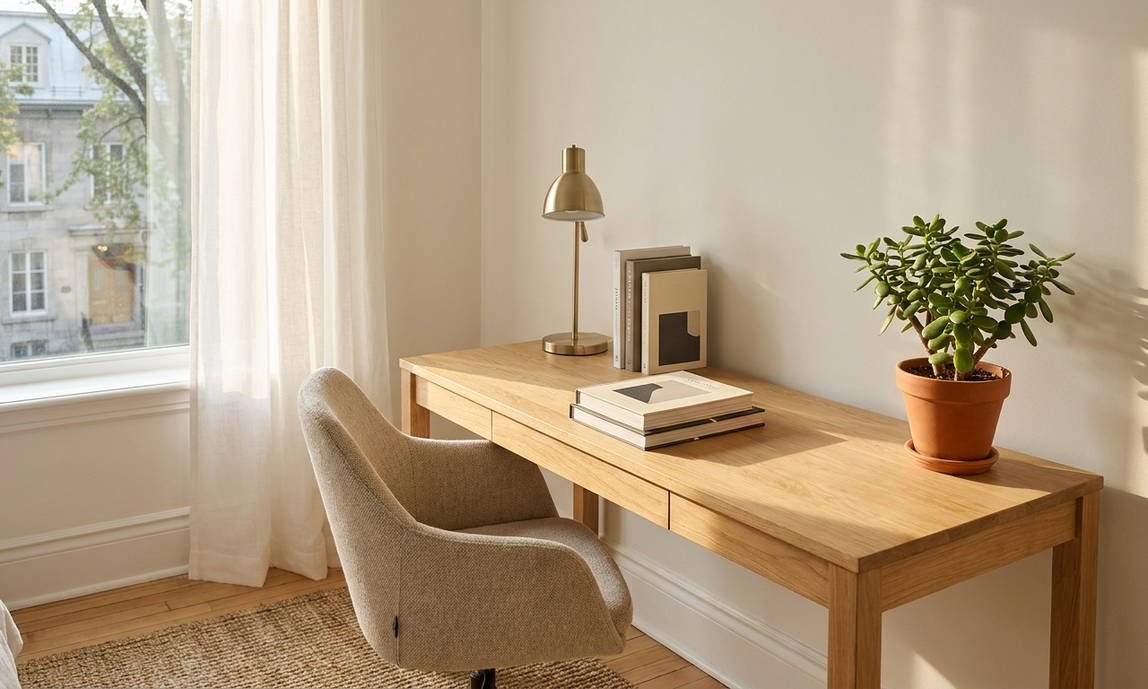
Faced with the continuous and unprecedented tightening of rules surrounding Airbnb-style rentals, many Quebec homeowners now find themselves at a crossroads. For several years, the provincial government and municipalities have been tightening the net around tourist accommodation to protect the residential housing stock. At the start of the 2026 school year, the strict application of the 2026 Quebec tourist accommodation law completely reshuffled the deck for amateur hosts.
At Roomlala, we see daily the concern of hosts when faced with this mountain of administrative constraints. Between mandatory registration, tax collection, and the threat of colossal fines, overnight rentals have lost their appeal. The stress linked to managing transient travellers is added to a legal framework that has become particularly punitive for those who do not comply to the letter.
Read also: 2026 rental reference rate in Switzerland: Shared housing to counter the rise, New EPB requirements in Brussels in 2026: What impact for renting out a room in your main residence? and Generalisation of the CIN in Italy by 2026: What are the requirements for renting out a room?
However, a simple, legal, and profitable solution exists: renting a room long-term in Quebec. By hosting a student or a worker for several months, you step out of the restrictive framework of tourism and into the much more flexible one of traditional residential rentals. This article deciphers the current legislation for you and shows why renting a room by the month or year is now the safest alternative for generating extra income.
Understanding the 2026 Quebec tourist accommodation law
To make informed choices regarding your property, it is crucial to fully understand the current legal framework. The Quebec short-term rental regulation has undergone major changes with the adoption of Bill 25, aimed at strictly regulating the abuses of improvised tourist accommodation.
What is changing for short-term rentals?
In Quebec, the law is very clear: any rental for a period of 31 consecutive days or less is considered tourist accommodation. Whether you rent out your primary residence while you are on holiday or an unoccupied room for a weekend, you fall under this regulation. The flagship measure of the 2026 Quebec tourist accommodation law is the absolute obligation to obtain a registration certificate from the Corporation de l'industrie touristique du Québec (CITQ).
This registration number is more than just a formality. It must be clearly displayed on all your online listings, regardless of the platform used. In addition, tourist hosts are required to collect and remit the 3.5% lodging tax for each night sold. These steps transform the simple act of renting out a spare room into a genuine commercial activity, with all the accounting and bureaucracy that this entails.
Let's take a concrete example: Marc, a homeowner in Trois-Rivières, occasionally rented out his spare room on weekends. To continue in 2026, he must pay annual registration fees, keep a visitor register, report his taxes quarterly, and ensure his home insurance specifically covers tourist accommodation. A considerable mental load for a few hundred dollars a month.
Deterrent financial sanctions and strict municipal zoning
The Quebec government is no longer messing around with offenders. Penalties for non-compliance with tourist accommodation law have become extremely severe. A host who rents without a CITQ number or with an invalid number is now exposed to fines of up to $50,000. Online booking platforms, for their part, risk up to $100,000 per illegal listing hosted on their site.
But provincial registration is just the tip of the iceberg. Municipalities also have a say and are making massive use of their zoning bylaws to limit or outright ban tourist rentals. In Montreal and Quebec City, for example, entire neighbourhoods are now closed to short-term rentals. Even with an iron will to obtain your CITQ number, your borough could refuse you the right to rent out by the night if your area is exclusively zoned for residential use.
These strict rules create an environment of insecurity for hosts. An unhappy neighbour can easily report an illegal listing, triggering a municipal investigation. Faced with these major financial and legal risks, more and more homeowners are looking for an honourable and safe exit to continue making their available space profitable.
The practical and human limitations of tourist rentals
Beyond the purely legal and financial aspects, short-term rental imposes a pace of life that is often incompatible with a busy daily schedule. Managing a tourist rental is akin to running a mini-hotel. You have to respond to booking requests at all hours, organise key exchanges, manage the unexpected (flight delays, lost travellers), and ensure the accommodation is spotless between each stay.
Cleaning is one of the biggest points of friction. Washing sheets, cleaning the bathroom, vacuuming every two days... These tasks quickly become exhausting if you do them yourself, and very expensive if you hire a cleaning company, thereby significantly eating into your profit margins.
Finally, on a human level, renting by the night prevents the creation of real bonds. Travellers are just passing through, often in a hurry, and consider your home as a simple consumer product. At Roomlala, we believe that homestay accommodation should remain an enriching experience, based on mutual respect and sharing, which is difficult to achieve during 48-hour stays.
Renting a room long-term in Quebec: The winning alternative
Fortunately, there is a solution to legally bypass all the constraints of tourist accommodation: long-term rental. By choosing to rent out your space for periods longer than 31 days, you completely change your legal and operational paradigm.
Zero administrative hassle: Goodbye CITQ
This is the golden rule to remember: renting a room for a period of more than 31 consecutive days is not considered tourist accommodation under Quebec law. In practical terms, this means that you do not need a CITQ registration number. You also do not have to collect or remit the 3.5% lodging tax.
This practice falls under the standard residential regime. It is governed by the Tribunal administratif du logement (TAL). The rules there are clear, known, and designed to regulate primary residences. You sign a lease or a standard room rental agreement, you define the rules of community living, and that's it. No more anxiously monitoring your municipality's zoning changes or fearing Revenu Québec fines for tourist non-compliance.
Use case: Julie, a resident of the Plateau-Mont-Royal in Montreal, could no longer rent out her room on Airbnb because of her neighbourhood's zoning. By using Roomlala, she now rents her room to a French student on a university exchange for stays of 4 to 8 months. She is 100% compliant and did not have any complex administrative procedures to carry out.
Stable and regular room rental income
The other major advantage of renting a room long-term in Quebec lies in financial predictability. With short-term rentals, your income fluctuates enormously depending on the seasons, the weather, or local events. In long-term rentals, you know exactly how much you will receive at the end of each month.
The market is actually extremely buoyant. The housing crisis in Quebec is pushing many high-quality profiles to look for homestay accommodation. Your potential tenants are varied and serious:
- International or regional students looking for a place to stay for the university semester.
- Temporary workers or young professionals on probation.
- People in life transitions (separation, professional relocation) needing affordable, furnished housing quickly.
This room rental income constitutes a significant salary supplement to cope with inflation, pay your municipal taxes, or pay off your mortgage faster, all with a management effort reduced to the strict minimum. Once the tenant is settled, you no longer have to worry about the welcome or daily cleaning.
How to get started with room rentals with Roomlala?
Convinced by long-term rental? That's an excellent decision. However, even if it is much simpler than short-term, this activity requires following a few basic rules so that the cohabitation takes place in the best possible conditions. At Roomlala, we accompany you at every step.
Check the rules applicable to your situation
Before publishing your listing, it is imperative to check your status. If you own a single-family home, you have carte blanche. However, if you are a co-owner in a condominium (a condo), you must consult your declaration of co-ownership. Certain clauses may restrict the rental of individual rooms or impose a minimum lease duration (often 6 or 12 months).
If you are a tenant yourself, the Civil Code of Quebec allows you to sublet part of your home, but under certain conditions. It is mandatory to inform your landlord (the lessor) of your intention to sublet or host a flatmate. The landlord cannot refuse without serious grounds, but transparency is the key to a healthy relationship. Also, make sure to clarify the status of the occupant: is it an official subtenant or just an occupant sharing expenses?
Practical example: Thomas, a tenant of a 4 1/2 in Sherbrooke, asked his landlord in writing if he could rent his second room to a student. With the latter's agreement, he was able to publish his listing on Roomlala with complete peace of mind, thus sharing the cost of his monthly rent.
Declare your income and secure your contract
There is one crucial point of vigilance that we often remind our community about: the income generated by renting a room, even within your primary residence, constitutes taxable income. You must report it to the tax authorities (Revenu Québec and the Canada Revenue Agency) in your annual tax return. The good news is that you will also be able to deduct a portion of your current expenses (electricity, heating, internet, mortgage interest) in proportion to the rented area, thus optimising your tax position.
Finally, to guarantee your peace of mind, it is essential to manage the rental properly. On Roomlala, we facilitate this connection. Our platform allows you to chat with candidates before accepting a booking, verify their profiles, and secure payments. We advise you to always sign a written document (a TAL lease or an occupancy agreement) detailing the rent amount, shared spaces, and house rules (cleaning, visits, noise).
In conclusion, faced with the complexity of the 2026 Quebec tourist accommodation law, long-term room rental stands out as the obvious choice. It combines legal security, financial stability, and human connection. Don't wait any longer to turn your spare room into a reliable and serene source of income by joining the Roomlala host community today.


There are no comments yet.
Leave a comment
You must be logged in to post a comment.