
 SEARCH
 LIST YOUR PROPERTY

With the tightening of energy legislation, concern is growing among many Brussels landlords. Indeed, the new rules linked to PEB Brussels 2026 are shaking up the traditional rental market. The hunt for energy-inefficient housing is officially on, imposing costly renovation work and strict rent restrictions. Facing this legal and financial puzzle, one question arises: how can you continue to generate rental income without breaking the bank on immediate renovations or endless administrative procedures? At Roomlala, we have analysed the situation in depth. We are convinced that renting out part of your own home is more than ever the ideal solution. Here is a breakdown of this complex legislation and the opportunities offered by homestays.
Understanding the tightening of PEB Brussels 2026: What changes for landlords
The Brussels property landscape is going through a real ecological shift. To meet its climate targets, the Brussels-Capital Region has put in place a strict schedule aimed at eradicating energy-guzzling housing. If you own a property in the capital, these new directives apply to you directly, whether you are a landlord or a resident.
Read also: British Columbia rental law 2026: Why long-term rentals are the future, Shortage of student accommodation in Brussels in 2026: Homestay becomes the go-to solution for the new academic year and Tax and room rentals in Switzerland: How to declare your rental income in 2026
The planned end of energy-inefficient housing by 2033
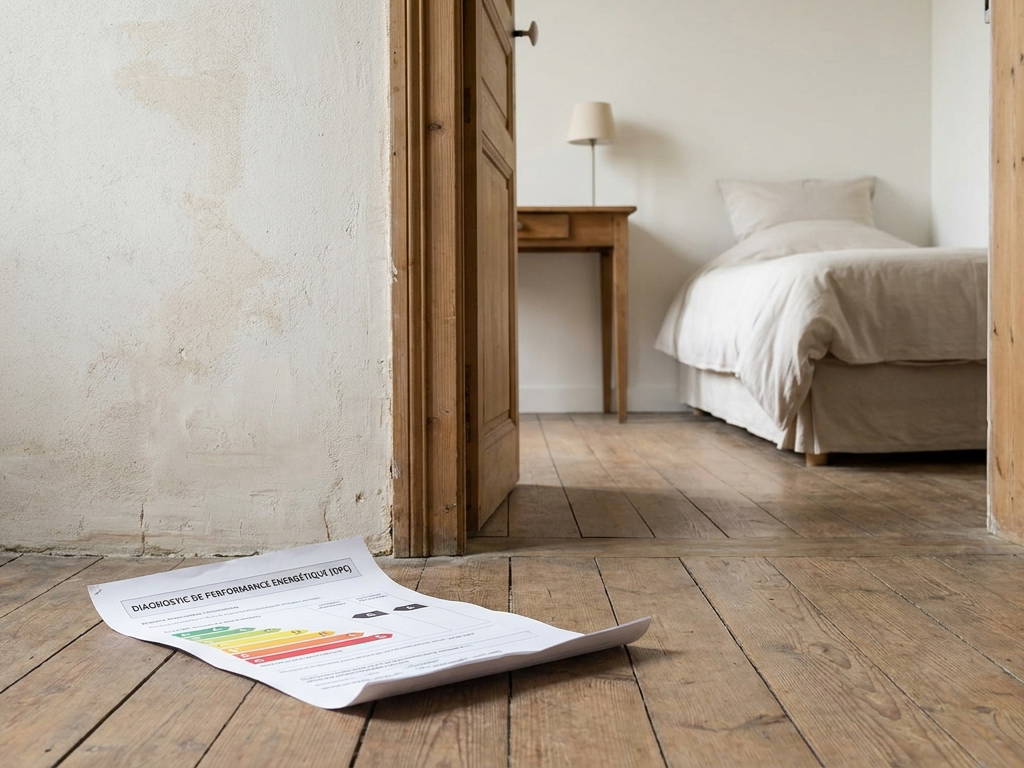
The first major measure of this new regulation concerns the certification requirement. By 2025, the PEB (Energy Performance of Buildings) certificate will be mandatory for absolutely all Brussels homes, even if you are not planning to sell or rent out your property. A true energy map of the city is being drawn, leaving no room for energy anonymity.
But the real hammer blow will fall a few years later. The legislation provides for the outright ban on energy-inefficient housing (properties ranked F and G) by 2033. This means that an owner of an old, uninsulated Brussels house will be required to carry out renovation work to reach at least class E, or face regional sanctions. This pressure is increasing with the PEB Brussels 2026 deadline, which marks a turning point in the authorities' tolerance of non-compliant properties.
Practical example: Imagine Marc, owner of a charming town house in Schaerbeek. His property is currently ranked G due to an uninsulated roof and old window frames. By 2025, he will have to officialise this score via a certificate. If he were to put his house on the traditional rental market in 2026, he would be subject to drastic rules, and by 2033, he will have the legal obligation to renovate his property to raise it to at least class E, whether he rents it out or lives there alone.
Rent indexation strictly conditional on the PEB score
The other major aspect of this reform concerns rental profitability. Historically, annual rent indexation allowed landlords to keep up with inflation. From now on, this indexation is held hostage by the building's energy score. The region has decided to financially penalise landlords who do not invest in insulating their property.
Specifically, if your property has a class F or G PEB, indexation is completely blocked. For a class E PEB, indexation is limited to 50%. Only homes with a class A, B, C or D PEB can benefit from full 100% indexation. This measure aims to protect tenants from fuel poverty by offsetting their high heating bills with a rent freeze.
For landlords practising traditional renting, the loss of income can amount to thousands of euros over the duration of a lease. It is here that shared housing PEB regulation and the rules governing shared accommodation become a burning issue, pushing many landlords to rethink their rental strategy.
Renting a room in your home in Brussels: An advantageous legal exception
Faced with this wall of constraints, creating an independent unit (such as a studio converted in your attic) becomes an uphill battle, requiring planning permission, insulation meeting strict standards and an individual PEB certificate. Fortunately, the Belgium room rental law offers a much more flexible alternative: renting out a homestay within your main residence.
No individual PEB certificate required for the room
This is one of the major advantages of this formula. When you decide to rent out a room in your home in Brussels, the room is not considered an independent housing unit. Consequently, the legislation does not require a specific and exclusive PEB certificate for this room. The overall PEB certificate of your home is the one that counts.
This nuance is crucial. It saves you from having to hire a certifier to specifically assess the rented room, which would be technically complex anyway (how do you assess the insulation of a single room integrated into a larger heated volume?). At Roomlala, we find that this administrative simplification is a huge relief for our hosts, who can thus start hosting a student or a young professional much more quickly.
Use case: Sophie owns a large apartment in Ixelles (PEB E). With her children having left the nest, she decides to rent out a room on Roomlala. She does not need to get the 15m2 room certified. She will simply use her apartment's class E PEB to draft her student lease agreement, thus saving herself unnecessary expert fees.
Administrative flexibility without planning permission
Beyond the benefit linked to the PEB, renting a room in your main residence allows you to avoid planning red tape. Dividing a single-family house to create several distinct apartments requires planning permission in Brussels. Municipalities are increasingly reluctant to grant these permits to avoid uncontrolled densification and often demand heavy compensation (creation of bike storage, strict fire safety standards, etc.).
By opting for a homestay (via a standard lease or a student lease), you share your living spaces (kitchen, bathroom) without changing the planning status of your property. You remain within the framework of a single-family home occupied by its owner.
- Speed: Immediate rental without waiting months for a permit approval.
- Economy: No architect fees or taxes linked to planning permission.
- Flexibility: You can stop renting at the end of the lease without having to reallocate your property.
This agility makes the homestay a perfect response to the uncertainties linked to PEB Brussels 2026. You keep full control over your assets while optimising their occupancy.
Legal points to watch to stay compliant
Be careful, however, flexibility does not mean a total absence of rules. For this experience to remain positive and legal, it is imperative to respect certain obligations. At Roomlala, we want our hosts to be fully informed to avoid any litigation or regional sanctions.
The obligation to provide information upon signing the lease
Even if you are exempt from an individual PEB for the room, you are not exempt from transparency. Brussels legislation requires the landlord to provide the tenant with a copy of the building's global PEB certificate as soon as the lease is signed. This certificate must of course be valid (the standard validity period is 10 years).
Furthermore, the obligation to display the energy class in any rental advertisement also applies. If you publish a listing on Roomlala, it is your duty to indicate the global PEB score of your house or apartment. This allows the future tenant, often a student or intern, to estimate their thermal comfort, even if utility charges are generally fixed in this type of rental.
Our Roomlala advice: Systematically attach a paper or digital copy of the global PEB certificate to the rental contract. Have your tenant sign an acknowledgment of receipt to prove that you have fulfilled your duty to inform, thus protecting yourself against any future recourse.
The risk of planning requalification
This is the most common trap into which well-meaning owners fall. To offer more independence to their tenant, some install a small private kitchenette in the room, add a separate shower and create a distinct entrance. Be careful: by doing this, you are crossing the red line of Brussels town planning!
From the moment the room has all the basic functions (kitchen, sanitary facilities, rest) in a private manner and it no longer requires sharing common spaces with the owner, it can be requalified as an "independent unit" by regional inspectors. This requalification leads to disastrous consequences: planning infringement (hefty fines), the obligation to apply for a permit retroactively, and above all, immediate subjection to the strict rules of PEB Brussels 2026 for this new unit.
To stay within the legal and protective framework of the Belgium room rental law, the sharing of living rooms (at least the kitchen or the bathroom) must be real and effective. The room must remain a simple part of your own home.
Financing your energy transition thanks to homestays
As we have seen, the 2033 deadline regarding the ban on energy-inefficient housing (classes F and G) will apply to the entire building, even if you live there alone. The PEB exemption for the room therefore does not exempt you from your regional obligation to renovate your house in the medium term. This is where renting out a room makes perfect sense from a strategic point of view.
Insulation work (roof, façades, boiler replacement) is expensive. Although the Brussels Region offers "Renolution" grants, the remaining cost for the owner is often substantial. By choosing to rent out one or more unoccupied rooms in your house via Roomlala, you generate immediate, monthly and stable rental income.
This additional income, often partially tax-exempt if well structured, can be directly allocated to a savings account dedicated to your future works. Instead of suffering the pressure of the legislative calendar, you anticipate it thanks to the collaborative economy. By renting out a room for 500 euros per month, you can collect 6,000 euros per year, which is 24,000 euros by 2028, a substantial budget for redoing a roof or insulating a back façade.
In conclusion, faced with the challenges imposed by PEB Brussels 2026, homestays are not just a simple administrative trick. It is a real asset management strategy. It combines the human warmth of hosting, the legal security of a light framework, and the financial opportunity to serenely prepare the ecological transition of your property. Do not wait for your house to depreciate: increase the value of your empty spaces today with Roomlala and finance the renovation of tomorrow.





There are no comments yet.
Leave a comment
You must be logged in to post a comment.