
 SEARCH
 LIST YOUR PROPERTY
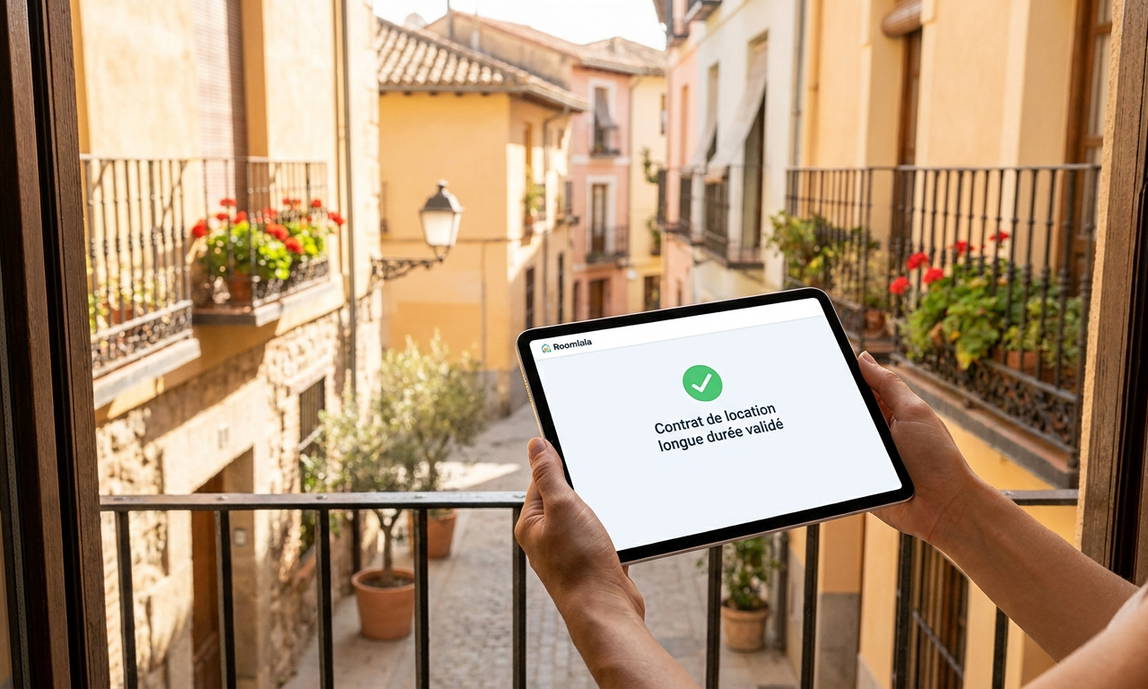
With the increasingly strict regulation of seasonal and tourist rental contracts in Spain, many hosts have legitimate questions about the future of homestays. The Spanish government recently made headlines with its plan for a new national registry. If you rent out a room in your main residence in Madrid, Barcelona, Valencia or Seville, you are likely wondering what your new administrative obligations are. Rest assured, at Roomlala, we are closely monitoring the evolution of the Spain room rental law to ensure you have a serene, secure and 100% legal experience. In this detailed article, we break down the recent legal twists and turns of late 2026, notably the partial cancellation of the national registry by the courts, and we explain how to continue renting out your room with complete peace of mind to students or young professionals.
Understanding the 2026 Registry of Rentals and its cancellation
To fully grasp the stakes of the legislation at the end of 2026, it is essential to look back a little. The initial objective of the Spanish government was clear: to fight against the uncontrolled proliferation of illegal tourist rentals that are drying up the traditional housing market and driving up property prices in large metropolitan areas.
Read also: Regulation of seasonal rentals: What's changing for students in Spain for the start of the 2026 academic year, Canada 2026 rental law: Why long-term room rentals are becoming essential over Airbnb and Reform of residential leases in Wallonia (Autumn 2026): The new benefits for shared housing
The government's initial project: Royal Decree 1312/2024
At the end of 2024, the Ministry of Housing and Urban Agenda (MIVAU) firmly adopted Royal Decree 1312/2024. This piece of legislation provided for the creation of a National Unique Registry (known by the acronym NRUA) coupled with a Digital One-Stop Shop (Ventanilla Única Digital). The idea was simple on paper: to impose a mandatory national registration number for all short-term, seasonal and room rentals, which was to be applicable from 1 July 2025. Each host would have had to obtain and display this famous number on booking platforms under penalty of heavy financial sanctions. This project aimed to centralise data to facilitate state inspections.
The legal turning point of May 2026
However, the Spanish constitution has a strong particularity: it grants very extensive powers in terms of housing and urban planning to the autonomous communities (Andalusia, Catalonia, Community of Madrid, etc.). On 19 May 2026, a major legal twist completely reshuffled the deck. Through its landmark ruling No. 620/2026, the Spanish Supreme Court simply cancelled the national Unique Registry (NRUA). The country's highest magistrates considered that the central state was unconstitutionally encroaching on the exclusive prerogatives of the regions. The direct and immediate consequence: the famous 2026 Registry of Rentals, in its national, centralised and coercive form, is no longer relevant. As a host renting out a room on a yearly basis, you therefore do not need to worry about this new national administrative process that was set to be particularly complex and time-consuming.
The maintenance of the Digital One-Stop Shop (Ventanilla Única)
While the national registry was rejected by the supreme court, the Spanish government still managed to save a crucial part of its technological control system. The Digital One-Stop Shop, or Ventanilla Única Digital, remains well and truly active and operational at the end of 2026. But what does this mean in practical terms for you, as hosts offering a room on our platform?
This portal is actually aimed primarily at matching and booking platforms like Roomlala. We now have a strict legal obligation to transmit certain data relating to rentals to the Spanish administration via secure connections (API). The objective of public authorities is to ensure total transparency in the property market and to help tax and local authorities distinguish between true tourist rentals (which are subject to strict quotas and licences) and long-term room rentals, which are, in fact, strongly encouraged to alleviate the deep housing crisis the country is going through.
For you, this data transmission is completely transparent, automatic and entirely managed by our technical teams. For example, if you rent a room to an Erasmus student in Granada for a duration of 9 months, Roomlala takes care of communicating the required information securely to the competent authorities. This proves de facto to the administration that your action is part of a legitimate long-term rental contract in Spain. This protects you and spares you from abusive administrative inspections intended to track down clandestine holiday rentals.
At Roomlala, we take the protection of your personal data very seriously. The information shared via the Ventanilla Única Digital is strictly governed by European privacy standards (GDPR) and is used only to certify the perfect legality of your long-term hosting activity.
Spain room rental law: What changes (or not) for you
The cancellation of the national registry by the Supreme Court is undoubtedly excellent news for the administrative simplicity of small-scale hosts, but it does not mean that there are no rules left to follow. The Spain room rental law now relies more than ever on local and regional regulations. It is therefore absolutely crucial to distinguish clearly between the different types of rentals to understand your exact obligations.
The crucial difference between tourist and long-term rentals
The central government and the regions are targeting tourist rentals as an absolute priority (i.e. stays of a few days to a few weeks for holidaymakers passing through). This type of rental very often requires specific licences (licencias turísticas), which are increasingly difficult, if not impossible, to obtain in so-called high-demand areas like the centre of Barcelona, Madrid or Palma de Mallorca. Conversely, renting out a room in a homestay for a long duration (targeting students, young professionals, or workers on the move) remains completely legal and benefits from a much more flexible and incentive-based legal framework.
By opting for a long-term rental contract in Spain with Roomlala, you are meeting a very strong social need: housing local residents at affordable prices. Public authorities look very favourably upon this virtuous practice which optimises the occupancy of the existing housing stock without driving out historic residents from city centres, unlike overtourism.
Local and regional obligations still in force
Since the Supreme Court has confirmed the exclusive power of the regions regarding housing, you must imperatively comply with the registries and rules of your autonomous community or municipality. Here are some practical tips to be compliant:
- Check with your town hall (Ayuntamiento): Some cities require a simple prior declaration (declaración responsable) to rent out a room in your home, even for the long term. This is often a free and quick process.
- Check your building's rules (Comunidad de propietarios): Ensure that your building's internal regulations do not explicitly prohibit subletting or renting out independent rooms. The law on horizontal property sometimes allows neighbours to limit tourist uses, but rarely classic residential rentals.
- Declare your rental income: As always, income from renting out a room must be scrupulously declared to the Agencia Tributaria (the Spanish tax authorities) when filing your tax return (IRPF). Good news: long-term rentals (the tenant's habitual residence) very often qualify for particularly advantageous tax deductions (up to 60% deduction in certain cases) compared to tourist rentals which are heavily taxed.
- Identify the legal framework: In Spain, renting out a single room often falls under the Civil Code (Código Civil) rather than the strict Urban Leases Act (LAU), which offers you greater contractual freedom to set the duration and conditions with your tenant.
Let's take a concrete example: if you live in the Gràcia neighbourhood in Barcelona and you rent a room to a young engineer for 12 months, you are absolutely not subject to the city council's strict moratorium on tourist licences. You simply need to respect the classic Spain shared housing regulation, declare your income, and enjoy having your new flatmate!
Spain shared housing regulation: How Roomlala supports you
Faced with this administrative maze and constant changes in case law, it is quite normal to sometimes feel lost or intimidated. That is precisely where we come in. At Roomlala, our primary mission is to make your life easier, to democratise homestays and to secure your rental income, all while strictly respecting the Spain shared housing regulation in force.
We provide you with pre-filled contract templates specifically adapted to homestays and long-term shared housing. These legal documents are drafted by experts and designed to be in perfect alignment with current Spanish laws of 2026. By using our online contracts, you clearly and legally define the rules of communal living, the exact amount of rent, the precise duration of the stay, the security deposit amount and the notice conditions. This helps avoid any future misunderstanding or dispute with your tenant.
Furthermore, our platform carries out rigorous checks on the profiles of registered tenants. You know exactly who you are about to welcome under your roof. Whether you are hosting a medical student for the whole university year or a professional on a temporary mission, we facilitate the connection thanks to a secure messaging system. We also offer secure online payment solutions that guarantee the payment of your first rents, thus offering you invaluable peace of mind.
In conclusion, the cancellation of the 2026 Registry of Rentals by the Supreme Court has fortunately removed the threat of suffocating national bureaucracy for private individuals. By choosing to prioritise long-term rentals with Roomlala, you are opting for a solution that is 100% legal, financially profitable and profoundly human. You are actively participating in solving the housing crisis in Spain, while benefiting from our continuous expertise to navigate serenely through the sometimes complex waters of local regulations. Don't wait any longer to make the most of your unoccupied room legally and join our large community of trusted hosts!





There are no comments yet.
Leave a comment
You must be logged in to post a comment.