
 SEARCH
 LIST YOUR PROPERTY
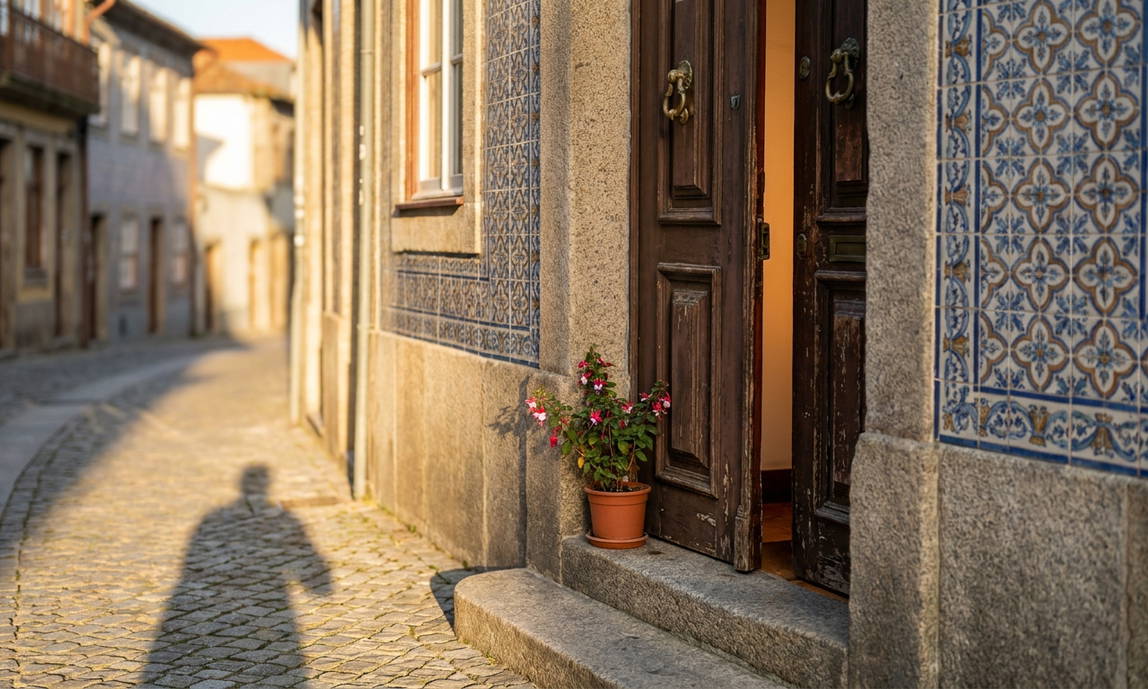
A high-tension university term is looming in Portugal's northern capital. In autumn 2026, the search for student accommodation in Porto 2026 is more of a struggle than ever for thousands of young people, whether they are from other Portuguese regions or from abroad. Faced with a saturated property market and soaring prices, the distress of students is palpable as the first classes approach. At Roomlala, we are observing this alarming situation closely and firmly believe that there are viable, humane alternatives to compensate for this lack of infrastructure. Shared housing and, more specifically, a homestay, are no longer just emergency options, but absolute necessities to guarantee the right to education in decent conditions.
This unprecedented crisis is pushing local stakeholders, universities, and families to completely rethink the way we conceive student accommodation. As entire homes are becoming unaffordable for most budgets, community mutual aid is taking over. Hosting a young person at home is becoming a strong act of solidarity, while also offering a significant additional income for hosts facing inflation. In this article, we will delve into the causes and consequences of this historic shortage in Porto, and explain why opening your door to a student is one of the most relevant and rewarding responses to the housing crisis in Portugal today.
Read also: Canada 2026 rental law: Why long-term room rentals are becoming essential over Airbnb, Reform of residential leases in Wallonia (Autumn 2026): The new benefits for shared housing and Italy 2027 Budget Law: Taxation and New Regulations for Room Rentals
Whether you are a student anxious about not finding a roof over your head before October, or a host with a spare room in the Paranhos or Bonfim neighbourhood, this comprehensive guide is for you. We will detail recent market figures, changes in government support, and above all, the legal and human best practices for a successful cohabitation. Together, let's discover how to turn this housing crisis into an opportunity to create social ties and intergenerational solidarity in the heart of Porto.
The alarming reality of the student housing market in Porto in 2026
To understand the scale of the situation in Porto, one must first look at the figures at the national level, which are, to say the least, worrying. In autumn 2026, Portugal is recording a critical deficit of 119,000 student beds. The country currently has only 28,000 places in public or subsidised university halls of residence, a derisory figure compared to the massive demand of 227,000 displaced or international students. This asymmetry between supply and demand is creating a dramatic bottleneck, particularly in major university hubs like Lisbon, Coimbra, and of course, Porto.
In Porto, the quintessential student city, the international appeal of universities and polytechnics is not waning—on the contrary. The constant influx of Erasmus students, international researchers, and young Portuguese people from inland regions or the islands (Madeira, Azores) is putting unsustainable pressure on local housing. Historically student-friendly neighbourhoods, such as the Asprela university campus, Paranhos, or even Cedofeita, are literally overrun from June onwards, leaving those who are late without any viable options by the end of the summer.
At Roomlala, we see that this pressure results in the precariousness of student housing. Many young people are forced to accept substandard accommodation, to move significantly further from the city centre by renting in peripheral municipalities like Gondomar or Valongo, with the travel times that this implies, or worse, to give up their university enrolment for lack of a place to live. It is a real social emergency that requires the mobilisation of all real estate stakeholders and civil society.
The explosion of rents and the critical delay of new residences
The most direct consequence of this shortage is the rampant inflation of rental property prices. At the start of the 2026 term, the average rent for a simple student room in Porto crossed a new psychological threshold to reach around 450 euros per month, excluding charges. For an independent studio, prices are soaring well beyond 750 euros, making the rental of an entire home completely illusory for an average student without very wealthy guarantors. This price spike effectively excludes a large portion of the youth from middle and working-class backgrounds.
Hope relied largely on the European Recovery and Resilience Plan (PRR), which provided massive funding for the construction and renovation of public university residences across the country. Unfortunately, the reality on the ground is quite different. In the summer of 2026, official data shows that construction projects have been significantly delayed. Only 27% of the beds planned by the PRR have actually been completed and delivered. Administrative delays, rising construction material costs, and a lack of labour in the building sector have undermined the original schedule.
Take the concrete example of Lucas, an engineering student at FEUP (Faculdade de Engenharia da Universidade do Porto). Expecting to get a place in one of the new residences promised near the Asprela campus, he waited until mid-August to look for an alternative. Faced with the delayed delivery of his building, he found himself on the private market at a time when supply was at its lowest and prices at their highest. Without the option of a homestay in Porto, Lucas would have had to postpone his year of studies.
The end of the subsidy programme accentuates the crisis
As if the situation were not complex enough, the 2026/2027 university year is marked by a major political change: the end of government funding for beds in private residences. The Alojamento Estudantil Já programme, which subsidised places in the private sector for grant-holding students who did not obtain a place in the public sector, has not been renewed on the same terms. This political decision, motivated by budgetary constraints, has an immediate devastating impact.
Thousands of grant-holding students, who previously benefited from capped rates in partner private residences, are suddenly being thrown into the arena of the traditional rental market. These young people, with extremely tight budgets, are in direct competition with international students with often higher purchasing power. The pressure on small spaces and shared rooms is tenfold, creating a real war of attrition for every square metre available in Porto.
This situation perfectly illustrates the vulnerability of the current student accommodation system. At Roomlala, we believe it is dangerous to base young people's housing solely on temporary subsidy programmes or institutional constructions that are struggling to get off the ground. It is time to value and encourage the existing housing stock, which is often underutilised, by encouraging private individuals to open their doors. This is where homestay rental takes on its full societal meaning.
Homestay in Porto: A supportive and humane alternative
Faced with this bleak picture, a glimmer of hope is emerging: citizen mobilisation through homestay rental. Historically perceived as a last resort solution or reserved for language stays, this formula is experiencing a real golden age in 2026. At Roomlala, we notice a fundamental paradigm shift. A homestay is no longer just a financial transaction; it is claimed as a supportive approach, a direct and immediate response to the housing crisis affecting Portuguese youth.
By opening up an unoccupied room, homeowners in Porto (whether retired people, single-parent families, or couples whose children have left the nest) instantly put thousands of potential beds back on the market. These homes already exist; they do not require building permits, no additional concrete, and are often located in safe residential areas that are well served by public transport, such as Boavista, Foz do Douro, or Campanhã. It is an ecological, economical, and immediately available solution.
We would like to stress that this approach should not be viewed solely through the prism of profitability. Of course, the extra income is a trigger, but the human aspect is what makes these cohabitations last. It is an opportunity to build bridges between generations that rarely cross paths in everyday life. It is a form of citizen resistance against the excessive financialisation of the real estate market, where the human being regains their place at the centre of housing.
Creating intergenerational ties and fighting against isolation
Portugal, like many European countries, is facing an ageing population. In Porto, many elderly people live alone in large apartments or houses that have become too big for them. Social isolation is a silent scourge. Hosting a student at home means bringing life, youth, and security into one's daily routine. The reassuring presence of a young person in the evening, conversations over coffee in the morning, or simply the sound of life in the house are invaluable elements for the mental health of senior hosts.
Take the case of Maria, 68, a widow and owner of a large four-bedroom flat in the Bonfim neighbourhood. Since her children left, three rooms were gathering dust. In 2026, touched by reports on the distress of young people, she decided to sign up on Roomlala. She now hosts João, a medical student from the Algarve. In exchange for a very modest rent, João agrees to help her with her heavy shopping and to share a few meals. This intergenerational shared housing in Porto is a total success: Maria has regained her smile and João has found a second family, far from the stress of housing precariousness.
This dynamic of mutual aid is not limited to seniors. Young couples with children also see hosting an international student as an opportunity for openness to the world. Hosting a Brazilian, French, or Italian student allows the family's children to open up to other cultures and languages, transforming the home into a real place of cultural exchange and mutual enrichment.
An essential breath of fresh air for the student budget
On the tenant side, the financial advantages of a homestay are undeniable. While a room in a standard shared flat reaches 450 euros in Porto, homestay rooms are generally offered at much more affordable rates, often between 250 and 350 euros per month. This price difference is not anecdotal; it often represents a student's monthly food budget. It is a real breath of fresh air that allows young people to focus on the essentials: the success of their studies.
Furthermore, homestay rental almost systematically includes utility bills (water, electricity, internet, heating) in the advertised price. In a context of energy crisis where bills can be unpredictable and very high in winter, this formula offers total peace of mind to students. There are no nasty surprises at the end of the month, no astronomical regularisation bills to split between flatmates. The budget is fixed, transparent, and under control from the very first day of the long-term rental.
Finally, this financial security has a direct impact on mental health and academic performance. Not having to juggle exhausting student jobs (often in catering or tourism in Porto) to pay an exorbitant rent allows young people to devote their energy to their revision. By offering affordable housing, hosts in Porto are actively participating in the training of the country's future professionals, thus fighting against university dropout linked to precariousness.
Shared housing in Porto and long-term rental: Win-win solutions against inflation
It would be hypocritical to deny the financial aspect of accommodation for hosts. If solidarity is the engine, the extra income is the fuel that allows this solution to be sustained. In autumn 2026, Portugal continues to suffer the repercussions of inflation, particularly affecting food and energy prices. For many middle-class Portuguese households, making ends meet has become a real challenge. Long-term rental of a spare room is thus emerging as a strategic and secure financial lever.
Unlike short-term tourist rentals (Alojamento Local), which have been heavily regulated and restricted by the government in areas of high urban pressure like Porto, long-term rentals to students are encouraged. They offer income stability over nine or ten months (the university year), without the time-consuming constraints of daily cleaning, constant key handovers, and managing online reviews. The host knows exactly how much they will receive each month, which allows them to plan their family budget with peace of mind.
Moreover, opting for shared housing in Porto with a student allows one to optimise the space in one's home without losing privacy, provided that the rules of living are clearly defined. An additional income of 350 euros per month represents 3,500 euros over a ten-month university year. This sum can be used to pay property taxes (IMI), to finance energy renovation work, or simply to maintain a comfortable standard of living in the face of the rising cost of living. It is a reciprocal arrangement where each party finds their own benefit, in respect and transparency.
Hosts: What you need to know before hosting a student
Hosting a student at home is a wonderful human adventure, but it is also a commitment that requires respecting a precise legal framework and putting in place good practices. At Roomlala, we support our users at every step to ensure a smooth stay. It is essential to understand that renting a room, even within one's main residence, is governed by strict Portuguese laws that must be respected to protect both the host and the tenant.
One of the most common mistakes is to consider this arrangement as informal. However, the signing of a specific tenancy agreement (contrato de arrendamento) for a room is highly recommended, or even mandatory for certain procedures. This document sets the duration of the rental, the rent amount, the notice conditions, and the basic rules. It protects the host in the event of damage and reassures the student about the long-term nature of their accommodation. Roomlala facilitates this trusted connection, but it is up to the parties to comply with local tax requirements.
Beyond the contractual aspect, the success of a cohabitation relies on communication. Hosting someone who is not part of the family requires an adjustment period. It is essential to be clear from the start about your expectations and boundaries, in order to avoid silent frustrations that could affect the atmosphere of the home. Here are our detailed tips for navigating this experience with peace of mind.
The crucial importance of official receipts (Recibos eletrónicos)
This is the absolute point of vigilance for the year 2026: the issuance of rent receipts. In Portugal, all rental income must be declared to the tax administration (Autoridade Tributária). As a host, you have a legal obligation to issue electronic receipts (recibos de renda eletrónicos) via the Portal das Finanças for each payment received. Not doing so exposes you to heavy fines, but more importantly, it severely penalises your student tenant.
Why is this so critical for students? Because the majority of housing aid and study grants awarded by the DGES (Direção-Geral do Ensino Superior) are conditional on the presentation of these official receipts. Without a receipt, the grant-holding student cannot prove that they are paying rent and risks losing their housing allowance (complemento de alojamento). In the context of the current crisis, depriving a young person of their financial aid because the host refuses to declare the rent is dramatic and contrary to the spirit of solidarity that we defend.
We can reassure you: the process on the Portal das Finanças is now simplified. Simply register the rental contract online, then issue the receipt monthly in a few clicks. Although this involves paying tax on this income (the rate can be reduced for long-term contracts), it is the price of legality, peace of mind, and respect for the student you are hosting. Be transparent from the moment you publish your listing on Roomlala by specifying that you do indeed issue legal receipts; this will attract the most serious students.
Our Roomlala tips for a harmonious cohabitation
Once the legal framework is respected, make way for everyday life! To ensure your homestay in Porto goes as smoothly as possible, we recommend drafting a small charter of shared living. This document, informal but precious, allows you to put the rules of the house in writing. The goal is not to be rigid, but to anticipate small daily conflicts.
- Define shared spaces: Clearly specify whether the student has access to the living room, if they have a dedicated shelf in the fridge and in the kitchen cupboards, and what the rules are for using the washing machine (days, times).
- Set rules on visitors: Can the student invite friends for dinner? Can their boyfriend or girlfriend stay overnight on the weekend? Establish these limits from the first day to avoid misunderstandings.
- Talk about schedules and noise: If you get up early for work, ask for silence after a certain hour. Conversely, understand that the student might return late from the library during exam periods.
- Maintain open communication: Plan an informal check-in after the first two weeks to make adjustments if necessary. Kindness and dialogue are the keys to a successful cohabitation.
By following these tips and using the secure Roomlala platform to find the profile that best matches your lifestyle, you will make this experience a real success. Faced with the shortage of student accommodation in Porto in 2026, your spare room has the power to change a young person's life. Engage in this solidarity-based approach, generate an additional legal income, and actively participate in resolving the housing crisis in Portugal. Mutual aid is the most beautiful response to adversity.


There are no comments yet.
Leave a comment
You must be logged in to post a comment.