
 SEARCH
 LIST YOUR PROPERTY
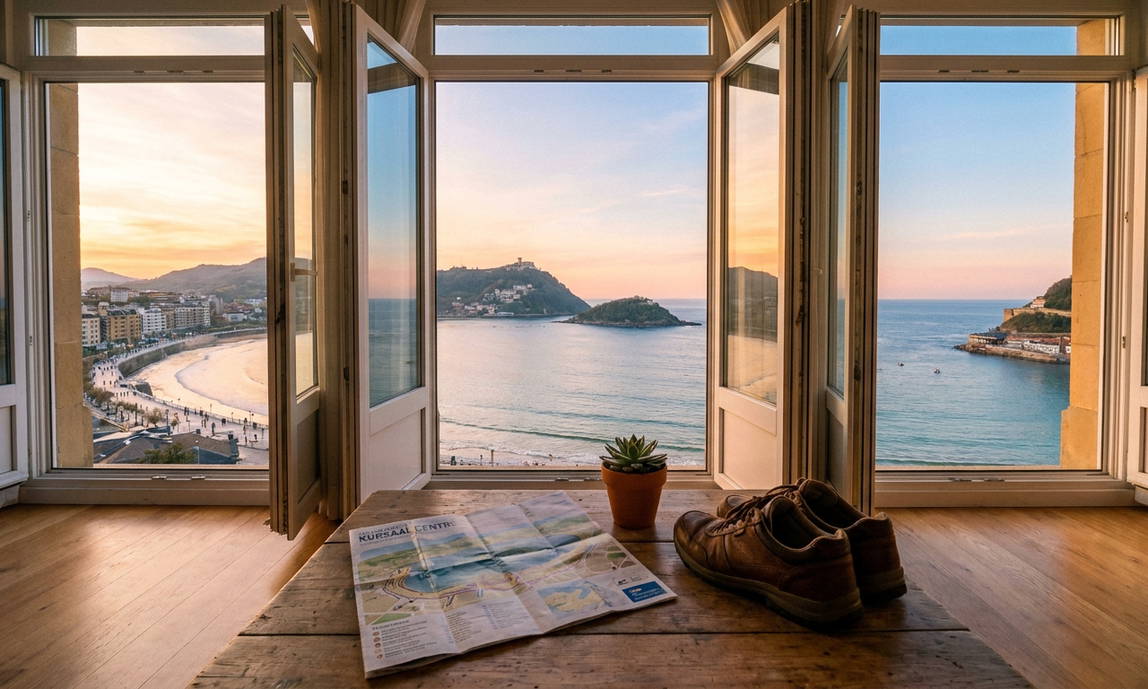
18 September 2026 will mark the highly anticipated kick-off of the 74th edition of the San Sebastián International Film Festival, globally known as Zinemaldia. Until 26 September 2026, the magnificent pearl of the Spanish Basque Country will vibrate to the rhythm of exclusive screenings, red carpets, and encounters between seventh-art enthusiasts. However, an international cultural event of this scale inevitably means hotel saturation. Every year, hotel room prices soar as autumn approaches, making a stay financially inaccessible for many travellers and independent film buffs.
Faced with this price surge and the scarcity of traditional accommodation, how can you fully enjoy this event without breaking the bank? At Roomlala, we have a strong conviction: culture, travel, and major events must remain accessible to all. That is why we offer a solution that is both affordable, convivial, and perfectly adapted to the local context: homestay accommodation. Discover in this complete article how to experience the San Sebastián Festival 2026 differently, by combining a controlled budget, compliance with new local regulations, and total immersion in Basque culture.
Read also: Milan Fashion Week 2026: The chic and affordable homestay alternative, Locarno Film Festival 2026: Homestay accommodation in Ticino without breaking the bank and Feiras Novas 2026: Experience the Ponte de Lima festivities by choosing a homestay
Why does the San Sebastián Festival 2026 saturate accommodation?
The excitement of Zinemaldia versus limited hotel capacity
The San Sebastián International Film Festival is not just the unmissable meeting place for Spanish and Latin American cinema; it is also an event that attracts tens of thousands of visitors from around the world. For a little over a week, directors, actors, journalists, and film enthusiasts converge on the Kursaal Congress Centre and the Victoria Eugenia Theatre. This massive concentration of visitors over a very short period (from 18 to 26 September 2026) creates a major bottleneck in the accommodation market.
The very geography of San Sebastián, wedged between the Cantabrian Sea and the surrounding mountains, naturally limits its urban expansion and hotel capacity. Consequently, finding an affordable San Sebastián accommodation during this period is often a Herculean task. Hotels are booked out months in advance, and the few remaining rooms see their rates multiplied by three or four. For example, a traveller looking to book a standard hotel room at the last minute often finds themselves facing rates exceeding 300 euros per night, an impossible budget for the majority of festival-goers.
It is precisely in this context of extreme tension that the collaborative economy makes perfect sense. Turning to residents who have a spare room becomes not only a logistical necessity but also a fantastic opportunity to rethink how you travel and consume during a major cultural event.
The freeze on tourist licences: what changed in 2026
To understand the complexity of searching for Zinemaldia accommodation this year, it is essential to take into account recent local legislative changes. In January 2026, the San Sebastián city council made a historic decision by modifying its General Urban Development Plan (PGOU). In order to fight gentrification and preserve the quality of life for its residents, the city has definitively frozen the granting of new licences for tourist accommodation.
This radical measure specifically targets so-called "saturated" neighbourhoods, namely the Centro, the Parte Vieja (Old Town), Gros, Antiguo, and Ibaeta. In practical terms, this means that no new apartment or new room can legally enter the Basque Country short-term rental market in these highly sought-after areas. Legal supply is therefore strictly capped, while demand for the festival continues to grow.
For a festival-goer accustomed to renting an entire apartment in the Gros district, for example, options will be drastically reduced this year. This freeze on licences reinforces the attractiveness of existing and legally registered homestays, which remain one of the few ways to absorb the influx of tourists while respecting the living environment of the Donostiarras (the residents of San Sebastián).
Homestay: the ideal alternative for your accommodation in San Sebastián
Significant savings to fully enjoy the festival
Opting for a homestay in Spain is first and foremost a strategic economic choice. At Roomlala, we regularly observe that renting a room from a private individual costs on average 40% to 60% less than a hotel room of equivalent quality, particularly during periods of high price tension like the San Sebastián Festival. This price difference is not negligible: it allows you to reallocate a significant portion of your travel budget to what really matters.
Let us take a concrete example: by saving 80 euros per night on your accommodation over a five-day stay, you free up a budget of 400 euros. This sum can be invested in purchasing passes to attend more film screenings, in gastronomic dinners in the famous local gastronomic societies (if you are lucky enough to be invited), or simply to enjoy the city's countless pintxo bars without watching your spending.
Furthermore, staying with a host often gives you access to your host's kitchen. Preparing your own breakfast or a quick meal between two film sessions is an additional trick to significantly reduce your daily dining costs, making the festival experience even easier on your wallet.
Authenticity and valuable local advice
Beyond the purely financial aspect, homestay rental radically transforms the experience of your stay. The San Sebastián Festival is a bubbling, sometimes dizzying event where it is easy to get lost in the crowd. Staying with a local means giving yourself an anchor, a warm reference point in the midst of the Zinemaldia excitement.
The residents of San Sebastián are deeply proud of their city and culture. Your host will be your best guide for navigating the city during the festival. They could, for instance, show you shortcuts to avoid the crowds in the Parte Vieja, recommend the best pintxo bar in the Amara district (often ignored by tourists but highly appreciated by locals), or explain how to effectively use the Dbus bus network to reach the various screening venues.
At Roomlala, we receive countless testimonials from travellers whose stay was enhanced by these human interactions. Discussing the film you just saw over a glass of Txakoli (the local white wine) with your host in the family living room offers a dimension of authenticity that no hotel lobby, no matter how luxurious, could ever match.
Regulation and safety: how to rent your homestay in Spain properly
Check the Basque Country tourist licence
While homestay rental is a fantastic solution, it must strictly comply with the laws in force. The city of San Sebastián, supported by the Basque government, is waging a fierce battle against illegal rentals. It is our duty, at Roomlala, to inform and protect you to guarantee a serene stay.
The rule is strict: any room rented for short-term tourist stays must be registered in the Basque Country tourist register. The host is legally obliged to display their official registration number (which generally begins with the letters ESS or LSS followed by digits) directly on their listing. Local authorities punish offenders severely and have even set up an online verification tool accessible to the general public.
Before finalising your booking for the San Sebastián Festival 2026, always take the time to check for this licence number. At Roomlala, we encourage all our hosts to bring their listings into compliance, and we provide our users with secure platforms to exchange and verify this information in complete transparency. It is the guarantee of a stay without nasty surprises, where you do not risk having your booking cancelled at the last minute by council intervention.
Distinguish between short-term rental and residential rental
The year 2026 has been marked by major legislative changes in the Spanish property market, and it is crucial for travellers to clearly understand the nuance between the different types of rentals. A new national regulation, widely commented on in the Spanish press, has established a strict price cap for the rental of rooms for residential use (long-term leases for students or workers).
However, it is essential to keep in mind that this national residential rent regulation does not apply to short-term tourist rental, such as the one you are looking for to attend Zinemaldia. Basque Country short-term rental remains subject to market rules and local regulations (like the licence freeze mentioned above), but is not affected by the monthly price cap.
This distinction is important because it explains why nightly rates during the festival might seem high compared to the monthly cost of a standard rent. By understanding this legal framework, you will approach your search for accommodation with realistic expectations, while knowing that a homestay will always remain the most competitive option compared to traditional hotels.
Our practical tips for booking your Zinemaldia accommodation
Now that you are convinced of the benefits of a homestay and informed about the regulatory subtleties of 2026, it is time to take action. The key to success in finding the perfect accommodation during the San Sebastián Festival lies in anticipation and flexibility.
Here are our top tips for securing your accommodation:
- Book extremely early: With the freeze on new tourist licences in effect since January 2026, the legal supply is fixed. Do not wait until August to look for your room for September. As soon as your travel dates are confirmed, start your search on Roomlala.
- Move away from hyper-central neighbourhoods: Since Centro, Parte Vieja, Gros, and Antiguo are saturated (and therefore more expensive), turn to peripheral but excellently connected neighbourhoods. The Amara or Egia districts (very dynamic and cultural) or even Loiola offer fantastic opportunities for homestay accommodation. Thanks to the Euskotren network or urban buses, you will reach the Kursaal in under 15 minutes.
- Communicate with your host before booking: Use the Roomlala messaging system to introduce yourself. Explain that you are coming for Zinemaldia. A host reassured by a polite and cinema-passionate traveller will be more inclined to accept the booking and prepare a personalised welcome.
- Check access times: The festival often involves late nights (midnight screenings, closing parties). Ensure with your host that coming home late at night will not cause any logistical or neighbourhood issues.
By following these recommendations, you are guaranteed to have an absolutely memorable 74th edition of the San Sebastián Festival. Leave behind the stress of searching for overpriced hotels, and dive into the authenticity of a homestay. Enjoy the festival everyone, and long live cinema!

There are no comments yet.
Leave a comment
You must be logged in to post a comment.