
 SEARCH
 LIST YOUR PROPERTY
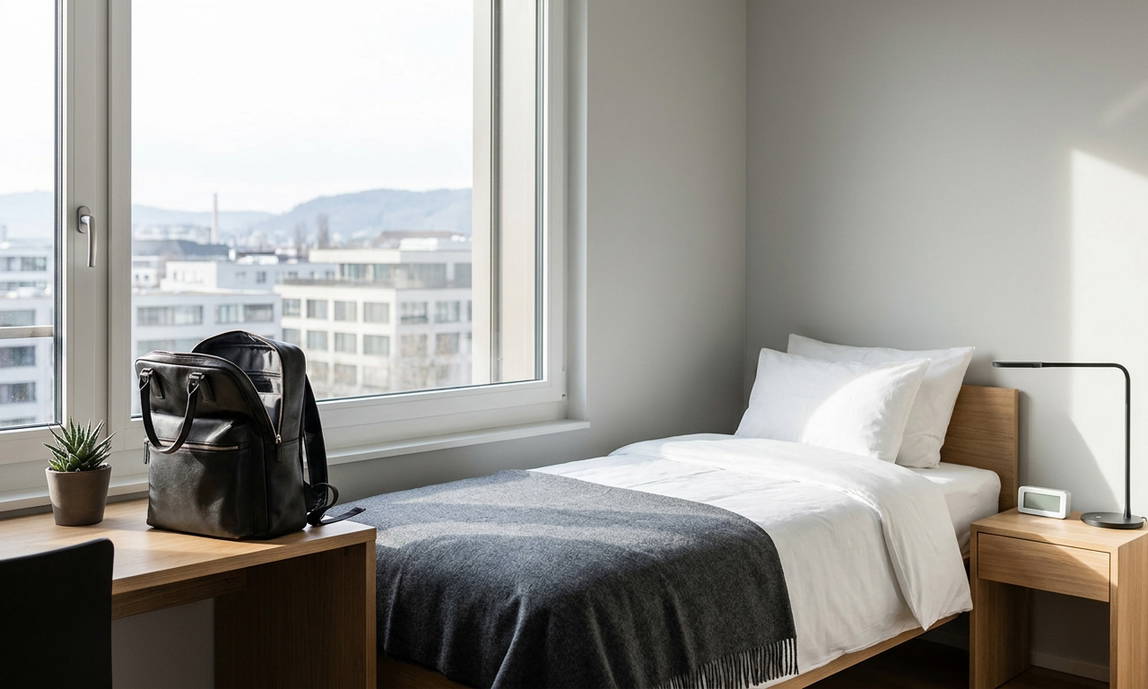
The 2026 Swiss housing crisis is hitting the country's major urban centres hard. With vacancy rates reaching historically low levels, finding a place to live is becoming a real challenge for young professionals and expatriates. Faced with this property shortage, one solution is standing out and gaining unprecedented momentum: renting a room in a homestay. At Roomlala, we see every day how this practice turns a national constraint into a genuine opportunity. For Swiss homeowners and principal tenants, it is an opportunity to generate a secure extra income. For cross-border commuters, it provides the assurance of an affordable base. Here is a look at a phenomenon that is reshaping the Swiss property landscape.
The 2026 housing crisis in Switzerland: a market under high pressure
In 2026, Switzerland is going through one of the most severe property crises in its recent history. Figures published by the Federal Statistical Office (FSO) are clear: the national vacancy rate is stagnating at around 1%, a critical threshold that paralyses residential mobility. This shortage is all the more marked in economically dynamic cantons, where demand far outstrips the supply of new builds.
Read also: Student accommodation shortage in 2026: Homestays as a key solution for the new academic year, Housing crisis in Portugal: 2026 tax incentives for room rentals and Fraud in temporary leases in Spain: The new 2026 rules that secure long-term shared housing
The situation is particularly alarming in the large metropolitan areas. In Zurich, the vacancy rate has fallen below 0.5%, making the search for long-term accommodation in Zurich extremely complex and expensive. As for French-speaking Switzerland, Geneva has a vacancy rate of about 0.3%. Queues at property viewings are getting longer, and the dossiers required by property management agencies have become draconian, effectively excluding many solvent applicants who do not fit into traditional boxes.
The primary victims of this extreme tension are young professionals, students and, above all, cross-border commuters. The latter, essential to the Swiss economy, often find themselves forced to accept gruelling commute times for lack of being able to live near their place of work. It is in this context of deadlock that solidarity and citizen ingenuity are taking over, making homestay accommodation an essential and pragmatic alternative.
Renting a room to a cross-border commuter: a win-win solution
Meeting an explosive demand for flexible housing
Switzerland currently has more than 410,000 cross-border commuters. The canton of Geneva alone accounts for nearly 48% of French commuters. These professionals, whether they are nurses, engineers or commercial employees, have a massive need for flexible housing. Renting a room for a cross-border commuter from Monday to Friday, for example, is seeing meteoric growth. It allows these workers to reduce their daily fatigue while returning to their families at the weekend.
At Roomlala, we find that flexibility is the watchword of 2026. Unlike a traditional long-term lease that imposes heavy guarantees and a strict commitment, renting a room by the month adapts to probationary periods, fixed-term contracts or specific assignments. Cross-border commuters thus find an invaluable work-life balance, avoiding the endless traffic jams at the Bardonnex or Thônex-Vallard customs checkpoints.
Let us take a concrete example: Julien, an IT developer living in Annecy, has landed a job in Geneva. Rather than spending three hours a day in transport, he rents a room in a homestay via Roomlala from Monday evening to Thursday morning. This setup allows him to be productive at work while maintaining his personal quality of life, all for a budget well below that of renting a studio in Geneva.
Additional income in the face of property inflation
For Swiss hosts, the financial argument is major. With the increase in the cost of living and rising charges, the profitability of a homestay in Switzerland offers a real breath of fresh air. Renting out an unoccupied room helps to significantly offset one's own housing costs, whether it be paying off a mortgage or paying one's principal rent.
On average, renting a furnished room in the cantons of Vaud, Geneva or Zurich can generate between 600 and 1,000 CHF per month, depending on the location and the amenities provided. This extra income, regular and secured by platforms like ours, allows many households to maintain their purchasing power in the face of inflation. It is an intelligent economic approach that optimises existing built space without requiring new construction.
Moreover, the human aspect should not be overlooked. Welcoming a cross-border worker is also about opening yourself up to new encounters and creating social ties. Many of our users testify to beautiful friendships born from a simple cohabitation of a few months, proving that the financial aspect is often accompanied by true human wealth.
Legal framework and procedures: what you need to know before you start
The right to sublet guaranteed by Article 262 of the CO
It is natural to have questions about the legality of subletting in Switzerland. Rest assured: in 2026, the practice is fully legal and regulated. Swiss citizens actually reaffirmed their commitment to this right by rejecting, during the federal vote in November 2024, a bill that aimed to drastically restrict subletting. Thus, Article 262 of the Code of Obligations (CO) continues to guarantee the tenant the right to sublet all or part of their home.
However, this right comes with strict duties. The golden rule is transparency: a principal tenant must imperatively inform their landlord or property management agency and obtain their prior consent before welcoming a subtenant. The landlord can only refuse for valid reasons defined by law, in particular if the conditions of the sublet are abusive or if they present major drawbacks for them.
In practice, at Roomlala, we advise you to send a registered letter to your property manager specifying the exact terms of the rental: the identity of the cross-border worker, the planned duration of the stay and the amount of rent requested. This proactive approach demonstrates your good faith and prevents any subsequent dispute, guaranteeing a serene experience for all parties involved.
Avoiding abuse and setting the fair price
One of the legal grounds allowing a landlord to refuse a sublet is if the principal tenant is making an abusive profit. Swiss law is very clear on this point: the goal of subletting is not to get rich at the expense of the subtenant, but to share housing costs fairly. The rent charged must therefore be strictly proportional to the surface area rented and the use of common areas.
However, jurisprudence tolerates a legitimate surcharge if the room is rented furnished. As a general rule, a surcharge of 15 to 20% maximum is accepted by the courts to compensate for the wear and tear of furniture (bed, wardrobe, desk), the provision of bed sheets, access to Wi-Fi, or even the use of electricity and heating. It is crucial to detail these elements in the sublease agreement.
Here is a clear use case: if you rent a 100 m² apartment for 2,000 CHF per month and you sublet a 20 m² room (which is 20% of the surface area), the base rent for the room should be 400 CHF. By adding a 15% surcharge for the furnishings and internet/electricity charges, a rent of 460 CHF is perfectly fair, legal and unassailable. It is this equity that ensures the lasting success of the formula.
Taxation and good practices for successful cohabitation
Tax declaration and financial transparency
The financial aspect of renting a room does not stop at receiving the rent. It is essential to remember that the income generated by renting a room in a homestay constitutes taxable income. In Switzerland, tax legislation depends on the canton of residence, but the basic principle remains the same: these amounts must appear on your annual tax return.
We recommend that you keep simple but rigorous accounts of the rent received. In most cantons, you can deduct the actual costs associated with the rental from this income (share of charges, direct maintenance of the room). Transparency with the tax authorities is the guarantee of a lasting activity without any unpleasant surprises. Do not hesitate to consult the specific guidelines of the tax administration of your canton (Geneva, Vaud or Zurich) to optimise your legal deductions.
By using Roomlala, the traceability of your income is facilitated. The history of your bookings and payments received online provides a clear and precise justification for your tax return, greatly simplifying your administrative procedures at the end of the year.
The keys to a peaceful and organised shared housing experience
Whether it is a shared housing in Geneva for a young professional or hosting a cross-border commuter, the success of the experience relies on communication. Even before the tenant arrives, it is essential to establish clear house rules. Address everyday topics without taboo: use of the kitchen, bathroom schedules, household management, or rules regarding guests.
We find that drafting a short cohabitation charter, annexed to the tenancy agreement, helps to avoid 90% of misunderstandings. For example, if you are renting to a cross-border commuter who goes home for the weekend, specify whether the room can be used or not to store their personal belongings during their absence. Also clearly define the division of space in the fridge and cupboards.
Finally, the Roomlala platform supports you at every step to secure this cohabitation. From verifying tenant profiles to providing contract templates compliant with Swiss law, we do everything possible to ensure your room rental takes place in an atmosphere of absolute trust. Faced with the housing crisis, opening your door is a powerful, profitable and deeply useful gesture. Ready to take the plunge?
There are no comments yet.
Leave a comment
You must be logged in to post a comment.