
 SEARCH
 LIST YOUR PROPERTY
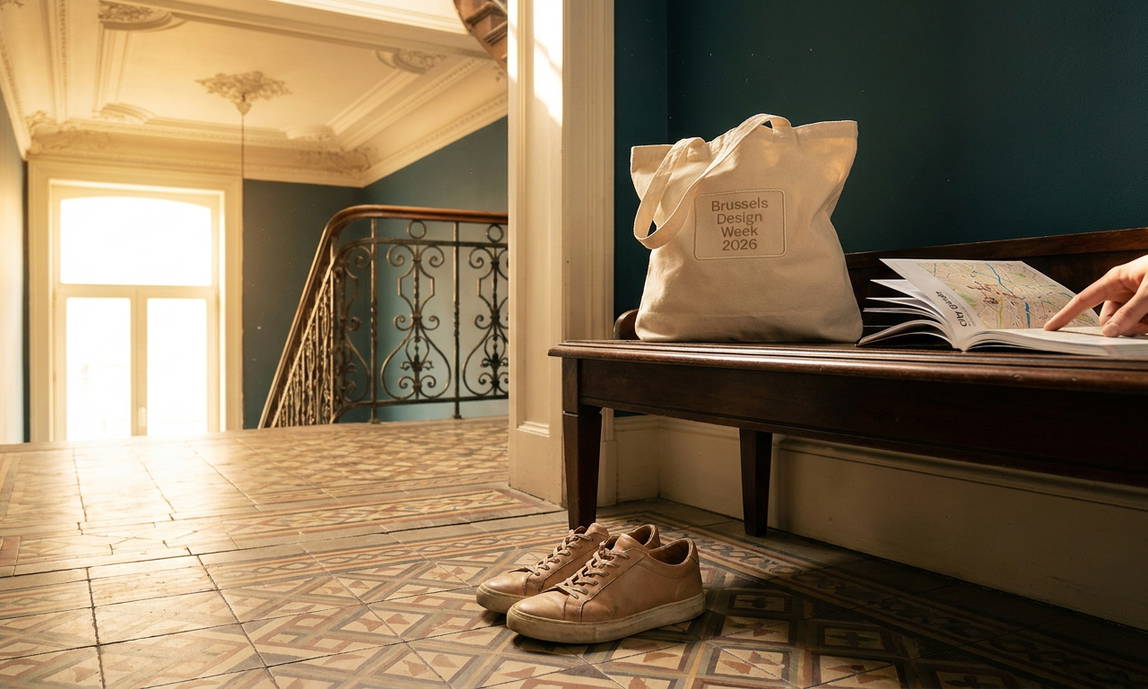
Every year at the end of summer, the Belgian capital transforms into a true showcase for contemporary design. If you are a fan of interior design, innovative furniture or urban art, you are likely aware that the must-attend event of the new academic and professional year is the Brussels Design September 2026. This year marks a historic turning point for the festival, which is getting a makeover for its 20th edition and embracing a whole new scale. At Roomlala, we know how much attending such an event can cost, particularly when it comes to accommodation.
Finding a comfortable, affordable and well-located place to stay is often an uphill battle when thousands of professionals and art lovers converge on the same city. Hotels are fully booked months in advance and the prices of standard rentals soar. This is where booking a homestay comes into its own. Not only does this solution allow you to make significant savings, but it also offers an authentic immersion into local life.
Read also: Lille Braderie 2026: The best way to stay in the heart of the event without breaking the bank, Fierté Montréal 2026: Experience the festival from the inside by staying in a homestay and Calgary Stampede 2026: The best way to find affordable accommodation during the festival
In this comprehensive guide, we reveal all our tips for finding the perfect design festival accommodation. We will also provide an update on the latest 2026 Brussels housing regulations to ensure your stay is completely safe. Prepare your sketchbooks and cameras, we are taking you on a journey to discover Brussels design in the best possible conditions!
Brussels Design September 2026: A 20th edition under the sign of renewal
Key dates and the inauguration of "The Hub"
To celebrate its 20th edition, the famous Brussels design month is undergoing a major transformation. Although the search term Brussels Design September 2026 remains on the lips of regulars, the festival is officially changing its name this year to become the Brussels Design Week. This adjustment reflects a desire to focus creative energy on a more intense and richer period. The festival will take place from Thursday 24 September to Sunday 4 October 2026, offering ten days of effervescent programming throughout the Belgian capital.
The big innovation of this 2026 edition is undoubtedly the inauguration of "The Hub". This brand new, unique central venue has been designed to serve as a real anchor point for both professionals in the sector and the general public. Gone are the days when visitors had to run from one end of the city to the other without a meeting point! The Hub will centralise major exhibitions, cycles of expert conferences and informal meeting spaces.
In practical terms, if you are a young designer looking to network or just a curious amateur, The Hub will be your daily starting point. You will find maps of the various routes there, be able to attend masterclasses in the morning and return in the evening for exhibition openings or networking events. At Roomlala, we recommend that you look for accommodation easily connected to this new nerve centre by public transport (STIB), in order to optimise your days of visits.
Why accommodation becomes a challenge during the festival
The appeal of the Brussels Design Week is well-established. Thousands of international visitors, from furniture buyers to specialised journalists and art students, flock to Brussels. This massive concentration over about ten days creates extreme pressure on the housing market. Traditional hotels, aware of this high demand, often apply high-season rates, making the stay prohibitive for smaller budgets.
Moreover, the very spirit of the festival, focused on conviviality, exchange and discovery, sometimes contrasts with the cold, impersonal nature of a standard hotel room. Festival-goers are increasingly looking for a comprehensive experience where the place of residence extends the cultural immersion. It is precisely this need for authenticity that drives many travellers to rethink how they stay during major cultural events.
Opting for an alternative design festival accommodation therefore becomes an economic as well as a philosophical necessity. By choosing to stay with a local in Brussels, you avoid the spike in hotel prices while ensuring a warm welcome. Many hosts registered on Roomlala are themselves sensitive to culture and lifestyle, and are delighted to welcome festival-goers to share the excitement of this creative week with them.
The undeniable advantages of a homestay in Brussels
A controlled housing budget to invest in design
The first argument in favour of renting a homestay in Brussels is indisputable: the financial aspect. On average, a night with a private individual costs two to three times less than a night in a mid-range hotel in the centre of the capital. This price difference is a major asset, especially if you plan to stay for the entire duration of the festival, from 24 September to 4 October.
Let's imagine a concrete case: an interior design student coming from Paris to attend the Brussels Design Week. By saving around fifty euros a night thanks to their homestay, they free up a substantial budget. This saved amount can be reinvested in a much more relevant way: buying tickets for paid exhibitions, acquiring pieces from local creators, or even treating yourself to good Brussels gourmet restaurants between two exhibition openings.
At Roomlala, we facilitate the secure connection between hosts and travellers to guarantee fair and transparent rates. Additional costs are minimised, and you have access to a kitchen, allowing you to prepare your own meals and make further savings on daily dining. It is the ideal formula for experiencing Brussels accommodation in an intelligent and economic way.
Experience the festival like a true Brussels local thanks to your host
Beyond the financial aspect, the human experience is the true heart of a homestay. Brussels is a complex city, made up of neighbourhoods with very distinct identities, sometimes difficult to grasp for a weekend visitor. Your Brussels host will be your best asset for deciphering the city. They know the shortcuts, the most reliable tram lines and the little spots that do not appear in official tourist guides.
For example, if the official Brussels Design September 2026 programme takes you to the Dansaert district for fashion or the Marolles for vintage, your host will be able to recommend the ideal local café for a break, or the emerging art gallery hidden at the end of a cul-de-sac in Ixelles. These local recommendations have inestimable value for enriching your design journey.
- The host's advice: Take advantage of breakfast to discuss your plans for the day.
- Cultural immersion: Discover the typical interior architecture of Brussels townhouses from the inside.
- Conviviality: Share your impressions of the day's exhibitions when you return in the evening, over a Belgian beer or a tea.
Safety and new standards: what changes for your accommodation in Brussels in 2026
Strict habitability rules for your comfort
While conviviality is paramount, safety and comfort are just as important. At Roomlala, we make it a point of honour to inform our users of legal developments. Since 1 January 2026, the Brussels-Capital Region has implemented new strict quality standards for all housing, including those offered for short-term rental. These rules aim to guarantee an impeccable stay for travellers.
One of the flagship measures of this new 2026 regulation concerns the minimum surface area of rooms. For a room to be rented to a single person, it must now measure at least 18 m² (or 12 m² if it is housing specifically dedicated to a student upon presentation of proof). This standard ensures you have sufficient living space to rest, store your belongings and even work or sketch if you are a design professional on the move.
Another major advance for your safety is the total and definitive ban on type B gas boilers in bedrooms since early 2026. This radical measure was taken by the Brussels authorities to eradicate any risk of carbon monoxide (CO) poisoning. By booking via an regulated platform, you have the assurance that hosts are aware of these vital public health and safety standards.
A reassuring legal framework for short-term rentals
Renting a homestay in Brussels is not a lawless zone. On the contrary, the legal framework for tourist accommodation was considerably strengthened in 2026 to professionalise the sector and protect consumers. Any individual wishing to rent a room occasionally or regularly must comply with precise administrative obligations.
First of all, the host has a strict obligation to register officially with Brussels Economy and Employment. This registration allows the authorities to verify that the accommodation complies with the planning, fire safety and habitability standards mentioned above. A registration number is then issued to the host, as a guarantee of their reliability and legality.
Secondly, regarding tax, Brussels hosts are now required to file a monthly tax return related to their tourist accommodation activity. At Roomlala, we support our hosts in understanding these procedures so that they are in perfect order. For you, the tenant, this is the guarantee of staying with a responsible citizen, in a serene setting, far from the fraudulent listings that one can sometimes come across on unmoderated social networks.
How to choose your accommodation with Roomlala?
Anticipate your booking around strategic districts
To get the most out of the Brussels Design September 2026 (or Brussels Design Week), the location of your accommodation is strategic. Brussels is a sprawling city, and even if public transport is efficient, staying near the main events will save you precious time. We advise you to start your search on Roomlala several months in advance, ideally from the spring, to have the pick of the best neighbourhoods.
Which districts should you target? The Saint-Gilles district is historically renowned for its Art Nouveau architecture (notably the works of Victor Horta) and houses many designers' studios. It is a vibrant, bohemian district that is very popular with designers. The Dansaert district, in the city centre, is the epicentre of fashion and cutting-edge contemporary design. Finally, Ixelles, around Place Flagey or Le Châtelain, offers an exceptional living environment with its art galleries, concept stores and lively nightlife.
By using the search filters on the Roomlala platform, you can easily target these postcodes (1060 for Saint-Gilles, 1000 for the centre, 1050 for Ixelles). Do not hesitate to check the proximity of metro or tram stations on the map integrated into the listing to ensure easy access to "The Hub", the beating heart of the festival in 2026.
Talk with your host before confirming your stay
The key to a successful homestay lies in communication. Unlike a standard hotel booking, you will share the daily life of a person. It is therefore fundamental to ensure that your respective expectations are aligned. The secure Roomlala messaging system is designed precisely to facilitate this prior contact.
During your first contact, introduce yourself briefly. Explain that you are coming for the Brussels Design Week, specify your dates (between 24 September and 4 October) and your approximate arrival times. If you plan to return late in the evening after exhibition openings, ask if that is a problem. Also check the practical arrangements: provision of bed linen, access to the bathroom at peak times in the morning, or the possibility of using Wi-Fi to sort your photos from the day.
A fluid and polite exchange before booking is often the prelude to an excellent stay. Your host will be delighted to welcome a passionate and respectful traveller. By following these tips and taking advantage of the secure framework offered by the new 2026 Brussels standards, your immersion in the heart of Belgian design will undoubtedly be a memorable and enriching experience.
There are no comments yet.
Leave a comment
You must be logged in to post a comment.