
 SEARCH
 LIST YOUR PROPERTY

At Roomlala, we know how stressful housing matters can be, especially with the constant changes in legislation. If you are considering offering a homestay or subletting your flat while you are away, you have probably heard about a recent tightening of the Swiss tenancy law. Many tenants today worry about losing their home if they take this step. Rest assured, the reality of Swiss subletting in 2026 is much more favourable than the rumours suggest.
Indeed, a lot of conflicting information has been circulating following the intense political debates of recent years. The famous draft law aiming to drastically restrict your rights caused a lot of controversy, creating an atmosphere of uncertainty for principal tenants. Our mission today is to dispel these doubts with clear, verified information updated for 2026.
Read also: 2026 academic start in Switzerland: The boom in intergenerational housing in the face of shortages, Student return to Halifax 2026: Homestay, a key alternative in the face of shortages and Ban on renting energy-inefficient properties from 2026: Homestays as a legal solution
In this comprehensive article, we will decode the recent ups and downs of the Swiss Code of Obligations for you. We will explain step-by-step how to legally rent out a room, what your obligations are towards your landlord or property management company, and how to secure the process. Whether you want to host a student for a few months or sublet your flat while you are travelling abroad, you will have all the information you need to do so with complete peace of mind.
Understanding Swiss tenancy law: What has (or has not) changed in 2026
To fully understand the legal framework for Swiss subletting in 2026, it is essential to look back at a major recent political event. You may have read in the press that a planned revision of the Code of Obligations would have made it mandatory to obtain the landlord's written consent and strictly limited subletting to a maximum duration of two years. At Roomlala, we received countless messages from tenants worried about this threat of tightening rules.
The good news is that this restrictive draft law never came into force! During the popular vote on 24 November 2024, the Swiss people rejected this revision with 51.58% voting against it. In 2026, the law has not undergone this feared crackdown. The right to sublet remains a fundamental right of the tenant, protected by federal legislation, and property management companies cannot impose arbitrary two-year limits without valid justification.
Today, Article 262 of the Code of Obligations (CO) remains the standard. This article clearly states that the tenant may sublet all or part of the rented property with the landlord's consent. The rules of the game therefore remain balanced: you retain your freedom to sublet to ease your rent or keep your home during an absence, while respecting a duty of transparency towards the landlord.
Case study: Let us take the example of Sophie, who rents a 3-room flat in Lausanne. She is sent on a professional assignment to Berlin for 3 years. Under the rejected law, she would have had to give up her tenancy after two years. In 2026, thanks to the rejection of the revision, Sophie can perfectly well sublet her flat to a couple of expats for the full 3 years of her assignment, as she has the firm intention of moving back in when she returns to Switzerland.
The 3 legal conditions to legally rent out a room
1. Obtain the landlord's prior consent
The first golden rule, and arguably the most important, is the obligation to obtain the consent of your landlord or property management company before the subtenant arrives. Please note, this is not just a matter of informing them; it is a request for authorisation. If you sublet on the sly, you risk early termination of your tenancy for good cause, which is a risk we strongly advise against taking.
Although Swiss law (Article 262 of the CO) does not formally require this consent to be in writing, at Roomlala, we consider written landlord approval as an absolute protection. Faced with a property management company that might change management or a landlord with a poor memory, a written document (signed letter or confirmed email) is your only tangible evidence in the event of a dispute.
To obtain this agreement, you must be completely transparent. The landlord has the right to know the identity of the subtenant (first name, surname, date of birth), the terms of the sublet (the amount of the sub-rent), and the planned duration. If you refuse to share this information, the landlord has the legal right to object to the subletting.
Case study: Marc wants to offer his spare room on Roomlala to host EPFL students. Before publishing his listing, he sends a registered letter to his property management company. He indicates his intention to sublet a 15m2 room, states that the rent requested will be proportional to the surface area, and attaches the draft sublease contract. Having all the information at hand and seeing that Marc is serious, the management company sends him written authorisation within a few days.
2. Do not generate abusive profit
The second legal condition states that the terms of the sublease must not be abusive. Simply put, subletting in Switzerland is not intended to be a lucrative business designed to enrich the principal tenant at the landlord's expense. If you rent out your entire flat, the rent you ask from your subtenant must not exceed the rent you pay yourself, including charges.
If you choose to legally rent out a room (i.e. only a part of the accommodation), the calculation must be done pro-rata based on the area rented and shared common spaces. It is, however, legal and tolerated to apply a slight surcharge if you provide furniture. Swiss case law and the ASLOCA generally consider a surcharge of 10% to 20% maximum for wear and tear on furniture and administrative costs (such as internet or electricity if included) to be acceptable and not abusive.
If your property management company discovers that you are subletting your 1500 CHF flat for 2500 CHF per month, they are entitled to demand an immediate stop to the subletting, terminate your tenancy, and even claim restitution of the profits illicitly obtained. Financial transparency is therefore your best ally.
Case study: Clara rents a 4-room flat in Geneva for 2000 CHF per month. She decides to sublet a furnished room which represents, with access to common areas, about one third of the flat's usage. The base rent for the room would be about 660 CHF. By adding 15% for the depreciation of her nice furniture and the inclusion of Wi-Fi and home contents insurance, she sets the sub-rent at 760 CHF. This amount is perfectly legal and does not constitute an abusive profit.
3. Avoid major disadvantages for the landlord
The third ground for refusal provided by law concerns major disadvantages that the subletting could cause the landlord. This concept, although it may seem subjective, is strictly framed by case law. It refers to situations where the subletting would change the purpose of the accommodation or cause proven nuisances to the neighbourhood or the building.
For example, transforming a strictly residential flat into business premises, a music studio generating noise pollution, or a place of intense through-traffic (such as a daily rotation of noisy tourists) constitutes a major disadvantage. Similarly, overcrowding is a valid ground for refusal: you cannot sublet a 20m2 studio to a family of four.
As long as your subtenant uses the accommodation in a normal and respectful manner, in accordance with the principal tenancy (standard residential use), the landlord cannot invoke this reason to deny you the right to sublet. This is why it is crucial to select your subtenant carefully and ensure they will respect the building regulations.
Case study: Julien wants to sublet his room to a friend who is a craftsman and plans to use the living room to store heavy site equipment and receive clients. The property management company firmly objects, citing a change of use (from residential to commercial) and a risk of damage to common areas. This refusal is completely legal. Julien will have to find a subtenant with a standard profile (student, employee) to obtain approval.
Swiss shared housing rules: Managing subletting day-to-day
The exclusive legal responsibility of the principal tenant
A crucial point that we often remind people of at Roomlala concerns responsibility. By subletting a room, you take on the role of landlord towards your subtenant. However, in the eyes of your landlord or property management company, you remain the sole tenant and the only person legally responsible for the accommodation. There is no direct legal link between the landlord and your subtenant.
This means that if your subtenant does not pay you their rent, you are still under an absolute obligation to pay your full rent to the management company at the end of the month. Similarly, if the subtenant causes damage in the flat (scratches on the floor, broken window), the management company will turn to you to demand repairs at the end of the tenancy.
To protect yourself, we strongly advise you to require your subtenant to have private civil liability (RC) insurance valid in Switzerland. This is an essential standard of Swiss shared housing rules. In the event of accidental damage, their insurance will cover the costs, thus preventing you from having to pay out of your own pocket for damage you did not cause.
Case study: During a party, Thomas's subtenant accidentally knocks over a candle and burns a section of the carpet in their room. The management company sends the 800 CHF replacement bill to Thomas. Fortunately, Thomas had required a certificate of RC insurance when signing the sublease contract. The subtenant's insurance covers the costs, and Thomas does not lose a cent.
Drafting a proper sublease contract
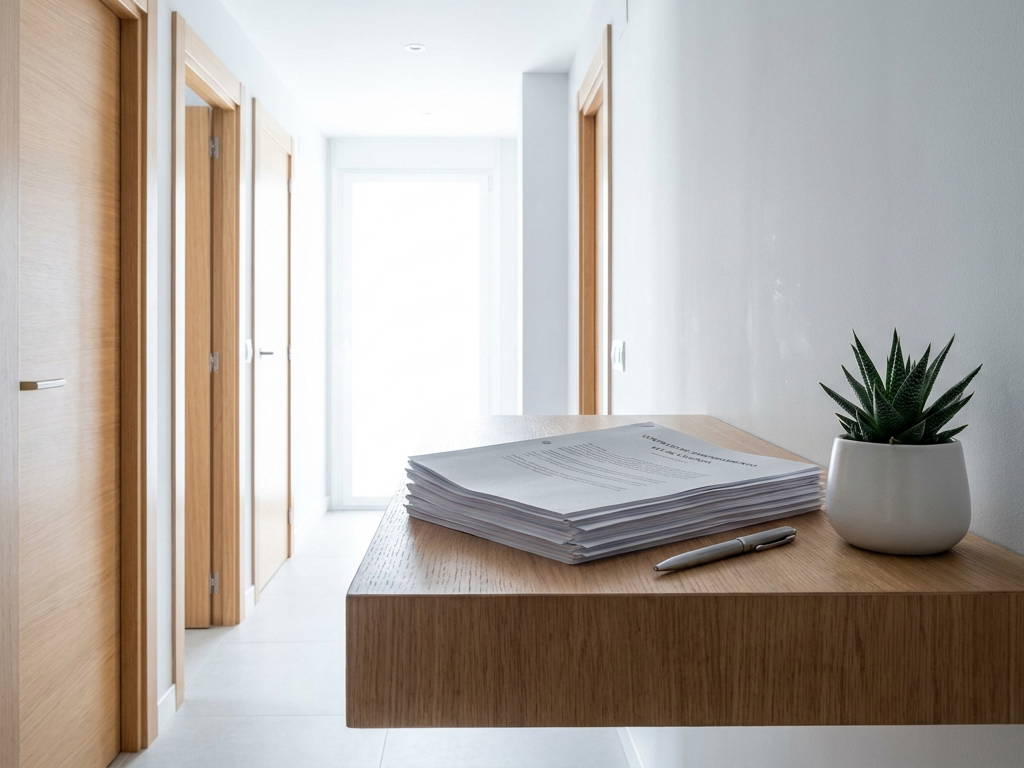
Even if you are subletting a room to a close friend or family member, writing a sublease contract is essential. This document governs your relationship and prevents misunderstandings. It must clearly state the names of the parties, the description of the sublet premises (e.g., room number 2 and shared access to the kitchen and bathroom), the amount of rent and charges, as well as termination procedures.
In addition to the contract, it is imperative to carry out a meticulous inventory check upon arrival and departure, ideally with photos. This is the document that will allow you to prove the initial state of the room in case of damage. Do not forget to ask for a security deposit, which cannot legally exceed three months' rent for a residential tenancy, and which must be deposited into a blocked bank account in the subtenant's name.
At Roomlala, we facilitate these steps by putting you in touch with verified profiles, but administrative rigour remains your responsibility. Free sublease contract templates that comply with Swiss law are also easily found from tenant defence associations such as the ASLOCA.
Case study: Élodie hosts a foreign student via Roomlala. She prints a standard Swiss sublease contract, specifies that the notice period for departure is 3 months (as required by law if nothing else is agreed for unfurnished accommodation, or 2 weeks for a furnished room according to Art. 266e CO). She does a detailed inventory check and asks for a one-month deposit. A few months later, the student has to leave suddenly. Thanks to the clear contract, Élodie collects the legal notice period and has time to find a new tenant without suffering a financial loss.
Duration and end of tenancy: What are the prospects for the future?
As we have seen, the threat of a strict two-year limit was swept away by the Swiss voters. However, this does not mean that subletting can go on indefinitely without justification. The case law of the Swiss Federal Tribunal maintains a golden rule: subletting must be temporary in nature, even if that duration is measured in years.
In short, the principal tenant must intend to move back into the room or flat eventually. If you move out of your home with no intention of ever returning, and you sublet it indefinitely to keep an advantageous rent, the management company can consider this a disguised transfer of tenancy, which is a ground for termination. You must be able to demonstrate, if asked, that your absence or the provision of the room is linked to a transitional situation (studies, travel, temporary family situation).
Regarding the termination of the sublease contract, it follows the same rules as the principal tenancy. If you rent out a furnished room, the legal notice period is two weeks at the end of a month of tenancy (Art. 266e CO). For an entire flat or an unfurnished room, the period is three months for the terms fixed by local custom or the contract. It is therefore crucial to anticipate these periods if you plan to reclaim your space.
Case study: Antoine has sublet his Geneva flat for 4 years while he worked in Zurich. The management company starts to get impatient and asks for his intentions. Antoine proves that his employment contract in Zurich is temporary and that he is moving back to Geneva the following year. The management company cannot terminate his tenancy. Conversely, if he had bought a house in Zurich and no longer had any ties to Geneva, the management company could have demanded the end of the subletting.
- In summary for a successful sublet in 2026:
- Always ask for prior authorisation (aim for written landlord approval).
- Be transparent about the rent and do not make an abusive profit.
- Ensure the subtenant has RC insurance.
- Draft a clear contract and carry out an inventory check.
- Keep in mind the intention to reclaim your home eventually.
By following these few simple rules from the Code of Obligations, you can enjoy all the benefits of subletting without any stress. At Roomlala, we are proud to support you in these home-sharing processes, which remain, more than ever in 2026, a future-proof solution to address the housing shortage in Switzerland legally.




There are no comments yet.
Leave a comment
You must be logged in to post a comment.