
 SEARCH
 LIST YOUR PROPERTY

In this year of 2026, the real estate landscape of British Columbia has permanently changed its face. Faced with a persistent housing crisis and rampant inflation, the provincial government has taken strong action to regulate the rental market. Gone are the days when any host could turn their flat into a transient hotel without accountability. Today, regulations have tightened considerably, reshaping opportunities for both investors and individuals. At Roomlala, we are observing a profound shift: faced with drastic restrictions on short-term rentals, more and more hosts and tenants are turning to a solution that is much more stable, profitable, and human: monthly room rentals and long-term shared housing. Let's discover together why and how this transition is happening, and how you can take advantage of it in full compliance with the law.
Understanding the new rules of the Short-Term Rental Accommodations Act in 2026
The strict principal residence rule
British Columbia's Short-Term Rental Accommodations Act has set a framework of unprecedented severity to curb property speculation. The flagship measure of this law now strictly limits short-term rentals to the host's principal residence. This means it has become illegal to rent out an investment property or a second home for short stays in most of the province. The government is thus seeking to return these properties to the long-term rental market for local residents.
Read also: 2027 rent cap in British Columbia: Renting a room to combat inflation, Rising rental costs in Switzerland (Winter 2026): Renting out a room to balance your budget and 2027 Finance Bill and furnished rentals: What hosts need to know this autumn
This restriction applies systematically in all municipalities with more than 10,000 inhabitants. Medium-sized towns and large cities are therefore all affected. The law still allows for a small amount of flexibility: a host can rent out a secondary unit (such as a finished basement or a laneway house) located on the same property as their principal residence, but this is the only major exception. Investors who owned multiple flats dedicated solely to tourism have had to completely overhaul their strategy.
Let's take a concrete example: Mark, a host who owns a flat in Victoria that he does not live in, can no longer rent it out by the night. If he does, he faces immediate prosecution. To continue generating income from this property, Mark has had to turn his flat into shared housing for students and young professionals, with leases of several months. This use case has become the norm in 2026 for all ineligible properties.
At Roomlala, we support hosts like Mark in this transition every day. We provide tools to find reliable tenants for extended periods, thus ensuring that your property strictly complies with provincial legislation while remaining a solid and regular source of income.
The specific case of Vancouver: the 90-day threshold
The city of Vancouver has always been a pioneer in real estate regulation in Canada. In 2026, the municipality took a harder line by changing the very legal definition of a short-term rental. Previously set at any stay of less than 30 days, the limit has been drastically extended to include any stay of less than 90 consecutive days. This is a monumental change that completely redefines the metropolitan rental market.
Practically speaking, this means that any stay of less than three months is now subject to strict short-term rules, including the requirement to register with the provincial registry and obtain a very expensive local business licence. Stays of 90 days or more, on the other hand, fall into the long-term rental category. These benefit from a much more flexible framework, freeing hosts from overwhelming paperwork.
To illustrate this point, let's imagine Sarah, who rents out a room in her Vancouver city centre flat. If she hosts a guest for 80 days, she must pay the city's annual business licence, which amounts to approximately $1,108, and maintain a complex register. However, if she uses Roomlala to rent out that same room for a university semester (more than 90 days), she is completely exempt from these fees and procedures. The savings are substantial.
This is precisely why we encourage our community to favour monthly or quarterly stays. Not only do you save on licence fees of over $1,000 per year, but you also ensure peace of mind by hosting stable tenants, such as international students or workers on temporary missions, who are looking for exactly this type of homestay accommodation.
Why sanctions and costs are driving the shift to long-term rentals
Deterrent fines and heavy additional costs
The British Columbia government has not done things by halves to enforce its new legislation. The penalties for illegal short-term rentals are designed to be particularly deterrent. In 2026, hosts who break the rules face fines of up to $3,000 per day per infraction. A single weekend of illegal renting can therefore turn into a financial nightmare of nearly $10,000.
Beyond provincial fines, municipalities have set up teams dedicated to tracking down illegal listings on the internet. Algorithms cross-reference platform data with land registries to identify offenders. It has become virtually impossible to slip through the net. The financial risk is simply too high to justify undeclared tourist rentals.
Consider the use case of a host in Richmond who thought they could discreetly rent their condo to passing tourists. After only two weeks of illegal renting, they received a formal notice accompanied by a cumulative fine of $42,000. This type of example, which was widely publicised, created a real shockwave, pushing hosts en masse to remove their short-term listings and turn to legal and secure solutions.
At Roomlala, the safety and legal compliance of our users are our absolute priority. By steering towards renting rooms for stays of 90 days and more, you completely eliminate the stress associated with these sanctions. You benefit from a clear legal framework, governed by the Residential Tenancy Act, which protects both the host and the tenant, without risking ruining your investment due to an administrative fine.
Local exceptions to keep in mind
Although provincial law is strict, the legal landscape in British Columbia includes some important nuances. The government has acknowledged that certain local economies rely almost exclusively on tourism. This is why exceptions have been made for certain resort municipalities and small communities of fewer than 10,000 inhabitants, where the principal residence rule does not apply in the same way.
For example, in 2026, a city like Kelowna obtained specific exemptions to temporarily exempt itself from the principal residence rule in certain very specific areas, in order to support its summer tourist industry and vineyards. These exemptions are, however, often temporary and subject to annual reviews, which maintains a certain level of uncertainty for long-term investors.
If you own a holiday home in Whistler or a flat near Lake Okanagan, it is crucial to check the municipal bylaws in force at the time of renting. A common use case is that of the investor who buys a property in an exempt area, but sees local regulation change the following year, making their business model obsolete overnight.
Faced with this regulatory instability, even in exempt areas, we find that a large proportion of hosts prefer to play it safe. Renting a room to a seasonal worker for 4 to 6 months via Roomlala guarantees predictable income, without having to scrutinise municipal law changes every quarter. It is the choice of serenity and sustainable profitability.
Shared housing and room rentals: The ideal solution to make your property profitable
Faced with this regulatory and financial wall, monthly room rentals and shared housing have emerged as the real winners of 2026. Hosts have quickly realised that leaving a property empty or trying to circumvent the law was not viable. By dividing a large flat into several rooms rented individually for periods exceeding 90 days, the rental yield once again becomes extremely attractive, sometimes even higher than tourist rentals once fees are deducted.
Shared housing also meets strong societal demand. With the cost of living in British Columbia, many young professionals, students, and even seniors are looking for affordable housing solutions. By offering a homestay or by turning an investment into shared housing, you are meeting a vital need while ensuring an occupancy rate close to 100%. No more empty months during the low tourist season!
Furthermore, daily management is considerably eased. Short-term rentals required constant cleaning, a key handover every three days, and managing late-night unforeseen events. With long-term tenants, you return to a normal rhythm of life. Your tenants take care of routine maintenance, and interactions take place on the basis of respectful and lasting cohabitation.
Here are the concrete advantages of switching to long-term room rentals with Roomlala:
- Total exemption from costly licences: Save over $1,100 per year by avoiding short-term business licences.
- Stable and guaranteed income: A 3, 6, or 12-month lease ensures a fixed income, without the volatility of tourism.
- Less wear and tear: Long-term tenants take better care of the property than transient travellers.
- Absolute legal compliance: You can sleep soundly, without fearing fines of $3,000 per day.
- Building social ties: Homestay accommodation allows for enriching and human encounters.
How to successfully transition to homestay accommodation with Roomlala
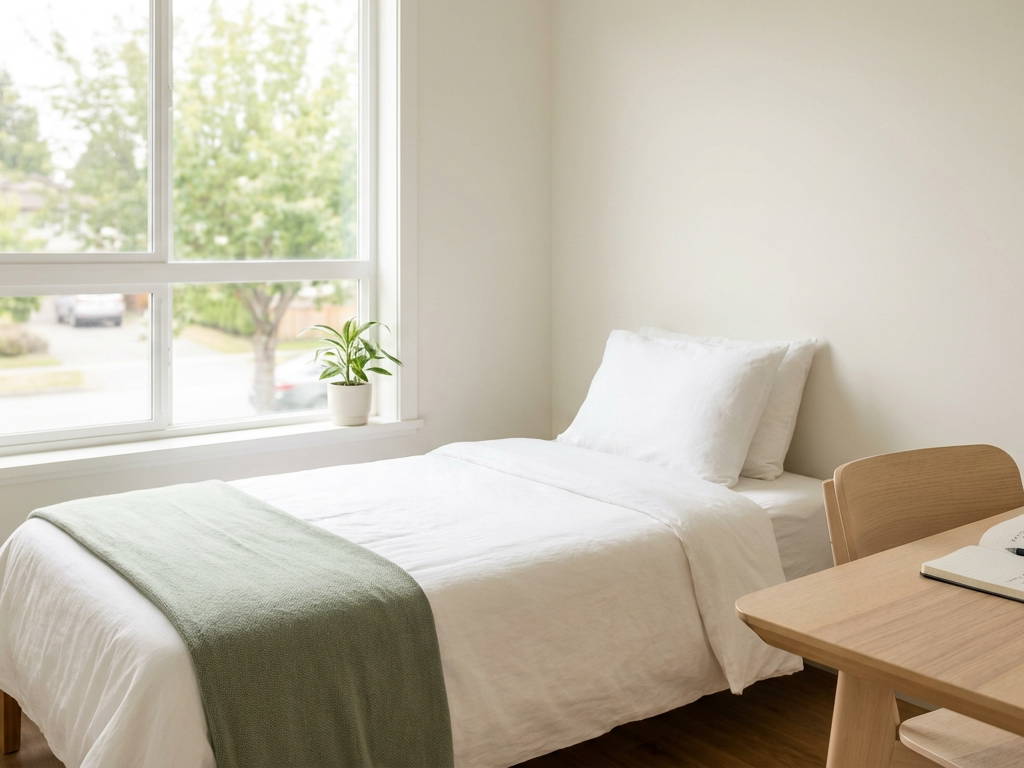
Moving from tourist rentals to long-term rentals or shared housing requires a few adjustments, but the process is simple if you follow the right practices. At Roomlala, we have optimised our platform to support you at every step. The first thing to do is to rethink the layout of your space. A room intended for a student for a semester must necessarily include a comfortable workspace, adequate storage, and high-speed internet connection.
However, there is a crucial legal point to watch out for in British Columbia concerning subletting. If you are yourself a tenant of your principal residence and wish to sublet a spare room to cope with rising rents, you cannot do so without agreement. Provincial law strictly requires you to obtain written permission from your landlord before signing a subletting agreement. A typical use case is that of a tenant in Burnaby who sublets a room without agreement: they risk immediate eviction for breach of lease.
Furthermore, if you live in a condominium building (strata), you must absolutely check the rules of your association (bylaws). Many stratas in British Columbia impose restrictions on the number of occupants, the age of residents, or strictly prohibit shared housing altogether. Obtaining the approval of the strata council is a mandatory step to avoid internal building fines, which can be added to provincial sanctions.
Once these checks are done, uploading to Roomlala is child's play. To guarantee a secure experience, we advise you to follow these key steps:
- Check profiles: Use Roomlala's secure messaging to communicate with candidates and verify their motivations before accepting a booking.
- Formalise the agreement: Even for a homestay, always sign a standard British Columbia Residential Tenancy Agreement to clarify house rules and notice periods.
- Request written authorisations: Keep your landlord's or strata's agreement in a safe place if you are concerned.
- Set clear cohabitation rules: Address the issue of cleaning, guests, and quiet hours from the start to ensure perfect harmony over the long term.
In 2026, renting out rooms is no longer a plan B; it is the smartest strategy to navigate the complex real estate market in British Columbia. With Roomlala, you have the assurance of finding verified profiles and renting out your space with peace of mind, in full compliance with the new laws in force.

There are no comments yet.
Leave a comment
You must be logged in to post a comment.