
 SEARCH
 LIST YOUR PROPERTY
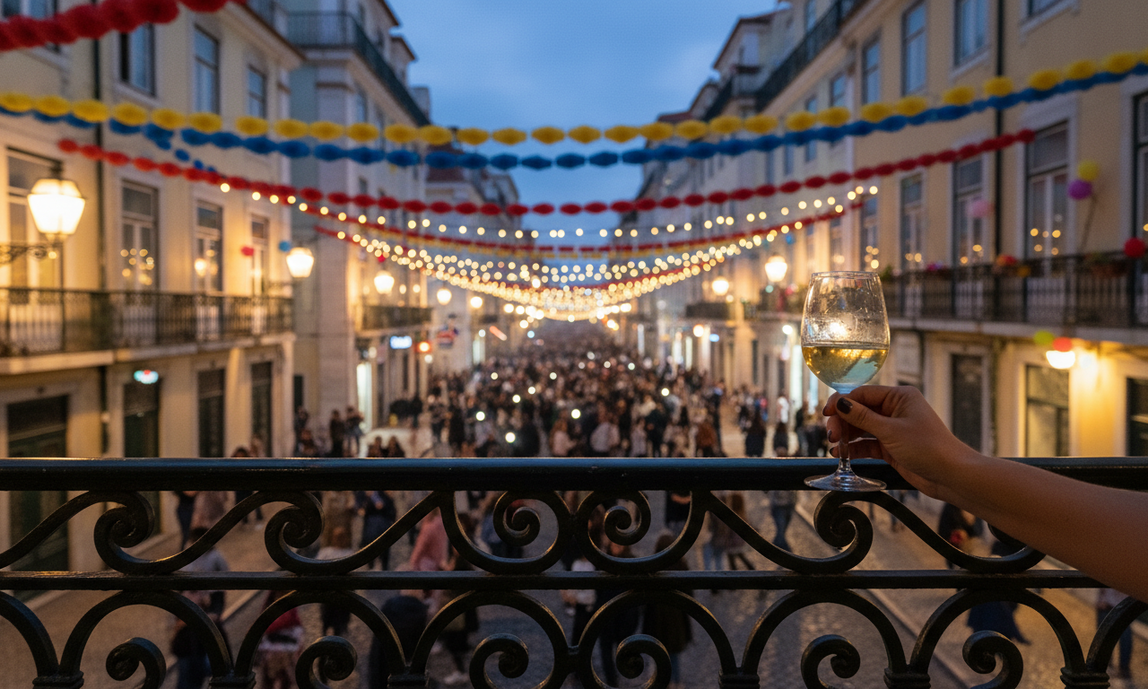
Lisbon in June transforms into a true open-air theatre. The air fills with the intoxicating scent of grilled sardines, streets are adorned with colourful bunting, and music echoes from every corner. You guessed it, the famous Festas de Lisboa are back! But while the desire to join these grand festivities is strong, the reality of the budget can sometimes dampen enthusiasm. With hotel prices soaring and entire homes becoming increasingly difficult to find in the historic centre, organising your stay can quickly feel like an uphill struggle. At Roomlala, we have the perfect solution for you: a homestay. It is not only an economical response to inflation, but also the best way to experience total immersion. Discover our complete guide to making the most of the Festas de Lisboa 2026 whilst managing your budget.
Festas de Lisboa 2026: A month of intense celebration
The Festas de Lisboa are not limited to just one day. They stretch across the entire month, from the 1st to the 30th of June 2026, transforming the Portuguese capital into a place of perpetual celebration. The official programme, supported by EGEAC and Visit Portugal, once again promises a rich schedule this year, mixing free concerts, exhibitions, street theatre, and gastronomic events. It is the perfect moment to discover Lisbon at its most joyful and traditional. Each neighbourhood competes in imagination to decorate its streets with paper garlands, balloons, and the famous "manjericos"—those small-leaved basil pots accompanied by a love poem, which are essential symbols of the festival.
Read also: Seville accommodation November 2026: The tip for the Film Festival, Toronto Santa Claus Parade 2026: Where to stay with your family without breaking the bank? and Montreux Comedy Festival 2026: The tip for affordable accommodation on the Riviera
The highlight: Saint Anthony's night (Santo António)
While the whole month of June is festive, there is one date you must mark in your calendar: the night of the 12th to the 13th of June. This is the peak of the festivities, dedicated to Santo António (Saint Anthony), the city's popular patron saint (although the official patron saint is Saint Vincent). On that night, Lisbon does not sleep. Residents and visitors flock to the narrow alleys to celebrate until the early hours. It is crucial to note one point of caution for your organisation: the 13th of June is a municipal holiday in Lisbon, though not a national public holiday in Portugal. This means that government offices, banks, and many local shops will be closed in the capital, but if you decide to take a trip to Sintra or Cascais that day, you will find that everything operates as normal.
The fervour of this night is indescribable. Lisboetas take to the streets to eat, drink, dance, and sing. The aroma of sardines grilled on impromptu barbecues on the pavements blends with the scents of caldo verde (traditional cabbage soup) and bifanas (marinated pork sandwiches). It is a unique sensory experience that plunges the visitor into the heart of the Portuguese soul. To take part in this night is to accept being carried by the crowd, to share communal tables with strangers, and to toast to the health of Santo António with a glass of local beer or sangria.
The must-sees: Marchas Populares and Arraiais
Among the flagship events of the Festas, the "Marchas Populares" hold a place of honour. On the evening of the 12th of June, the imposing Avenida da Liberdade is closed to traffic to make way for a spectacular parade. Each historic neighbourhood of Lisbon (Alfama, Bica, Madragoa, Castelo, etc.) presents its own choreography, flamboyant costumes, and original song, in a friendly but fierce competition to win the title of the best march of the year. The stands are packed, and the atmosphere is worthy of a carnival, with thousands of spectators cheering for their favourite neighbourhood.
The other pillar of the festivities is the "arraiais". These are street parties organised by local associations, sports clubs, or simply groups of neighbours. The most authentic and lively ones are found in historic districts like Alfama, Graça, Mouraria, or Bica. Getting lost in the labyrinth of the Alfama alleys on a June night is an adventure in itself. Rounding a corner, you will stumble upon a small square transformed into an impromptu dance floor where "pimba" music (rhythmic, popular Portuguese music) blares. It is in these arraiais that you feel the true human warmth of Lisbon, far from sanitised tourist trails.
Hotel inflation in Lisbon: why look for an alternative?
Whilst Lisbon remains a major draw, the cost of living for visitors has evolved considerably in recent years. Recent economic data published by ECO Sapo and Turisver are unequivocal: hotel inflation in Lisbon is particularly marked. In 2025, the hotel and catering sector was the primary driver of price increases in Portugal. This trend is being confirmed and intensified in 2026, making the organisation of a stay in the Portuguese capital much more expensive than before. For travellers on a tight budget, this can represent a real obstacle.
The situation becomes even more critical during peak event times. During the month of June, and particularly around the Saint Anthony's weekend (from the 11th to the 14th of June 2026), hotel rates can jump by more than 26% compared to the annual average. Establishments are fully booked months in advance, and the last remaining rooms are often offered at prohibitive prices. This dynamic pricing policy, whilst common in the tourism industry, heavily penalises spontaneous travellers or those looking for affordable accommodation in the heart of the action.
Let's take a concrete example. A couple wishing to stay 3 nights in a standard city-centre hotel (Baixa or Chiado) during the weekend of the 12th of June 2026 could easily be charged between 600 and 900 euros, excluding breakfast and tourist taxes. This disproportionate accommodation budget significantly reduces the ability to enjoy restaurants, cultural visits, or the famous arraiais. Faced with this reality, it becomes essential to rethink how you travel and turn to more wallet-friendly alternatives, without sacrificing the quality of the experience or the location.
This is precisely where the Roomlala model makes perfect sense. By choosing not to suffer this institutional inflation, travellers can turn to the sharing economy. However, it is crucial to fully understand the legal framework governing short-term rentals in Lisbon in 2026, as the rules have recently changed, reshaping the landscape of tourist accommodation in the capital.
Homestays: the legal and economical alternative of 2026
Faced with the housing crisis and tourism pressure, the Lisbon municipality has taken strong measures. The regulations for Alojamento Local (AL) were extensively revised in April 2026, with official publications in the Diário da República and detailed analyses by experts like Host Wise. It is fundamental to clearly distinguish between renting an entire apartment and a homestay. Indeed, licenses for entire homes are now strictly blocked in historic districts classified as absolute contention zones (Santa Maria Maior, Misericórdia, Santo António). Renting an entire Airbnb in Alfama or Bairro Alto has become very difficult, if not impossible for new listings.
Understanding the new Alojamento Local regulations (April 2026)
Fortunately, the law provides for a major exception, designed to preserve the social fabric whilst allowing residents to supplement their income. Renting a room in a primary residence remains explicitly authorised. The 2026 regulations specify the quotas: a host or principal tenant can legally rent 1 room in a T2 apartment (two rooms), or up to 2 rooms in a T3 or larger. At Roomlala, we ensure that our hosts strictly respect these guidelines. You can therefore book your room with peace of mind, knowing that your stay is 100% legal and directly supports the local economy rather than large property groups.
This regulatory distinction is a godsend for travellers. Whilst entire apartments are becoming rarer and seeing their prices explode due to supply and demand, homestays maintain stable and fair rates. It is the guarantee of finding a roof right in the heart of the festive zones, without breaking municipal law and without suffering the abusive price hikes of tourism professionals.
Financial benefits and authentic immersion
Financially, the advantage is undeniable. Let's return to our example of the couple travelling for the weekend of the 12th of June. By using Roomlala to rent a room in a district like Graça or Penha de França, the budget for 3 nights could be between 150 and 250 euros in total. This is a substantial saving that allows you to reinvest in enjoyment: tasting better wines, buying artisanal souvenirs, or extending your stay by a few days. Furthermore, having access to your host's kitchen allows you to prepare some meals and reduce the overall bill even further.
But beyond the economic aspect, a homestay during the Festas de Lisboa offers a luxury that money cannot buy: authentic immersion. Imagine arriving at the home of João, your host in the Mouraria district. Not only does he welcome you with a smile, but he gives you the keys to the city. He will point out the arraial hidden at the end of a cul-de-sac where only the locals go, explain how to eat a sardine on a slice of bread like a true Lisboeta, and help you avoid tourist traps. Sharing breakfast with a local the day after the big Saint Anthony's night, discussing the previous night's festivities, creates lasting memories and gives your trip an extra soul.
Our practical tips for surviving and enjoying the Festas
Participating in the Festas de Lisboa is an incredible experience, but one that requires a minimum of preparation. The city, already famous for its seven hills and cobbled streets, becomes a true festive labyrinth where the usual rules no longer apply. To ensure your homestay experience goes smoothly, we have gathered some essential tips based on the realities on the ground in June 2026.
Anticipating road closures and transport
The first point of vigilance concerns travel. Keep in mind that the night of the 12th of June leads to the closure of many streets to car traffic. The Avenida da Liberdade is completely blocked for the Marchas Populares, and historic districts like Alfama, Bairro Alto, or Bica are barricaded to make way for pedestrians and food stalls. Travel by car, taxi, or ride-share becomes extremely difficult, if not impossible, in the city centre. If you are arriving in Lisbon that evening, allow for an extended travel time from the airport and be prepared to finish the journey on foot.
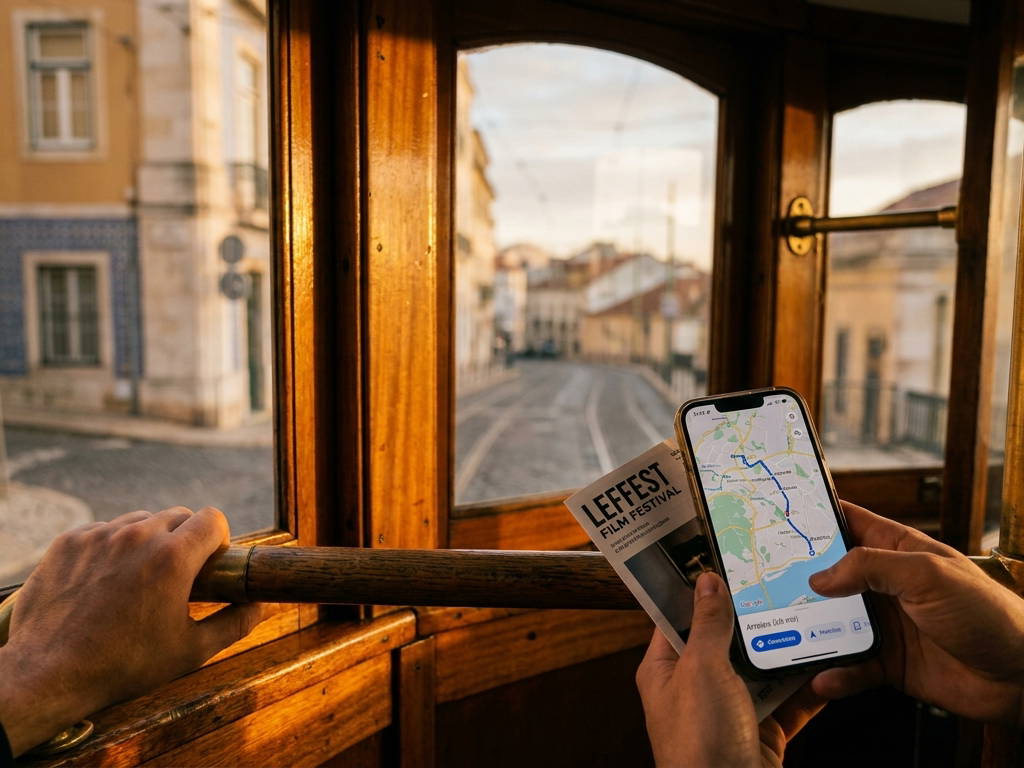
To survive this joyful chaos, forget the car. Lisbon's public transport network (Carris) generally adapts to the event by reinforcing its metro and night bus lines. The metro is by far the most reliable way to get close to the party zones. Remember to top up your Viva Viagem (or Navegante) card in advance to avoid the endless queues at the ticket machines on the evening of the 12th of June. And above all, prepare your calves: Lisbon is best discovered on foot, and during the Festas, walking remains your best ally.
Adapting to the Lisbon rhythm and local customs
Adapting to the local rhythm is the key to a successful stay. As mentioned earlier, the 13th of June is a municipal holiday. Do not plan any administrative errands or heavy shopping in small independent boutiques that day. Instead, take the opportunity to recover from the night of Saint Anthony, wander along the banks of the Tagus, or take the train from Cais do Sodré station to breathe in the sea air on the beaches of the Cascais line. Your Roomlala host will be excellent at advising you on the best beaches sheltered from the wind.
Finally, a few logistical details will make all the difference during your evenings in the arraiais:
- Bring cash: Although card payments (Multibanco or MB Way) are widespread in Portugal, many small local stalls selling drinks or food in the street only accept cash. Withdraw cash during the day so you are not caught out in the evening.
- Opt for closed, comfortable shoes: The Lisbon cobblestones (the calçada portuguesa) are beautiful but slippery. Add to that the crowds, spilled drinks, and leftover food on the ground during street festivals, and you will quickly understand that open sandals should be avoided.
- Dress in layers: June days are often hot and sunny, but nights can be chilled by the Atlantic wind. A light jumper or jacket will be much appreciated around 2 or 3 o'clock in the morning.
- Let your host guide you: Don't hesitate to ask your Roomlala host to accompany you or to point out their favourite spot for the evening. It is the best guarantee of experiencing an authentic and memorable Saint Anthony's.
By choosing a homestay for the Festas de Lisboa 2026, you are choosing economic intelligence and human richness. You skilfully bypass hotel inflation whilst respecting the new local regulations. All that remains is to book your room on Roomlala, learn a few words of Portuguese, and prepare to shout "Viva Santo António!" in the middle of a jubilant crowd.


There are no comments yet.
Leave a comment
You must be logged in to post a comment.